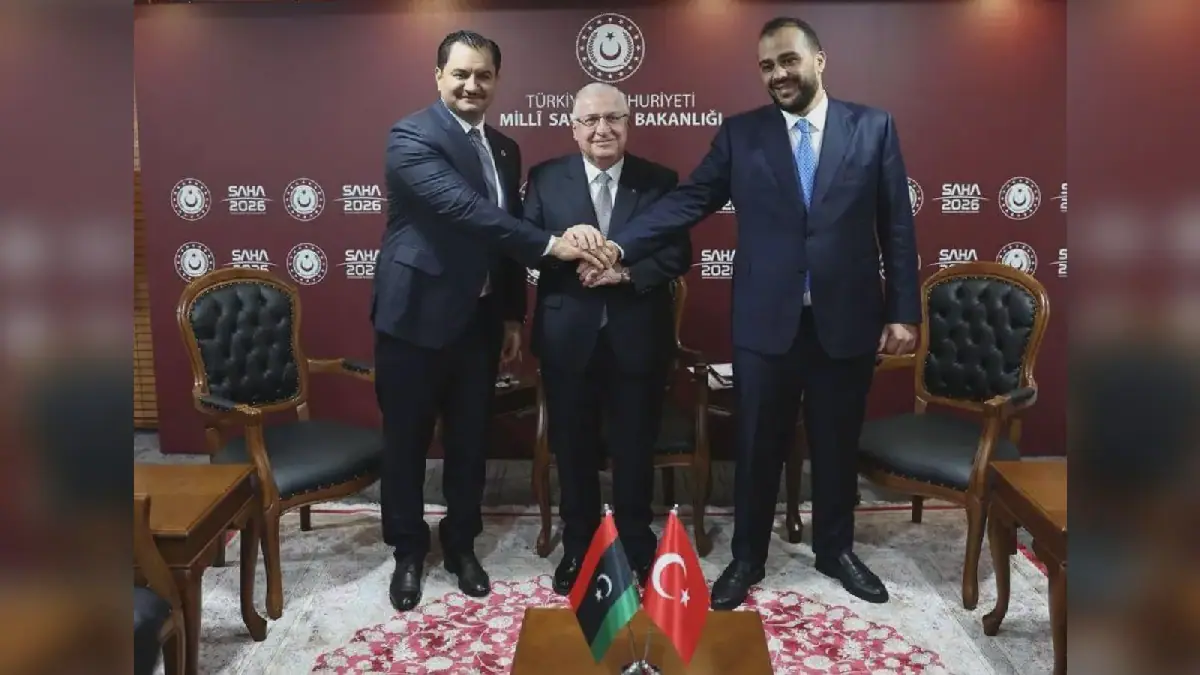
Libya's rival factions held talks in Ankara last week, aiming to unify the country's military. A high-ranking Turkish official confirmed the discussions, stating that although no agreement was reached, parties agreed to continue negotiations. The talks focused on military unification, with political unity to be addressed later. Turkey is playing a mediating role, with Ankara being the preferred location for future talks, possibly within Libya.
The Turkish Foreign Minister, Hakan Fidan, recently expressed optimism about reunifying Libya's east and west. He hinted at a potential announcement soon, emphasizing that a key aspect of national unity is integrating military units under a single umbrella. Turkey's improved relations with eastern Libya have contributed to its mediating role, having previously supported the Tripoli government during the conflict.
The Turkish initiative aligns with American and UN efforts to reunify Libya's institutions. A foreign observer noted that Turkish and American positions are aligned, with potential disagreements arising from European parties, particularly France, Italy, and Russia. The observer suggested that Russia's influence may wane with a potential settlement.
According to a proposed American plan, Abdul Hamid Dbeibah would remain head of the Tripoli government, while Sadam Hifter, son of Khalifa Hifter, would take over as president of the presidential council. This plan aims to bring stability to the region by establishing a unified government.
Hamish Kinnear, an analyst at Verisk Maplecroft, believes Turkey's improved relations with both Libyan factions give it an advantageous position to negotiate a political and military settlement. He suggests that Turkish efforts may receive implicit American support. However, Kinnear cautions that a temporary unification may not prevent future power struggles.
The unification process faces challenges, with various factions vying for control. Turkish mediation may provide a platform for negotiations, but the presence of multiple external actors, including European and Russian interests, complicates the situation. A lasting resolution will require addressing these competing interests.
Libya's path to unity remains uncertain, with multiple factors influencing the outcome. The success of Turkish-mediated talks and American proposals will depend on the willingness of rival factions to compromise. As the situation unfolds, the international community will be watching closely, hoping for a peaceful resolution to Libya's ongoing conflict.
Key points
- Turkey hosts talks between Libya's eastern and western factions to unify the military.
- The talks are part of a broader effort to bring stability to Libya, with American and UN support.
- A unified Libya would require compromise from rival factions and addressing competing external interests.