Libya is struggling to move past a 15-year transitional phase that began with the overthrow of Muammar Gaddafi in 2011. Despite multiple governments, dialogues, and agreements, the country has failed to achieve a lasting settlement. The transitional phase, initially intended to be temporary, has become a protracted state of political instability. This ongoing situation has hindered Libya's progress toward establishing a stable government and holding elections.
The collapse of Gaddafi's regime did not immediately lead to the establishment of a stable state. The issue is not specific to one government but rather a broader political system that has developed around the transitional phase. This system has allowed various groups to accumulate influence and hinder or facilitate decision-making. As a result, temporary institutions have persisted for years, despite the initial goal of achieving elections and ending the transitional phase.
The uncertainty surrounding Libya's elections has contributed significantly to the prolonged transitional phase. Multiple governments, institutions, and budgets have created a complex environment, making it challenging to assign responsibility and monitor public spending. The ongoing political divisions have had far-reaching consequences for Libyan citizens, affecting services, security, the economy, and investment opportunities.
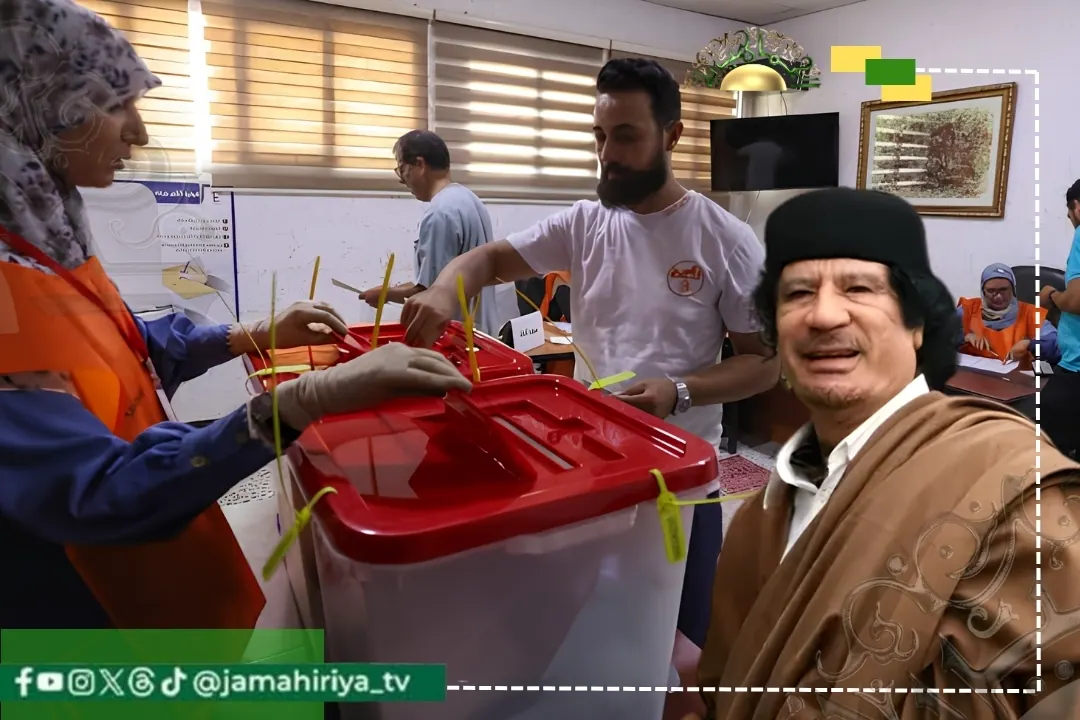
According to a report by Aljamahiriya TV, the persistence of temporary institutions and governments has led to a lack of accountability. The proliferation of various bodies and authorities has resulted in confusion and overlapping mandates. This situation has hindered efforts to establish a stable and effective government.
Libya's political landscape has become increasingly complicated due to the multiplicity of institutions and governments. The absence of a clear mechanism for transferring power has led to a situation where officials remain in office due to ongoing negotiations rather than a natural rotation of power. This has created an environment where temporary arrangements have become entrenched.
The challenge facing Libya 15 years after Gaddafi's overthrow is not only scheduling elections but also establishing clear rules to ensure their implementation and acceptance of the results. The international community and Libyan stakeholders must work together to create a framework that allows for a peaceful transfer of power and the establishment of a stable government.
Ultimately, Libya's path forward will require a concerted effort to address the country's deep-seated issues. This will involve negotiations between various stakeholders, the establishment of clear rules and institutions, and a commitment to achieving a stable and democratic government. The country's progress will depend on its ability to overcome the current transitional phase and establish a lasting settlement.
Key points
- Libya has been stuck in a transitional phase for 15 years, with multiple governments and institutions hindering progress toward stability and elections.