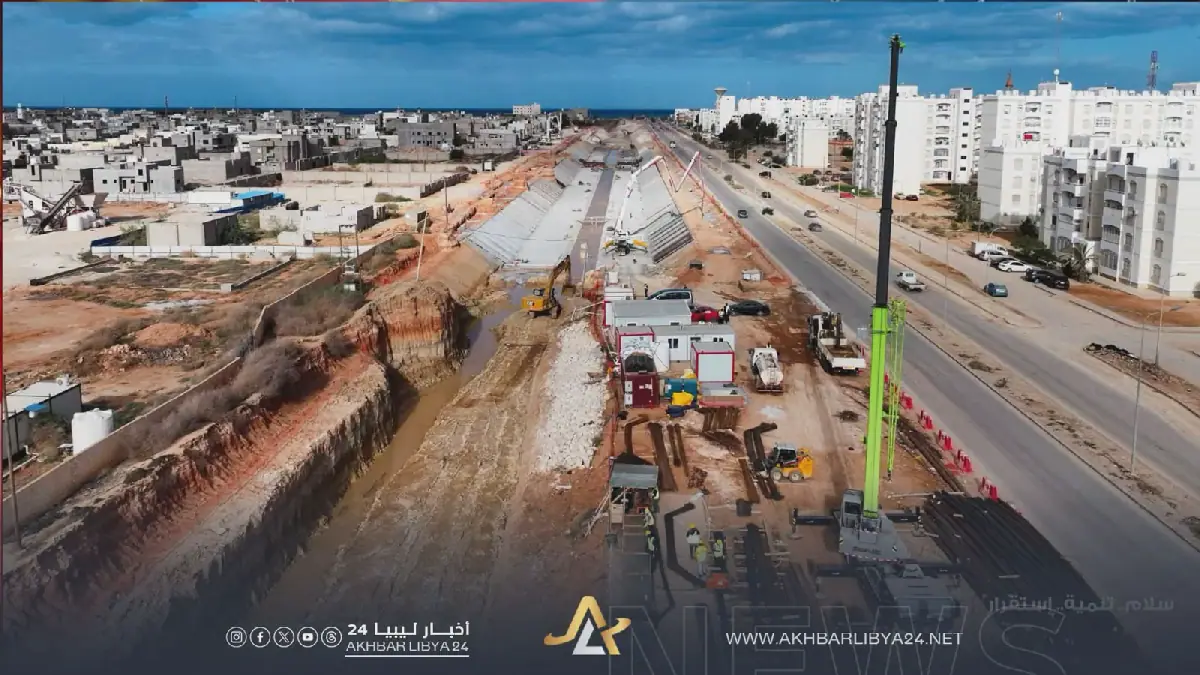
The Wadi Al-Qattara in Benghazi, Libya, is undergoing a significant transformation from a watercourse that has suffered from years of water accumulation and flood risks into a comprehensive engineering project aimed at enhancing protection and improving stormwater drainage. The project, overseen by the Fund for Development and Reconstruction of Libya, marks a shift in reconstruction efforts from addressing crisis aftermath to building infrastructure capable of facing future challenges. This development is crucial for the city and its surroundings, as it seeks to rehabilitate the watercourse and increase its capacity to mitigate the risks associated with rainfall and floods.
The project involves extensive work, with field teams having excavated 2,350 meters of the wadi and completed 420 meters of concrete works. The project's total length is 10,250 meters, with the upper part of the watercourse reaching a width of 38 meters and a depth of 5 meters. The scale of the effort is substantial, involving 177 individuals working in rotating shifts around the clock, supported by 10 excavators, 38 trucks, 2 cranes, 10 water pumps, and specialized concrete equipment. This ensures continuous execution and avoids work stoppages.
The significance of the project extends beyond the physical construction, as it aims to change the perception and reality of Wadi Al-Qattara. Historically associated with flood risks and drainage challenges, the development seeks to create a more efficient watercourse capable of handling rainfall and floodwaters, thereby enhancing the city's safety and improving its infrastructure readiness. The Fund for Development and Reconstruction of Libya is closely monitoring the project's progress, deploying human and technical resources and accelerating work to meet the planned 18-month construction timeline, with completion slated for April 2028.
The transformation of Wadi Al-Qattara reflects a broader approach to urban development and disaster risk reduction in Benghazi. By upgrading the watercourse, the project aims to protect the city from the impacts of heavy rainfall and floods, which often test the resilience of infrastructure. The project's progress is a testament to the efforts to move beyond addressing the immediate consequences of crises and toward building a more resilient and sustainable future.
The development of Wadi Al-Qattara is part of a larger vision to enhance urban infrastructure in Libya, focusing on resilience and sustainability. The project demonstrates the commitment of the Fund for Development and Reconstruction of Libya to improving the quality of life in cities like Benghazi by investing in critical infrastructure. As the project advances, it is expected to have a positive impact on the lives of residents by reducing flood risks and improving the overall urban environment.
The project's implementation is being closely watched by local communities, who are hopeful that it will bring an end to the perennial flooding issues that have plagued the area. The project's success could serve as a model for similar developments in other parts of Libya, contributing to a nationwide effort to enhance urban resilience and infrastructure. The involvement of local and international partners is crucial in ensuring the project's success and sustainability.
As the project nears completion, the focus will shift to ensuring its long-term sustainability and effectiveness. This will involve not only the physical maintenance of the watercourse but also the implementation of measures to prevent future degradation. The project's impact on the local community and its contribution to Libya's development goals will be closely monitored, providing valuable insights into the effectiveness of infrastructure investments in addressing urban challenges.
Key points
- The project aims to enhance protection and improve stormwater drainage in Benghazi.
Reporting sources
- صندوق التنمية يقود تحول وادي القطارة إلى مشروع للحماية والاستقرار · Akhbar Libya 24