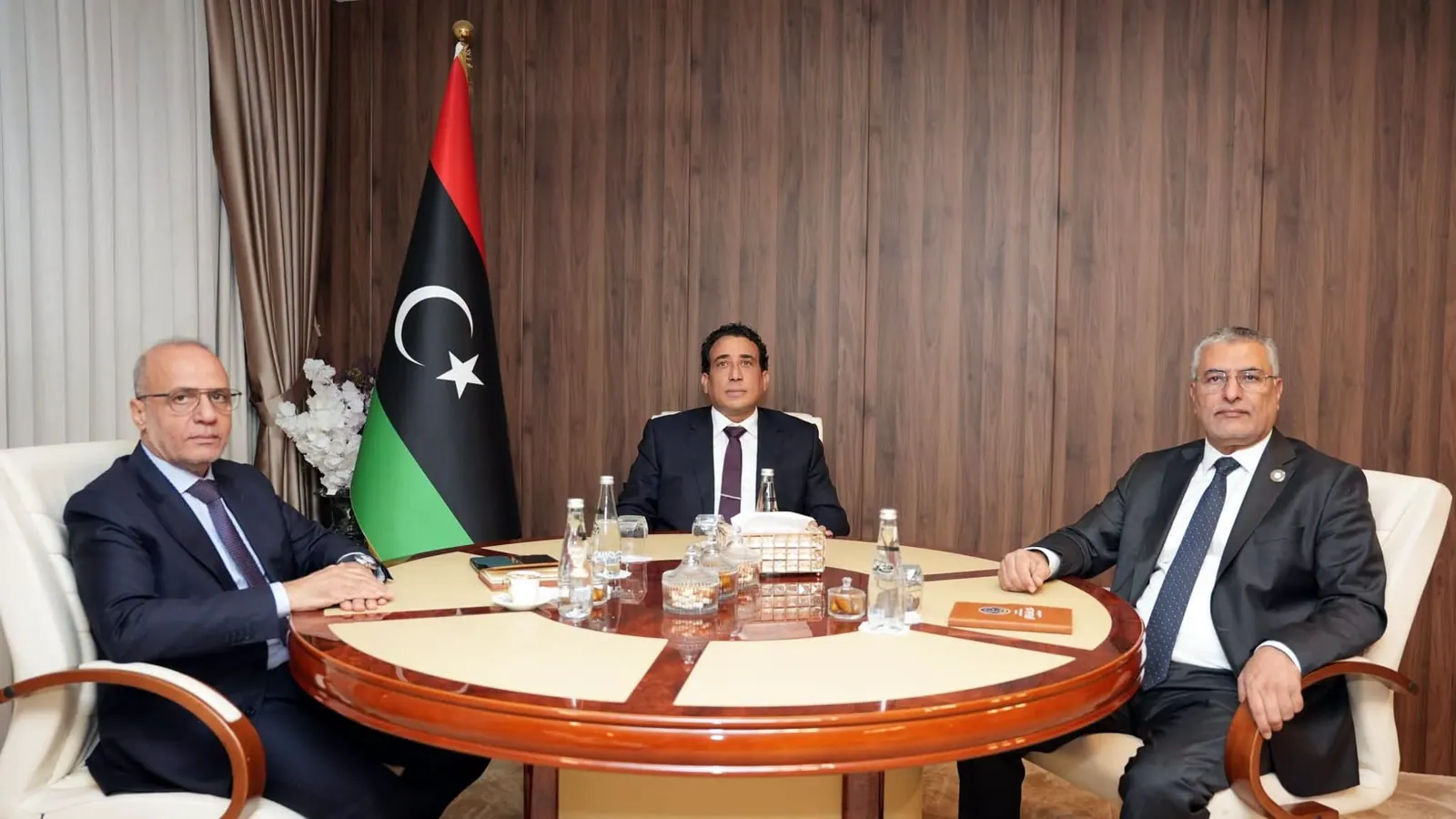
Libya's top leaders, including President of the Presidential Council Mohamed al-Menfi, Head of the State Council Mohamed Takala, and Deputy President of the Presidential Council Abdullah al-Lafi, have emphasized the importance of driving forward an inclusive political process. This process should involve all relevant institutions and parties, with the aim of achieving national stability and unity. The leaders made these remarks in a recent statement, highlighting their commitment to a comprehensive and participatory approach.
The leaders underscored the need for any political process to be grounded in the principle of Libyan ownership, with international support playing a facilitating role. They also stressed the importance of intensifying efforts to unify Libya's state institutions, which have been fragmented for years. This unification is seen as crucial for the country's progress and stability. The leaders' statements reflect a growing consensus on the need for a collaborative approach to address Libya's complex challenges.
A key objective of the proposed political process is to create conditions conducive to free and fair elections, which would enjoy broad national acceptance. The leaders believe that such elections would help bring an end to the country's transitional phases and pave the way for unified and stable institutions. This, in turn, would enable Libya to move forward with its development and reconstruction efforts, addressing the needs of its citizens.
The Presidential Council, State Council, and other Libyan institutions have been working to address the country's multifaceted crisis. The crisis has been characterized by ongoing conflict, political divisions, and a severe economic downturn. Against this backdrop, the leaders' commitment to an inclusive political process is seen as a positive step towards resolving Libya's challenges and promoting national reconciliation.
The international community has been closely following developments in Libya, with the United Nations playing a key role in supporting the country's peace and stabilization efforts. The UN has been working closely with Libyan stakeholders to facilitate a peaceful resolution to the crisis, based on Libyan-led initiatives and international support. The leaders' emphasis on Libyan ownership and international support reflects a growing recognition of the need for a collaborative approach.
Libya's complex history and ongoing challenges have underscored the need for a comprehensive and inclusive approach to addressing the country's issues. The leaders' statements reflect a growing consensus on the importance of national dialogue and reconciliation in achieving stability and unity. By emphasizing the need for an inclusive political process, the leaders are seeking to build trust and foster cooperation among different Libyan stakeholders.
The way forward for Libya will depend on the implementation of the leaders' vision for an inclusive political process. This will require sustained efforts from all parties involved, as well as continued international support. Key priorities will include preparing for free and fair elections, unifying state institutions, and promoting national reconciliation. The leaders' commitment to this approach offers a glimmer of hope for Libya's future stability and prosperity.
Key points
- Libyan leaders stress need for inclusive political process
- Process should be grounded in Libyan ownership with international support
- Free and fair elections are a key objective of the proposed process