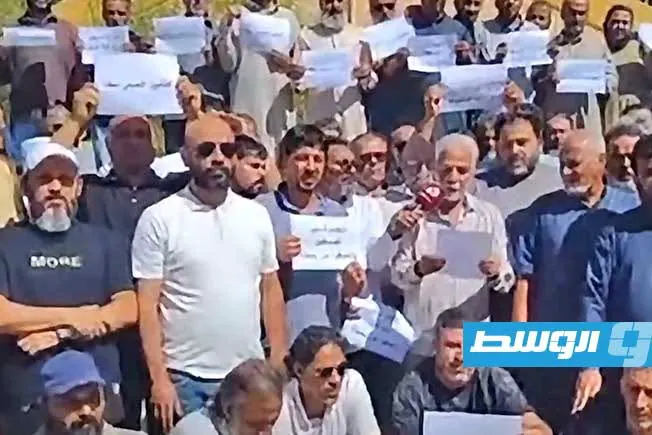
The teachers' movement in Libya has gained momentum, with protests and strikes taking place in several cities and regions. The movement is demanding a revision of the unified salary scale to reflect their living conditions, as well as the payment of outstanding financial dues and comprehensive health insurance. On October 7, 2026, teachers in the Eastern region held a demonstration in Benghazi, while in Zawara, the local teachers' movement rejected recent decisions and arrangements regarding the education sector.
The Eastern region's teachers' movement announced a general strike, showing solidarity with their colleagues in the Western region and expressing a unified stance. They emphasized that their demands are "rights-based and legitimate," including achieving fairness in salaries, unifying the salary scale, and providing comprehensive health insurance. The movement called on all teachers in the Eastern region to stand together and adhere to peaceful and civilized methods of expressing their demands.
In Zawara, the local teachers' movement expressed rejection of recent decisions by the interim government and the Libyan Teachers' Syndicate. They emphasized their commitment to previously announced demands and called for their concerns to be addressed. This development comes amid a broader discussion between teachers and the syndicate regarding the unified salary scale and its approval.
In Tripoli, the Teachers' Syndicate of Tripoli Center confirmed the continuation of their sit-in and strike to demand a revision of the unified salary scale. The syndicate stressed that their movement aims to achieve fairness and justice in wages. They vowed to continue their protest until their demands are met.
The Libyan Teachers' Syndicate denied approving the values of the unified salary scale in its current form, stating they were not party to the decision. A meeting with the Minister of Finance to discuss outstanding financial dues was canceled after the syndicate discovered that the salary scale had already been prepared for adoption.
The Libyan Prime Minister, Abdulhamid Dbeiba, decided to grant monthly bonuses to educational leaders as part of measures to support the sector. Meanwhile, experts warned that the unified salary scale could reduce the real income of employees and increase poverty.
The escalating teachers' movement has sparked concerns about the potential impact on the education sector and the broader economy. The situation remains uncertain, with no clear resolution in sight. The teachers' demands for fair salaries and improved working conditions continue to be a pressing issue in Libya.
Key points
- The teachers' movement in Libya is demanding a revision of the unified salary scale and improved working conditions.
- The movement has gained momentum, with protests and strikes taking place in several cities and regions.
- The Libyan government has responded with measures to support the education sector, including granting monthly bonuses to educational leaders.