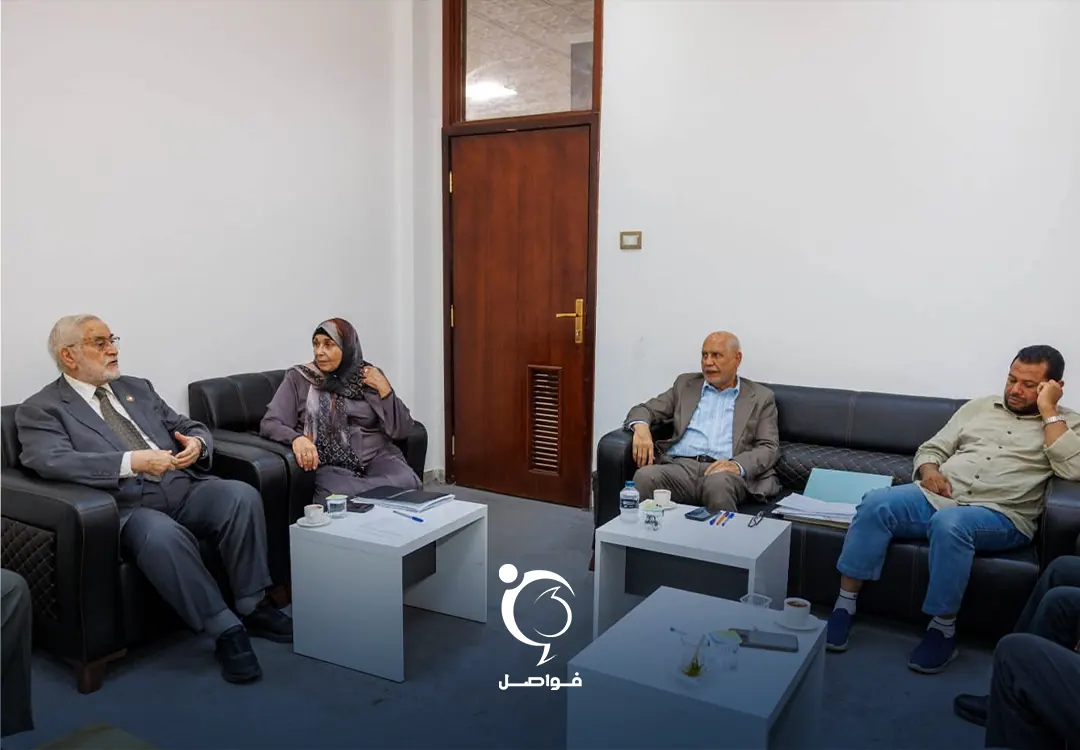
The Libyan State Council's Political Committee has rejected the recent changes to electoral laws made by the House of Representatives and the 4+4 committee. In a meeting held at the council's headquarters in Tripoli, the committee stated that these changes were made without proper legal and constitutional basis. They emphasized that any modifications to the electoral process must be done in accordance with the law and the constitution.
The committee's decision was made in response to a package of laws and decisions issued by the House of Representatives' speaker, Aguila Saleh. These laws included changes to the election of the president, adoption of the 2014 House of Representatives election law, and suspension of the 2023 State Council election law. The committee also rejected the reconstitution of the National High Electoral Commission and the agreement made by the 4+4 committee.
The State Council's Political Committee has prepared a memo outlining their legal and political objections to these changes. The memo will be submitted to the council's leadership and relevant parties. The committee stressed that any new steps regarding the electoral process must be based on the legal and constitutional frameworks and mechanisms for consensus among concerned institutions.
The recent changes to electoral laws have been met with controversy in Libya. The country's political landscape has been unstable in recent years, with various factions and institutions vying for power. The State Council's rejection of these changes is seen as a significant development in the country's ongoing political crisis.
The 4+4 committee, which comprises representatives from the House of Representatives and the State Council, was established to facilitate dialogue and agreement on Libya's electoral process. However, the committee's agreement has been met with criticism from various quarters, who argue that it was made without proper consultation and consensus.
The State Council's decision has significant implications for Libya's electoral process. The country's elections have been delayed several times, and the recent changes to electoral laws have raised concerns about the legitimacy and credibility of the process. The international community has been closely watching the developments in Libya, with many urging the country's leaders to work towards a peaceful and democratic resolution.
The Libyan State Council's rejection of the recent changes to electoral laws is a significant development in the country's ongoing political crisis. The council's decision highlights the need for a more inclusive and consensus-based approach to Libya's electoral process. The country's leaders must work towards finding a solution that is acceptable to all parties and ensures the integrity and legitimacy of the electoral process.
Key points
- The Libyan State Council's Political Committee has rejected recent changes to electoral laws made by the House of Representatives and the 4+4 committee.