The UN Security Council has extended the mandate of an international security force in Haiti for six months, aiming to combat powerful armed groups that control much of the country. The decision was made with 12 votes in favor, no votes against, and three abstentions from China, Russia, and Pakistan. These abstentions were due to concerns over insufficient funds, personnel, and efficacy. The force, known as the Gang Suppression Force (GSF), has struggled to deploy enough troops to effectively carry out its mandate.
The extension of the mandate comes as Haiti prepares for its first election in a decade, scheduled for December 13. The international community has been involved in Haiti for decades, with seven previous missions dedicated to the country, but with limited success. The GSF was launched a year ago, following the withdrawal of a Kenyan-led mission that also struggled to achieve its goals. Currently, the GSF has around 1,500 troops deployed in Haiti, with an additional 4,000 expected to arrive in the coming months.
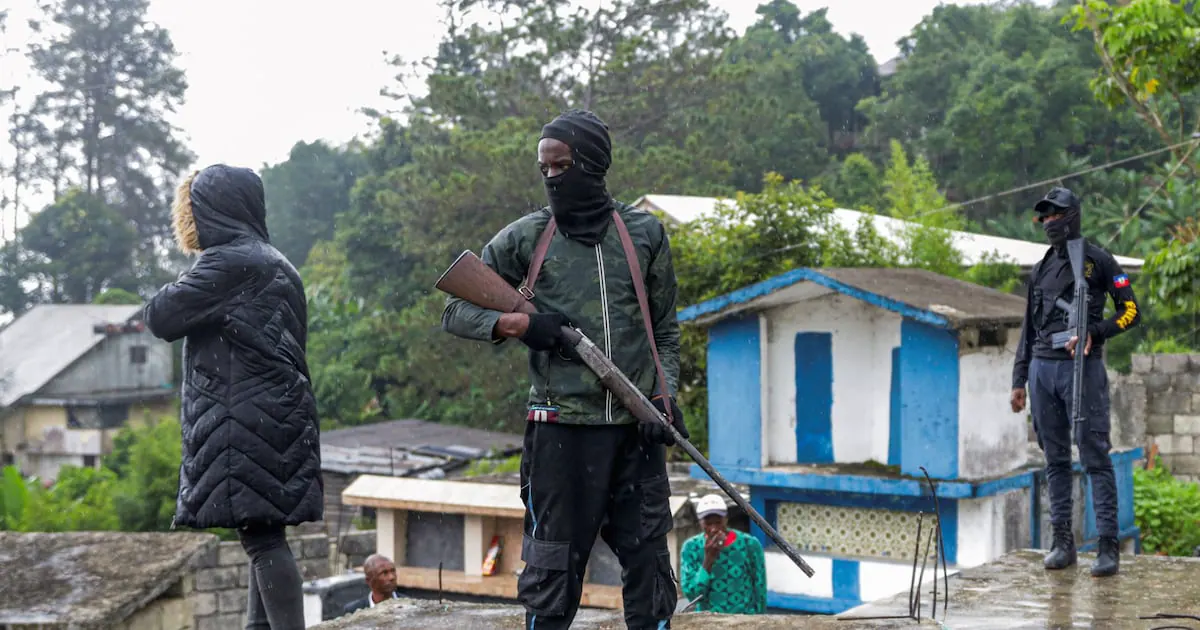
Despite the international efforts, armed groups continue to control large parts of Haiti. The situation on the ground remains dire, with gang members recently killing at least 11 people in the breadbasket region in retaliation for a GSF unit killing three gang members. A month ago, a massacre in the town of Kenscoff near the capital left at least 47 people dead and around 50 more kidnapped. These incidents highlight the challenges faced by the GSF in securing the country.
The Haitian government had urged nations to renew the mandate for the GSF, which is currently operating at less than 30% of its intended size. The force's struggles are compounded by the fact that successive transitional governments have long delayed elections due to worsening insecurity. This has forced close to 1.5 million people to flee their homes. The renewed mandate is set to last until March 31, 2027, with the elections scheduled for December 13 and final results due on March 7.
US Ambassador to the UN, Mike Waltz, representing one of the countries that proposed the motion, emphasized that the international community is trying to do something genuinely different this time. He acknowledged the limited success of previous missions but expressed hope that the current effort would yield better results. The vote to extend the mandate came as a response to Haiti's leaders' call for international security support, first made in 2022.
The situation in Haiti continues to be volatile, with gang violence and insecurity being major concerns. The GSF's ability to deploy more troops and effectively combat armed groups will be crucial in the coming months. The international community's commitment to supporting Haiti's stabilization and security is evident in the renewal of the GSF's mandate. However, the road ahead remains challenging, with the need for sustained support and resources to ensure the success of the mission.
The renewal of the GSF's mandate is a critical step towards addressing the security challenges in Haiti. With the elections approaching, the international community's focus will be on ensuring a secure environment for the voting process. The success of the GSF will depend on its ability to deploy sufficient troops and effectively engage with the armed groups. The coming months will be crucial in determining the impact of this renewed effort to stabilize Haiti.
Key points
- The UN Security Council has extended the mandate of the Gang Suppression Force in Haiti for six months to combat gang violence ahead of December elections.
- The GSF currently operates at less than 30% of its intended size, with 1,500 troops deployed and 4,000 more expected to arrive.
- The situation in Haiti remains dire, with gang violence and insecurity forcing close to 1.5 million people to flee their homes.