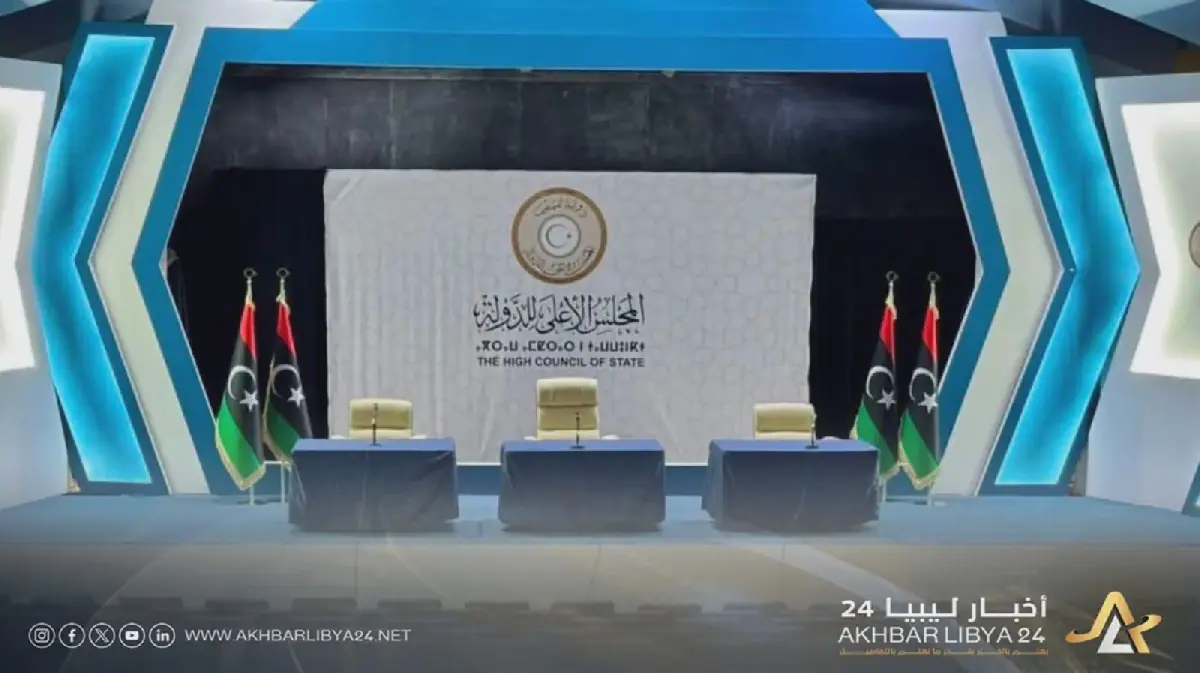
Libya's State Council is facing a legitimacy test due to internal disputes over membership and representation. The council's internal regulations have been criticized for being applied selectively, leading to concerns about the fairness and transparency of its decision-making processes. The disputes have sparked concerns about the council's ability to play a meaningful role in Libya's political landscape.
The disputes center around the council's membership and representation. Some members have been excluded from participating in council activities, sparking concerns about the fairness and transparency of the council's decision-making processes. The council's internal regulations state that all members should be treated equally and have a say in the council's decision-making processes.
The issue has sparked a wider debate about the council's role in Libya's political landscape. Some have argued that the council's selective application of its internal regulations has undermined its legitimacy and created divisions among its members. The council's ability to play a meaningful role in Libya's political landscape has been questioned.
A member of the council, Abubakar Mohamed Othman, has raised concerns about the selective application of the council's internal regulations. He has argued that the council's leadership has failed to uphold the regulations and has instead allowed political blocs to influence decision-making processes. Othman's concerns have sparked a wider debate about the council's accountability and transparency.
The council's internal regulations state that all members have the right to participate in decision-making processes and to express their opinions freely. However, some members have reported being excluded from participating in council activities, sparking concerns about the fairness and transparency of the council's decision-making processes.
The issue has also raised concerns about the influence of political blocs within the council. Some have argued that the blocs have been allowed to dominate decision-making processes, leading to concerns about the council's accountability and transparency. The council's leadership has been accused of failing to uphold the regulations and allowing political blocs to influence decision-making processes.
The State Council's legitimacy has been questioned due to internal disputes over membership and representation. The council's selective application of its internal regulations has sparked concerns about its fairness and transparency. The council's ability to play a meaningful role in Libya's political landscape has been questioned.
Key points
- The State Council's internal disputes have sparked concerns about its legitimacy and accountability.
- The council's selective application of its internal regulations has undermined its legitimacy.
- The influence of political blocs within the council has raised concerns about its accountability and transparency.