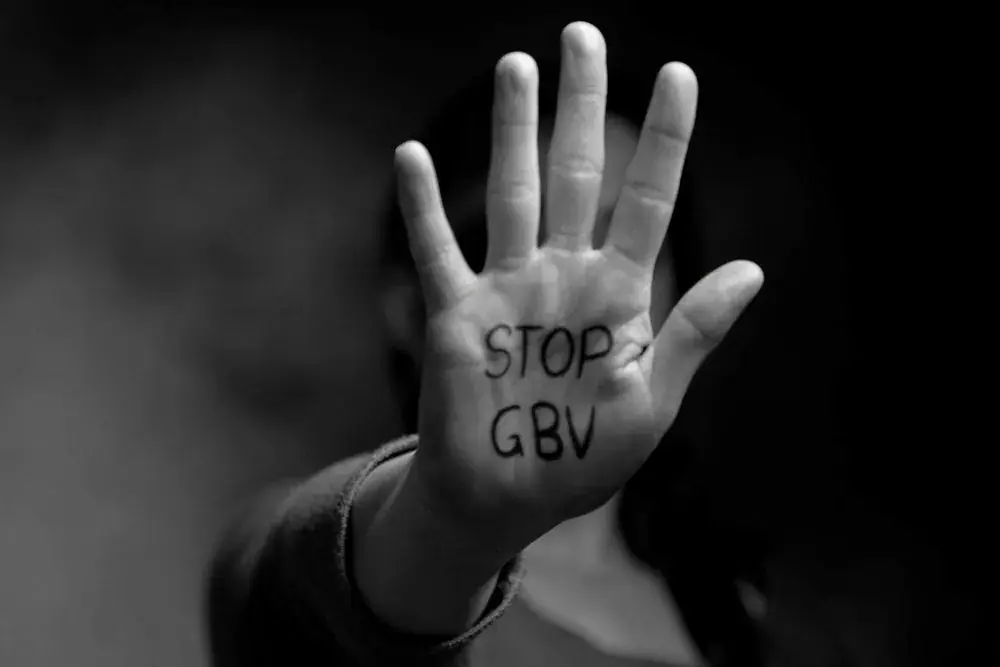
An open letter to President Cyril Ramaphosa has been written, calling for urgent action and accountability in the fight against gender-based violence and femicide (GBVF) in South Africa. The letter questions how many more women must be raped, abused, assaulted, and murdered before the government's response becomes more effective. The authors argue that South Africa has enough policies, declarations, and commitments, but lacks effective implementation, accountability, and leadership.
President Ramaphosa has classified GBVF as a national crisis and disaster, and billions have been announced to combat it. However, the TEARS Foundation has raised concerns about the government's reliance on incomplete information and flawed assumptions when developing its GBVF interventions. Official police statistics are incomplete, as many survivors never report their abuse due to fear or distrust of the police.
The TEARS Foundation analysed 53,004 distress calls and found that using real-world data can help identify geographical hotspots, high-risk periods, and demographic profiles of those seeking help. This data is crucial for effective resource allocation. However, the number of active support facilities has declined by approximately 1,000 since the pandemic, leaving survivors with fewer places to turn.
Frontline organisations providing immediate assistance to survivors face financial uncertainty, and direct funding for these organisations is desperately needed. Non-profits are left to fill the gaps left by collapsing state services, and government budgets must directly fund vetted, operational frontline organisations. The TEARS Foundation has pointed out that frontline NGOs absorb the fallout from state failures without receiving sustainable state financial backing.
The National Council on Gender-Based Violence and Femicide, established to coordinate the national response, has struggled to secure offices, appoint a CEO, recruit staff, and establish administrative structures. The council has spent only approximately R2.2 million of its allocated R46.5 million for the 2026/27 financial year, leaving approximately R44.3 million unspent. There is a risk that millions allocated to fighting GBVF could be lost due to the council's administrative issues.
The GBVF Response Fund, established in February 2021, has experienced three executive leadership transitions within its first five years. Its governance, priorities, expenditure, and tangible impact deserve rigorous public scrutiny. The fund's stated purpose demands transparency and accountability. The council's priorities have also raised questions, with international travel apparently entering its list of priorities.
The fight against GBVF requires urgent action, accountability, and direct funding for frontline organisations. The government must take concrete steps to address the crisis, including providing sustainable funding for NGOs and ensuring the effective implementation of its policies and strategies. Ultimately, South Africa cannot afford another promise while women continue to die.
Key points
- The government must provide direct funding for frontline organisations responding to gender-based violence and femicide.
- The National Council on Gender-Based Violence and Femicide must get its administration in order to effectively coordinate the national response.
- The GBVF Response Fund must be transparent and accountable in its governance, priorities, expenditure, and tangible impact.