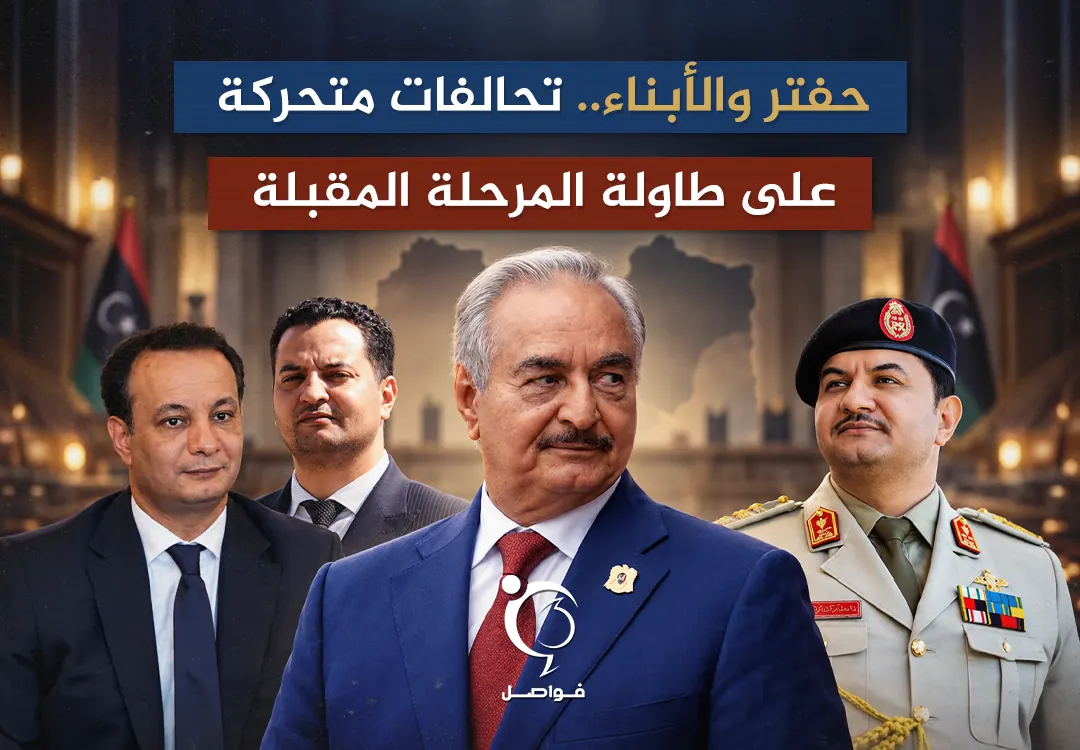
Libyan political dynamics are taking a new turn as Khalifa Haftar expresses support for the 4+4 arrangements. This development, alongside his son Saddam potentially heading the Presidential Council, indicates a complex situation within the Eastern camp. Furthermore, disagreements have emerged regarding the leadership of the House of Representatives in the upcoming phase. A total of 86 deputies are pushing for changes to the internal regulations of the council.
The push for change in the House of Representatives comes as a result of growing discontent with the prolonged leadership of Aguila Saleh, who has been in charge since 2014. Approximately 100 deputies have already voiced their support for the 4+4 path. It appears that Saddam Haftar is backing the changes in the House of Representatives. Conversely, information suggests that Khalid Haftar is supporting Aguila Saleh's continued role and thwarting attempts to convene a session to amend the regulations.
Recent developments also indicate a rift within the Haftar family, particularly between Saddam and Khalid. Some interpret this as a power struggle, while others see it as a distribution of tasks under unified leadership. These divisions are reflective of broader shifts in Libya's political landscape. The situation is further complicated by the involvement of various factions and international players.
The differences in opinion within the Haftar family are also reflected in their alliances. Saddam Haftar is aligned with the 4+4 path. On the other hand, Khalid and Belqasim Haftar seem to be supporting Aguila Saleh's continued leadership and the 6+6 path, as well as the initiative for the three presidencies. The final stance on the upcoming power arrangements in Libya remains uncertain.
The evolving situation in Libya has significant implications for the country's future. The involvement of various factions and international players adds complexity to the situation. The support of Khalifa Haftar for the 4+4 arrangements and his son Saddam as the potential head of the Presidential Council is a key development in this context.
The city of Tripoli is set to host a summit of the Ten Group in October. This event may provide further insights into the shifting alliances and power dynamics in Libya. The country's political landscape is likely to continue evolving in the coming months.
The situation in Libya remains fluid, with various factions vying for influence. The role of international players, including Turkey, will likely continue to shape the country's future. The outcome of the current power struggles will have significant implications for Libya's stability and prosperity.
Key points
- Khalifa Haftar's support for the 4+4 arrangements and his son Saddam as the potential head of the Presidential Council.
- Disagreements have emerged regarding the leadership of the House of Representatives in the upcoming phase.
- The involvement of various factions and international players adds complexity to the situation.