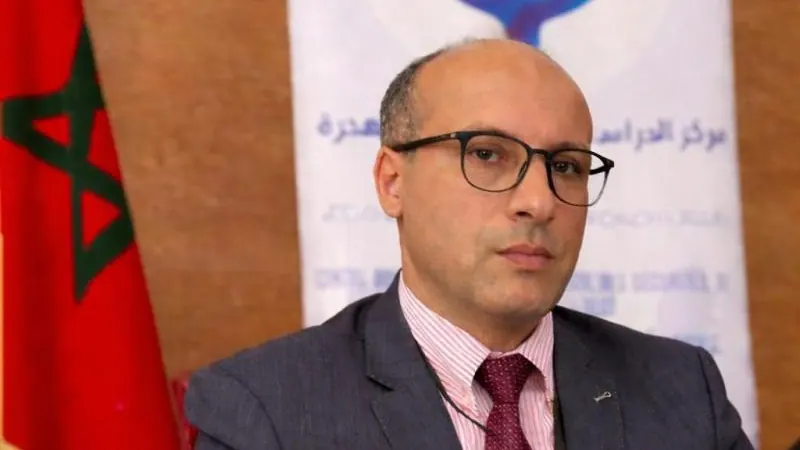
Moroccan professor and politician Abderrazzak Kabbouri has shared his insights on the country's recent elections, which took place on September 23. In an interview with L'Opinion, Kabbouri discussed the changing political landscape and the potential alliances that may form in the coming weeks. The elections saw a significant turnout, particularly in rural areas, and a strong showing from the Parti de la Justice et du Développement (PJD). Kabbouri's analysis highlights the complexities of forming a new government.
According to Kabbouri, the future alliances cannot be reduced solely to the pursuit of a numerical majority. He emphasizes that a mathematical approach is not enough to guarantee a coherent government. The professor notes that several scenarios are possible, including the formation of a broader coalition than in 2021. This could potentially lead to a more stable government, but it also raises questions about the compatibility of the various parties involved.
The elections saw a significant abstention rate, which Kabbouri believes will have an impact on the formation of the new government. He notes that the regions rural areas played a decisive role in the outcome of the elections. The Parti Authenticité et Modernité (PAM) emerged as a major winner, while the PJD also made significant gains. Kabbouri's analysis suggests that the coming days will be crucial in determining the shape of the new government.
Kabbouri's comments come as various parties begin to negotiate potential alliances. The leader of the PJD, Abdelilah Benkirane, has already met with other party leaders to discuss potential cooperation. The Istiqlal party is also expected to play a key role in the negotiations, with a decision on its potential participation in the majority expected on Saturday.
The formation of a new government is expected to be a complex and challenging process. Kabbouri notes that the various parties have different visions and priorities, which will need to be reconciled. The professor emphasizes that the coming days will be crucial in determining the shape of the new government and its ability to address the country's challenges.
The National Human Rights Commission (CNDH) has highlighted several irregularities during the election campaign, including the use of public resources and the display of campaign materials in unauthorized areas. These issues will need to be addressed to ensure the integrity of the electoral process.
As Morocco looks to form a new government, Kabbouri's analysis highlights the complexities and challenges involved. The coming days will be crucial in determining the shape of the new government and its ability to address the country's challenges. The various parties will need to navigate their differences and find common ground to form a stable and effective government.
Key points
- Abderrazzak Kabbouri emphasizes that future alliances cannot be reduced solely to the pursuit of a numerical majority.