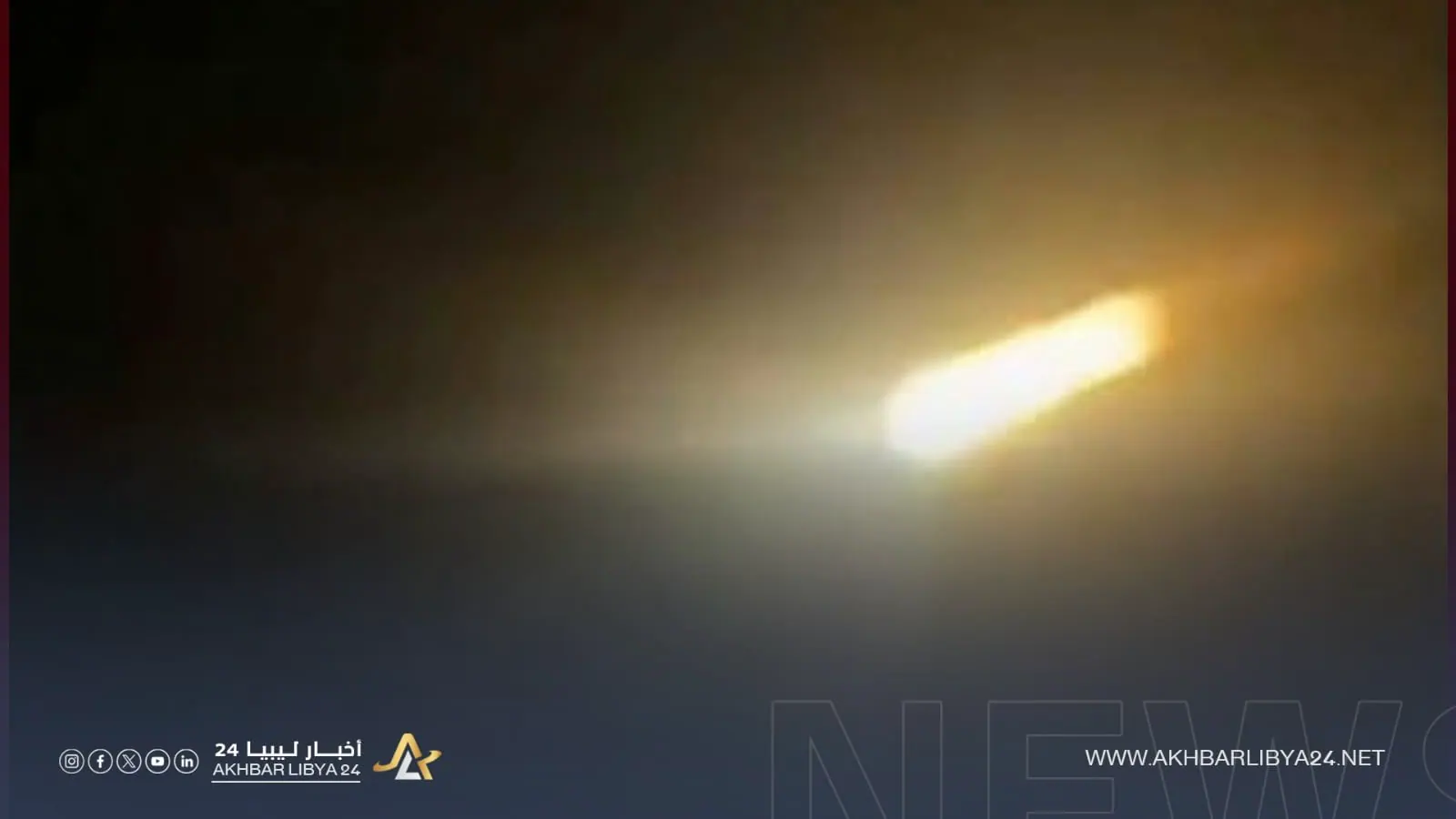
The Libyan Center for Remote Sensing and Space Sciences has officially clarified that the glowing object seen in Tripoli's sky was a meteor. This natural astronomical phenomenon occurs when a small celestial body, such as a piece of a meteorite or comet remnants, enters Earth's atmosphere at high speed. The friction with air particles causes it to burn, producing a bright light.
According to the Center, meteors appear as bright objects in the sky due to their high-speed entry into the atmosphere. This results in significant heat generation, causing them to burn up and create a luminous trail. The Center explained that such phenomena can produce a clear light path or a glowing tail behind the object as it moves through the atmosphere.
Anas Al-Mishri, Director of the Center's Information and Technology Office, confirmed that the glowing object in Tripoli's sky was indeed a meteor. He emphasized that this phenomenon is natural and related to a celestial body entering Earth's atmosphere. Al-Mishri's statement aimed to dispel any misconceptions about the object's origin.
The Center noted that the appearance of meteors does not necessarily mean that celestial bodies reach the Earth's surface. Most meteors burn up or disintegrate while passing through the atmosphere, and only a few manage to land on the planet's surface. This clarification helps to alleviate concerns about potential hazards.
In some cases, bright lights in the sky can be caused by space debris, such as old satellites or rocket parts, re-entering the atmosphere and burning up due to friction. This can produce a similar spectacle to meteors. The Center's explanation helps to distinguish between these different phenomena.
The clarification comes after videos spread across social media platforms showing a glowing object crossing the night sky, sparking curiosity among citizens about its nature and source. The Center's statement provides a scientific explanation for the event, encouraging the public to rely on credible sources for information.
The Libyan Center for Remote Sensing and Space Sciences urged the public to approach such events with a scientific perspective and avoid speculation. By understanding the natural causes of these phenomena, people can better appreciate the beauty of astronomical events. The Center's work helps to promote scientific awareness and literacy in Libya.
Key points
- The Libyan Center for Remote Sensing and Space Sciences confirmed that the glowing object in Tripoli's sky was a meteor.
- Meteors occur when small celestial bodies enter Earth's atmosphere at high speed, causing them to burn up and produce a bright light.
- The appearance of meteors does not necessarily mean that celestial bodies reach the Earth's surface.