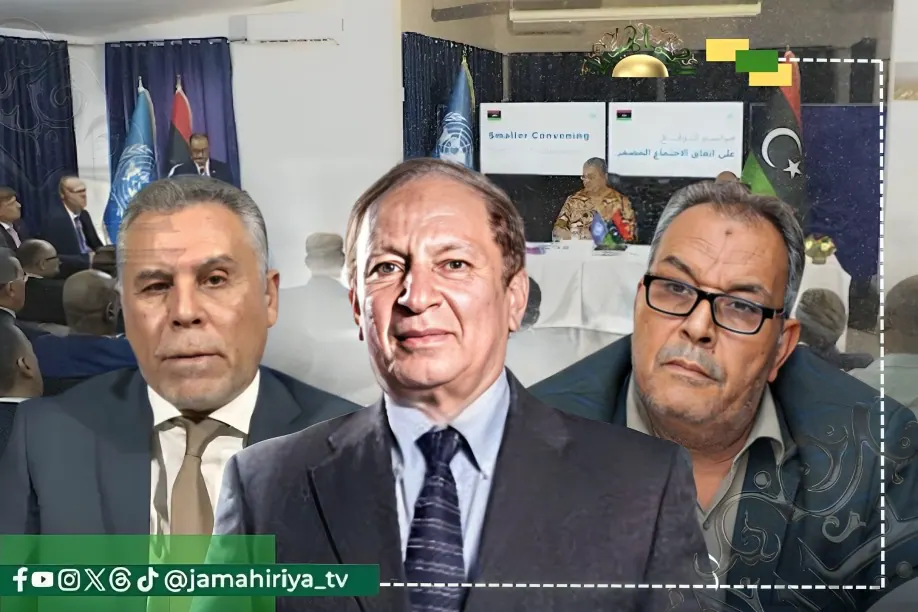
The Libyan political process has entered a new phase with the expiration of the deadline set by the UN Support Mission in Libya for the House of Representatives and the State Council to adopt the outcomes of the "4+4" mini-dialogue committee. This development has sparked a new confrontation between the two bodies over the agreement and its implementation mechanisms. The UN mission had given the two councils a one-month deadline to endorse the agreement, which was expected to provide a institutional cover for the transition to the next phase.
The House of Representatives announced its support for the agreement last September, a move welcomed by the UN mission. However, the State Council's stance remains more reserved, particularly with regard to the electoral laws and amendments adopted by the House of Representatives, which are linked to the outcomes of the "4+4" committee. While some members of the State Council view the House's approval as a practical translation of the political understandings, others argue that certain procedures have not met the necessary constitutional and institutional requirements.
The disagreement has now shifted from a procedural issue related to the deadline to a political and legal confrontation over which body has the authority to adopt the "4+4" outcomes. The UN mission's deadline has raised questions about whether it can compel Libyan institutions to take a specific decision. Member of the House of Representatives, Ali Al-Sool, emphasized that his council has already made its decision on the agreement, which was endorsed by 103 lawmakers.
Al-Sool stated that the House of Representatives will incorporate the "4+4" outcomes into the 14th amendment to the Constitutional Declaration in upcoming sessions. He rejected the idea that the State Council's approval is necessary for the agreement to take effect, arguing that the House of Representatives is not bound by the State Council's position. In contrast, member of the House of Representatives, Ali Al-Takbali, acknowledged that the House has done its part in endorsing the agreement, but noted that the problem lies with the State Council's stance.
Al-Takbali indicated that the division within the State Council persists, and the council has not provided a final response to the UN mission regarding the outcomes. This has left the agreement in limbo between two different institutional positions. Meanwhile, member of the State Council, Saeed Wnais, presented a different perspective, arguing that the prevailing trend within the council is to reject the "4+4" outcomes due to concerns about the future of Libya's democratic process.
Wnais stated that the council has not yet discussed the agreement officially and plans to debate it in a session on October 4. He emphasized that the deadline set by the UN mission does not bind the State Council, which views the agreement as a political initiative that requires discussion and voting. The UN mission has begun to engage with civil society organizations and community leaders in public consultations on the recommendations of the structured dialogue and the practical steps needed to implement them.
The "4+4" committee is set to hold a new meeting in Tunisia at the beginning of October to follow up on the implementation of the agreement and discuss outstanding issues, including electoral laws and institutional consensus. The UN mission may present the results of its recent efforts to the Security Council in October, coinciding with a discussion of the political, security, and humanitarian developments in Libya. The elections and unification of institutions remain at the heart of the UN's roadmap for Libya.
Key points
- The expiration of the UN's deadline for the "4+4" agreement has sparked a confrontation between the House of Representatives and the State Council.
- The disagreement centers on the authority to adopt the agreement and its implementation mechanisms.
- The UN mission is engaging with Libyan stakeholders to push for a consensus on the roadmap and the holding of elections.