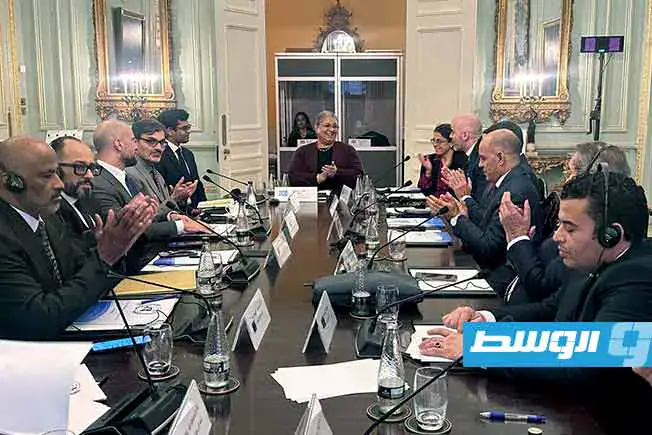
Libya's military and judicial institutions are at a crossroads as international players, including the United States, Russia, and European countries, jockey for position in the North African nation. The United Nations Support Mission in Libya (UNSMIL) is set to conclude its mandate on October 31, 2026, adding urgency to efforts to stabilize the country. A meeting of the "4+4" mini-dialogue committee in London on October 28, 2026, aimed to unify the country's judicial institutions and pave the way for elections.
The "4+4" committee, which includes representatives from Libya's main institutions, agreed to expand consultations with various components of the judiciary to ensure its unity and role in organizing credible elections. The committee also emphasized the importance of unifying the judiciary in ensuring the success of presidential and legislative elections. However, some Libyan parties have expressed reservations about the committee's approach, with the General Assembly of the Tripoli Court of Appeal rejecting any attempts to modify laws governing the judiciary through exceptional procedures.
Libya's judicial institutions have been divided for years, particularly regarding the competencies of the Supreme Court and the Constitutional Chamber. The rift worsened after the House of Representatives, led by Aguila Saleh, approved the establishment of a constitutional court in Benghazi. Separately, Saleh met with a delegation from the High Council of State, led by Omar Boushagh, to discuss cooperation and unify regulatory institutions and sovereign positions.
The international community is actively engaged in Libya's affairs, with the United States and Russia promoting competing initiatives. The US envoy, Masood Bouls, aims to broker an agreement between key parties, while Russia's President Vladimir Putin has expressed willingness to support Libya's political process. Turkey is also playing a role, with Foreign Minister Hakan Fidan indicating that Ankara is working to reunify Libya's military institutions.
A meeting between Sadam Gaddafi, deputy head of the Libyan National Army, and Abdel Salam Al-Zubi, Turkish Defense Minister, in Ankara last week, resulted in a preliminary agreement to establish a joint military command in Sirte. However, differences remain regarding the structure and powers of the presidential council and the ministry of defense. Meanwhile, Mohamed Al-Menfi, head of Libya's Presidential Council, has outlined conditions for unifying the military, including the need for a unified command structure and respect for the country's laws.
Al-Menfi's comments reflect the complexities of Libya's transition, with various actors vying for influence. During a visit to Moscow, Al-Menfi urged Russia to play a more active role in supporting Libya's unity, while Putin emphasized Russia's commitment to a Libyan-led solution. The country's economic challenges, including a depreciating currency and rising prices, continue to weigh heavily on its citizens.
As Libya navigates this tumultuous period, its citizens remain skeptical about the effectiveness of international interventions and domestic efforts to address the country's many challenges. The country's future trajectory will depend on the success of initiatives aimed at unifying its institutions and promoting stability. Key players, including the international community, must navigate these complexities to support a peaceful and sustainable resolution to Libya's crisis.
Key points
- The "4+4" mini-dialogue committee aims to unify Libya's judicial institutions and pave the way for credible elections.
- International players, including the US, Russia, and Turkey, are promoting competing initiatives to shape Libya's future.
- Libya's economic challenges, including a depreciating currency and rising prices, continue to affect its citizens.