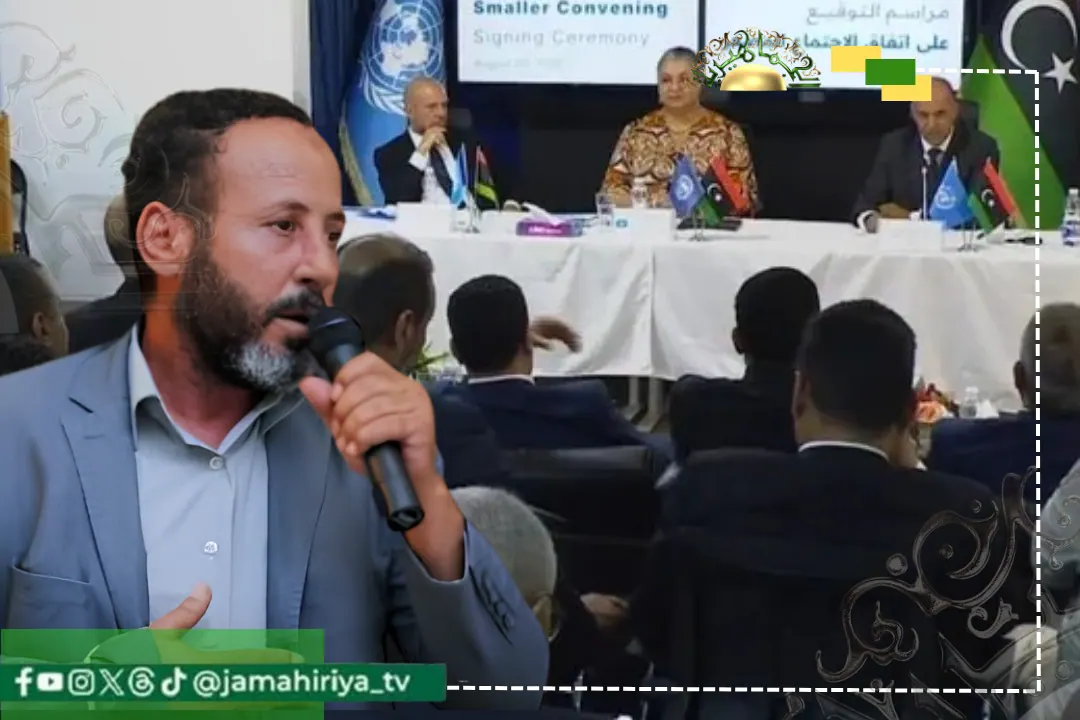
Libyan parliament member Abdul Moneem Al-Arifi stated that there are no objections within the House of Representatives regarding the participation of two members in the 4+4 committee. According to Al-Arifi, 103 representatives have already expressed their support for the agreement. The committee members are essentially House of Representatives members, holding official positions. Al-Arifi emphasized that disagreements over the selection process should not hinder the committee's work or the overall progress.
Al-Arifi highlighted that debates over committee selection mechanisms frequently occur within the House of Representatives and can sometimes cause delays or prolong the process. He stressed that there are no guarantees that the committee won't become a parallel political track to the House of Representatives and the State Council. Furthermore, there are concerns about granting the committee extensive powers, particularly regarding the Presidential Council and the executive authority in Libya.
The 4+4 committee is a significant development in Libya's ongoing efforts to address the country's challenges. The committee's formation aims to facilitate dialogue and cooperation among various stakeholders. However, Al-Arifi's statements underscore the complexities and potential roadblocks that lie ahead. The committee's effectiveness will depend on its ability to navigate these challenges and find common ground among its members.
According to Al-Arifi, the 14th constitutional amendment is the remaining step to incorporate the agreement into the constitutional declaration. However, achieving the required quorum of 111 representatives from the House of Representatives is proving difficult due to ongoing divisions within the council. This hurdle may significantly impact the committee's ability to move forward with its agenda.
The Libyan House of Representatives has been grappling with internal divisions and disagreements, affecting the country's progress toward stability. The 4+4 committee's success will depend on its ability to overcome these obstacles and find ways to work together effectively. Al-Arifi's comments highlight the complexities of the situation and the need for constructive dialogue.
The selection of committee members has been a contentious issue, with some members expressing concerns about the process. Al-Arifi emphasized that the debate over selection mechanisms should not hinder the committee's work. The committee's ability to navigate these challenges will be crucial in determining its effectiveness and impact on Libya's future.
The situation in Libya remains fluid, with various stakeholders working to address the country's challenges. The 4+4 committee's progress and the implementation of the constitutional amendment will be closely watched by Libyans and the international community. The outcome will have significant implications for the country's future and its efforts to achieve stability and prosperity.
Key points
- Libyan parliament member Abdul Moneem Al-Arifi stated that there are no objections within the House of Representatives regarding the participation of two members in the 4+4 committee.
- The 14th constitutional amendment is the remaining step to incorporate the agreement into the constitutional declaration.
- Achieving the required quorum of 111 representatives from the House of Representatives is proving difficult due to ongoing divisions within the council.