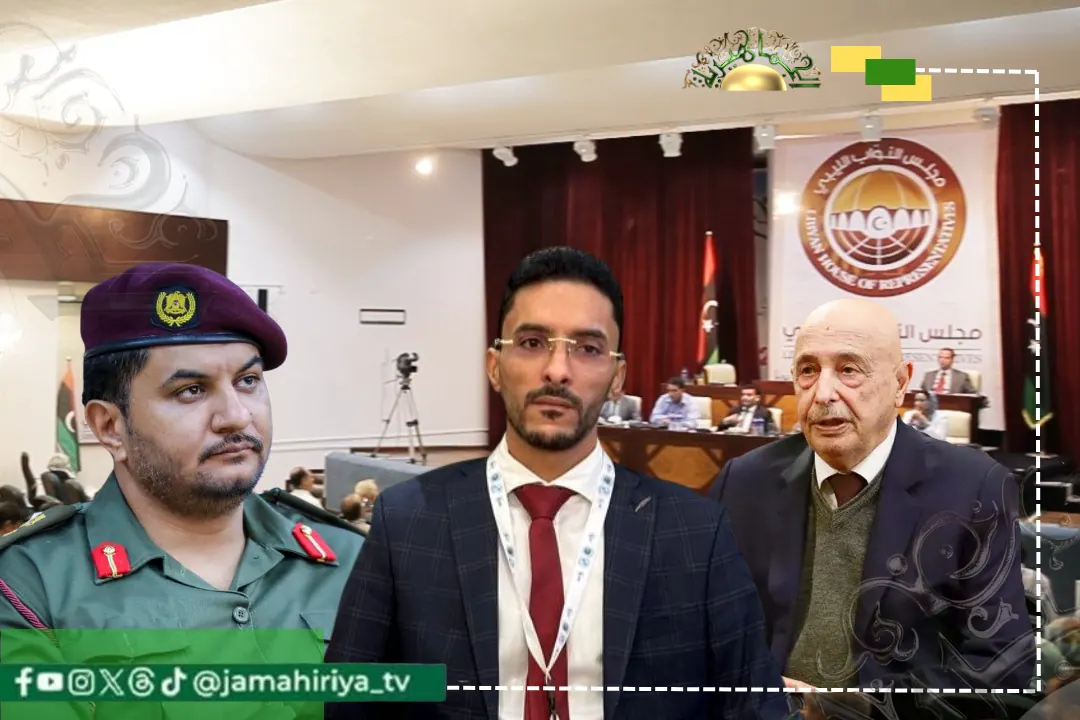
A session held in Benghazi on October 5, 2026, saw 98 out of 102 attending lawmakers vote in favor of changing the internal regulations, capping the term of the leadership body at 12 months. This development led to the election of a new leadership, with Abdul Naby Al-Abidi taking over as head of the council. The move was made possible by the support of Haftar, who has been seeking to gain favor with Washington and advance his plans for Libya.
The change in leadership has been met with controversy, with outgoing leader Aguila Saleh rejecting the session and its outcome, citing a lack of legal basis. Saleh's stance is shared by some within the council, including Ali Abuzriba, who called for a parallel session to be held in Tripoli. This development raises the possibility of two rival leaderships emerging within the legislative body.
Human rights advocate Ahmed Hamza has expressed concerns over the implications of this move on Libya's political process and elected institutions. Hamza warned that military intervention in civilian affairs is unacceptable and that the legitimacy of the so-called General Command is derived from the House of Representatives. He called for elections to be held to end the division and prevent further "political coups backed by the military".
The new leadership, comprising Abdul Naby Al-Abidi, Tariq Al-Ashtar, and Mesbah Duma, was elected in a session that some argue lacks a legal basis. The move is seen as a significant development in Libya's ongoing power struggle, with Haftar's influence playing a crucial role in shaping the country's political landscape.
The international community has been watching developments in Libya closely, with some expressing concerns over the potential for further instability. The country's presidential and parliamentary elections, scheduled for later this year, are seen as crucial in determining the country's future. However, with the current power struggle, there are concerns that the elections may be delayed or disrupted.
The Libyan Presidential Council's chairman, Mohamed Al-Menfi, has invited Saleh to participate in a meeting of heads of institutions scheduled for October 18, 2026, despite the election of a new leadership. This move has added to the confusion and uncertainty surrounding the country's political situation.
The developments in Libya have raised concerns over the potential for further conflict and instability in the country. With various factions vying for power, there are concerns that the situation may escalate, leading to a new wave of violence and displacement.
Key points
- The ousting of Aguila Saleh as head of Libya's parliament has sparked controversy and concerns over a potential political coup backed by military leader Khalifa Haftar.
- The new leadership has been elected, but its legitimacy is disputed by some, including Saleh, who argues that the session lacked a legal basis.
- The situation has raised concerns over the potential for further instability and conflict in Libya, with the international community watching developments closely.