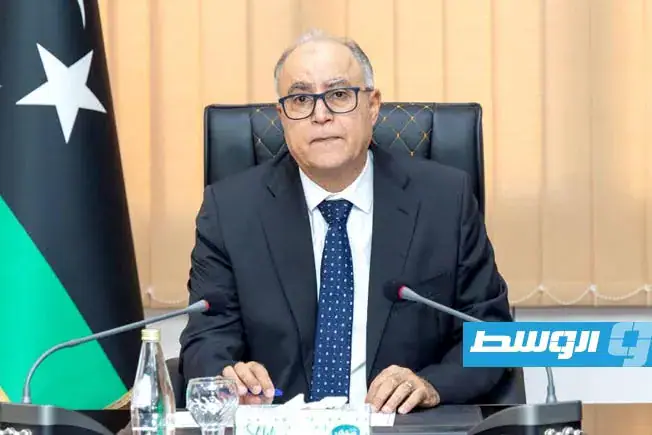
Libya's House of Representatives has announced an initiative to unify state institutions and renew political legitimacy. The initiative calls for the High Council of State to form a joint committee to develop the necessary political, constitutional, and legal arrangements for a political transition. This move comes amid recent security developments in the country, including an attack on a Russian ship in the port city of Benghazi.
The initiative aims to unify the country's institutions and pave the way for free and fair elections. The joint committee will be responsible for agreeing on a roadmap for the transition, including the unification of the executive authority, sovereign institutions, and financial and oversight bodies. The committee will also address issues related to the unity and independence of the judiciary.
The initiative was announced after a meeting of the House of Representatives' presidency in the city of Benghazi. The presidency emphasized the need for a national stance that rises to the level of historical responsibility and transcends political differences and narrow calculations. The initiative is based on existing constitutional and legal frameworks and aims to convert political agreements into enforceable amendments, legislation, and arrangements.
The joint committee will comprise members from each electoral district of both the House of Representatives and the High Council of State. The committee will be co-chaired by a member of the House of Representatives' presidency and a member of the High Council of State's presidency. The initiative does not represent a new dialogue or mediation mechanism but rather a way to implement existing agreements.
The initiative has been welcomed by the international community, with the UN Support Mission in Libya calling for support for the agreement and offering technical assistance. The mission emphasized the importance of respecting the constitutional and legal competences of Libyan institutions and promoting national ownership of the political process.
The recent attack on a Russian ship in Benghazi has raised concerns about the security situation in the country. The Ukrainian president, Volodymyr Zelensky, has claimed responsibility for the attack, which resulted in the sinking of a warship and damage to a cargo ship. The incident has sparked international condemnation, with Egypt denouncing the attacks on Benghazi.
The Libyan parliament's initiative aims to address the country's ongoing challenges, including the division of institutions and the threat of external interference. The success of the initiative depends on the cooperation of all parties involved, including the High Council of State and other Libyan stakeholders. The international community has a role to play in supporting the process and promoting a peaceful and stable transition in Libya.
Key points
- The Libyan parliament's initiative aims to unify state institutions and pave the way for free and fair elections.