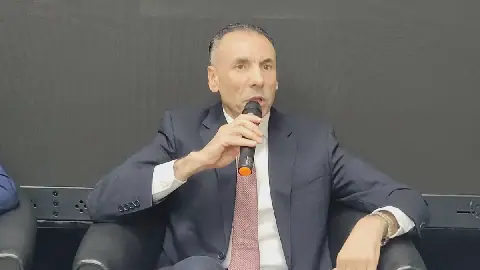
Mauritanian ex-minister Sidi Mohamed Ould Maham has sparked controversy with his recent article on the Western Sahara conflict. In the piece, he discussed the conflict between Morocco and the Polisario Front, a separatist movement fighting for the independence of Western Sahara. Ould Maham's comments were seen as brave by some, as he belongs to an elite group that usually considers the conflict a Moroccan-Algerian issue. His statements have been viewed as a departure from the usual cautious approach taken by Mauritanian officials when discussing the sensitive topic.
Ould Maham's article highlighted the complexity of the conflict and its high costs for both parties. He also discussed the geography of the Sahrawi Army's presence, mentioning specific locations in Western Sahara. By doing so, he confirmed the existence of liberated territories and refuted the notion of a buffer zone. Moreover, he stated that the Gergarat region is a liberated area, which is a significant claim. However, his comments also raised questions about his stance on the issue and his perceived neutrality.
One of Ould Maham's statements has sparked particular controversy: he claimed that the Sahrawi Army cannot cross into liberated territories without passing through Mauritanian territory. This assertion has been met with skepticism, and many are calling on him to clarify his position. The ex-minister's comments have been seen as contradictory, and his silence on certain aspects of the conflict has raised concerns. Ould Maham's article has sparked a lively debate in Mauritania and beyond.
Critics argue that Ould Maham overlooked the history of the conflict, including the 16 years of war fought by the Polisario Front against Moroccan occupation. They also point out that the Polisario Front, a movement with limited military capabilities, has historically faced significant challenges, including opposition from Morocco, France, the US, and Gulf countries. Despite these challenges, the Polisario Front has managed to sustain its fight for independence.
Ould Maham's assertion that Morocco's wall is sufficient to protect its soldiers and that the occupation can expand its territory at will has been disputed. Critics argue that this stance is inconsistent, as Morocco's military might does not necessarily translate to victory. Moreover, they contend that the wall is a symbol of weakness and defeat, rather than strength. The ex-minister's comments have sparked concerns about his understanding of the conflict.
Some have interpreted Ould Maham's call for a political solution as a coded message, urging Sahrawis in occupied cities to rise up and demand independence. This perspective views his comments as a necessary step towards resolving the conflict. However, others see his stance as ambiguous and unclear. The debate surrounding Ould Maham's article highlights the complexities of the Western Sahara conflict and the challenges of finding a solution.
Ultimately, Ould Maham's article has sparked a necessary conversation about the Western Sahara conflict and the need for a peaceful resolution. His comments have highlighted the complexities of the issue and the need for a nuanced understanding of the situation. As the conflict continues, it remains to be seen how Ould Maham's stance will evolve and what impact it will have on the broader debate.
Key points
- Ould Maham's comments on Western Sahara have sparked controversy and debate in Mauritania and beyond.
- Critics argue that Ould Maham overlooked the history of the conflict and the challenges faced by the Polisario Front.
- The ex-minister's stance has been seen as ambiguous and unclear by some, while others view it as a necessary step towards resolving the conflict.