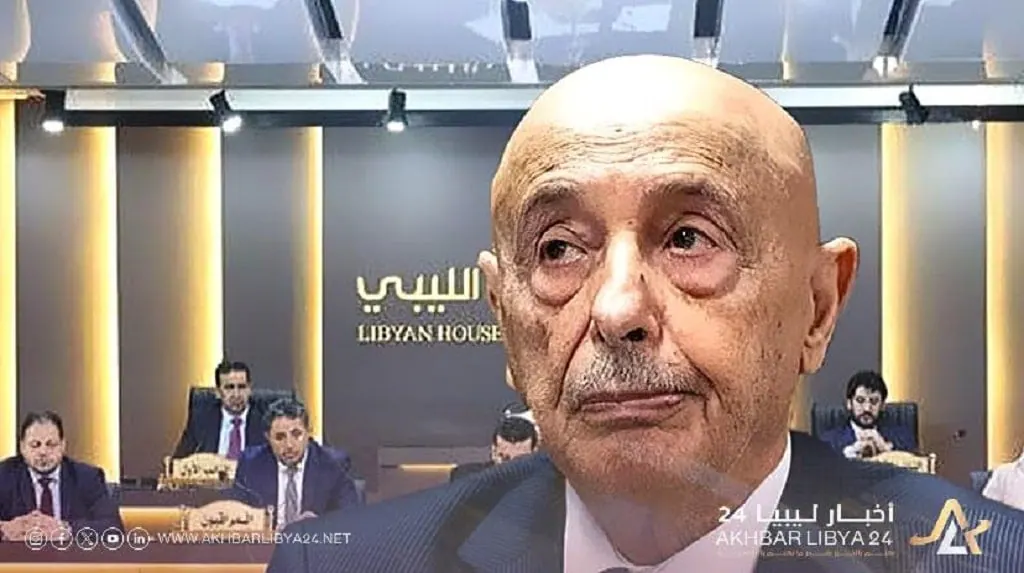
In a significant development, Libya's parliament has voted to remove its current leadership, paving the way for a new leadership to be elected. The move comes amid ongoing political divisions and institutional instability in the country. According to sources, 102 out of 120 parliament members attended the session, which was held in accordance with the parliament's internal regulations. The session was convened following a request from 88 members.
The parliament's internal regulations state that two sessions are to be held weekly on Mondays and Tuesdays. However, the regulations also allow for a session to be convened at the request of a number of members. The new development could potentially lead to a resolution of the country's ongoing political crisis. The parliament's decision to oust its leadership has been seen as a significant step towards resolving the country's institutional instability.
The ousted leadership, headed by Aqila Saleh, has been a major player in Libya's politics for several years. However, the parliament's decision to remove them has been seen as a significant shift in the country's power dynamics. According to Essam Al-Jahani, a member of parliament, the session has stripped Saleh of his position, and any statements issued by him in his former capacity will no longer be valid.
The parliament has also voted to amend the 2014 law, which sets the parliamentary term at 12 months. The amendment was approved by 98 out of 102 members present in the session. The new development is expected to lead to a new leadership being elected, which will be responsible for guiding the country towards stability and elections.
Following the amendment, the parliament turned its attention to the issue of its leadership. The session concluded with the termination of the current leadership's term. According to Khalifa Al-Daghari, a member of parliament, the management of the sessions will be carried out temporarily by a body headed by the oldest member of parliament, assisted by the youngest member as secretary.
The new development has significant implications for Libya's politics. The country has been plagued by institutional instability and divisions for several years. The parliament's decision to oust its leadership has been seen as a major step towards resolving the country's political crisis. However, the road ahead remains uncertain, with many challenges still to be overcome.
The Libyan citizen is eagerly awaiting the outcome of the parliament's decision. Any change in the parliament's leadership will only be meaningful if it leads to more effective legislative performance and clear positions on the country's pressing issues. The parliament's decision has raised hopes that the country may finally be able to move towards stability and elections.
Key points
- The Libyan parliament's decision to oust its leadership could pave the way for new elections and a resolution to the country's ongoing political crisis.