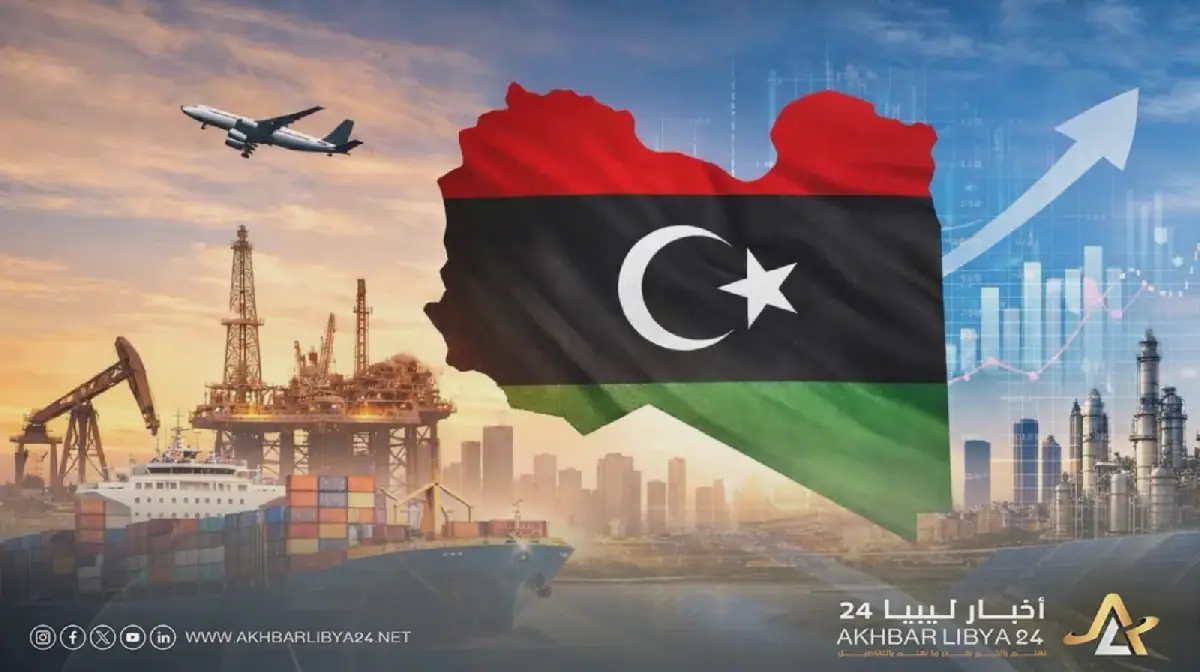
According to a report by Bloomberg, Libya's oil exports declined to 1.19 million barrels per day in October, marking the lowest level since June. This development is seen as an indicator of the ongoing challenges facing the country's oil sector, despite its crucial role as the primary source of state revenue. The oil sector is vital to Libya's economy, and any decline in exports has significant implications for the country's financial flows.
The decline in oil exports is particularly significant for Libya's economy, which heavily relies on oil revenues to finance public spending and provide foreign currency. The drop in exports is not solely attributed to a decrease in production but also to factors such as transportation, storage, and loading operations at ports, as well as operational conditions that may disrupt the flow of crude from fields to export terminals.
Libya's oil sector has experienced several operational disruptions in recent months, including the closure of a valve on the Hamada-Zawiya crude transportation line in September. This led to a halt in oil flows from the Hamada, Thalatha, and NC5 fields, with warnings from the National Oil Corporation about the potential declaration of a force majeure situation if the closure persisted.
The Sharara oil field, Libya's largest, also faced disruptions in September due to the closure of a valve on the pipeline leading to the Zawiya port. This resulted in a reduction in the field's production before a gradual restoration of flows. These developments highlight the impact of infrastructure stability and operational efficiency on Libya's oil exports.
The decline in oil exports to 1.19 million barrels per day presents a challenge for the oil sector to maintain consistent supplies, especially given the continued reliance on crude oil to finance the public budget. Libya's ability to increase exports is contingent upon stabilizing operations in oil fields, pipelines, and ports, as well as addressing operational bottlenecks.
The ongoing challenges facing Libya's oil sector have significant implications for the country's economy and its ability to generate revenue. The sector's stability is crucial for the country's financial recovery and growth. Efforts to address the disruptions and restore stability to the sector are essential to ensure a consistent flow of oil exports.
The situation in Libya's oil sector is being closely monitored by industry stakeholders and analysts, who are assessing the potential impact on global oil markets. The country's oil production and export levels are critical factors in determining the country's economic trajectory and its ability to meet its financial obligations.
Key points
- Libya's oil exports dropped to 1.19 million barrels per day in October, the lowest level since June.
- The decline in exports is attributed to various factors, including transportation, storage, and loading operations, as well as operational conditions.
- The ongoing challenges facing Libya's oil sector have significant implications for the country's economy and its ability to generate revenue.