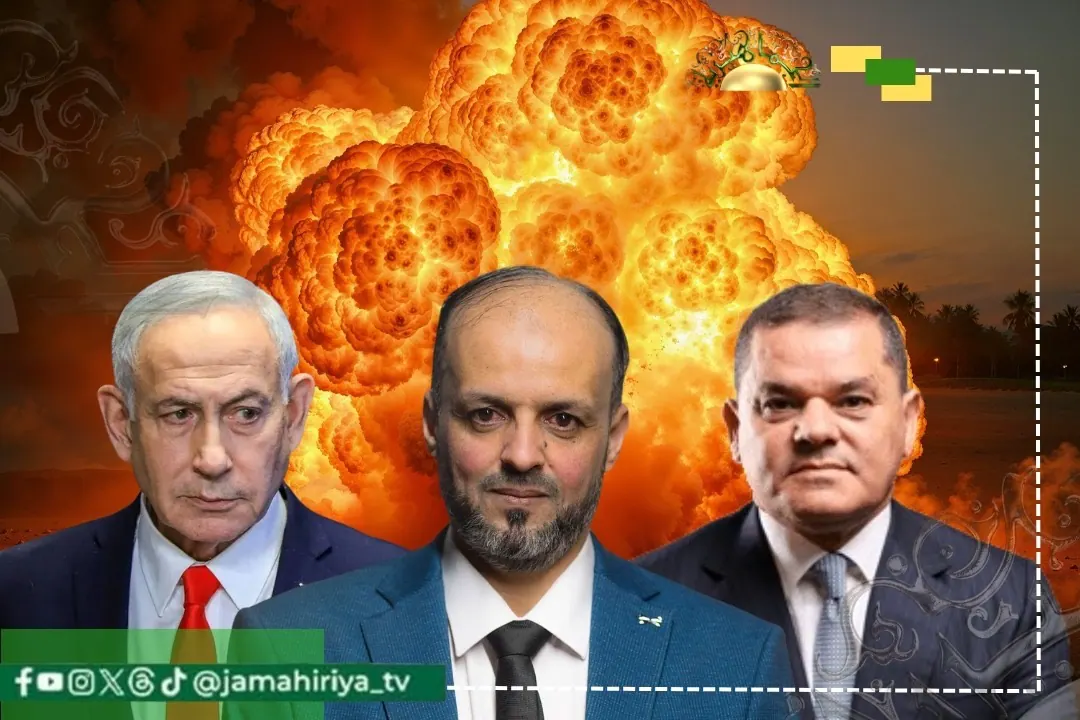
Libyan political analyst Omar Bou Saeed has expressed concerns that the country's normalization government may be compromising national security by potentially allowing Israeli intelligence activities to operate within Libya. Bou Saeed believes that the government's behavior over the past few years suggests a willingness to engage in security and political arrangements with Israel in exchange for political support and legitimacy. This development has raised questions about the government's priorities and potential implications for Libya's relationships with other countries.
Bou Saeed cited several instances where the government, led by Prime Minister Abdul Hamid al-Dbeibah, has prioritized securing international legitimacy over national interests. These include the handover of Abu Ajila al-Mirimy to American authorities and the extradition of Egyptian terrorist Mahmoud Fathi to Egyptian authorities. Additionally, the government has also handed over Jalal al-Bakoush, a suspect in a US embassy case, to American authorities. These actions have led Bou Saeed to speculate that the government may be willing to overlook or facilitate Israeli intelligence activities in Libya.
The analyst also pointed to a meeting between former Libyan Foreign Minister Najla al-Mangoush and Israeli Foreign Minister Eli Cohen in Rome in August 2023. This high-level encounter has sparked concerns about the potential for Libya to establish formal relations with Israel. Bou Saeed argued that such a development would be a significant departure from Libya's historical stance on the Israeli-Palestinian conflict and could have far-reaching consequences for the region.
Bou Saeed also discussed the presence of Hamas in Libya, stating that the movement does not have a significant presence in the country. He suggested that while there may be some individuals affiliated with Hamas in the western region, there is no evidence of a large-scale or organized presence. This assessment contradicts recent media reports suggesting that Israel has been targeting Hamas elements in Libya.
The analyst believes that these reports may be intended to boost the electoral prospects of Israeli Prime Minister Benjamin Netanyahu. Bou Saeed emphasized that his concerns about potential Israeli infiltration in Libya are based on an analysis of the government's past behavior and not on direct evidence of current cooperation between Libyan and Israeli intelligence agencies.
Bou Saeed's comments have sparked a national debate about the government's priorities and its handling of Libya's relationships with other countries. The government has yet to respond to these allegations, but the issue is likely to remain a contentious topic in Libyan politics for some time. The country's complex history and geography make it a challenging environment for navigating international relationships.
The situation remains uncertain, with many questions still unanswered. As Libya continues to navigate its relationships with other countries, the government's actions will be closely watched by both domestic and international observers. The country's future trajectory will depend on its ability to balance competing interests and priorities while maintaining national security and sovereignty.
Key points
- Analyst Omar Bou Saeed warns of possible Israeli infiltration in Libya through normalization government.