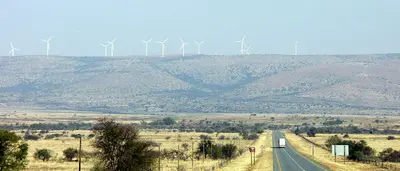
The Cookhouse Wind Farm Community Trust (CWFCT) is set to establish a commercial project in the Eastern Cape, aimed at driving long-term economic sustainability for local communities. The trust holds a 25% stake in the Renewables Cookhouse Wind Farm and will develop the project through its newly formed profit-making subsidiary, CWFCT Holdings. The initiative seeks to diversify revenue streams and secure community funding ahead of 2034, when the trust's initial 20-year Power Purchase Agreement (PPA) with the national grid is set to expire.
The proposed masterplan for the 4ha greenfield development features three distinct zones - a technical skills and enterprise hub, a hospitality, wellness and retail quarter, and a conferencing, learning and artisan village. The project is structured to directly benefit residents across four key Eastern Cape towns - Adelaide, Bedford, Cookhouse and KwaNojoli (Somerset East). The development is expected to have a positive impact on the local economy and provide new opportunities for residents.
To address potential regulatory concerns, CWFCT chair Fezeka Mkile has established strict governance safeguards to align with legal and auditor guidelines. The trust has confirmed that it is possible for a nonprofit entity to manage a commercial enterprise, and guidelines have been given to ensure that profits derived from the project are directed to socioeconomic development programmes. This will ensure that the project benefits the local community.
The project's technical rollout is underway, with initial planning and site approvals already completed. Mudd Property Developers chief executive Carmen Antonie confirmed that the project is expected to be completed within 23 months, with 18 months allocated for construction. The development will incorporate sustainable green building practices to operate independently of municipal utility burdens.
The project will feature a hybrid solar energy system and will be completely off-grid in terms of water, sewage and waste management systems. This will ensure that the development has a minimal impact on the environment and can operate sustainably in the long term. The project's focus on sustainability is expected to set a new standard for developments in the region.
Anthem social performance practitioner Thandaza Theka highlighted the urgent need to align the project's technical training offerings with the real skills demands of the local renewable energy sector. Theka noted that local residents remained largely excluded from technical employment due to a severe skills shortage, with each wind farm employing an average of 21 technical personnel per site, but roughly 85% of these workers recruited from outside the region.
The Cookhouse Wind Farm Community Trust's project is expected to have a significant impact on the local economy and provide new opportunities for residents. The project's focus on technical skills and enterprise development will help to address the skills shortage in the renewable energy sector and provide a sustainable future for local communities. The project's success will depend on effective implementation and management.
Key points
- The Cookhouse Wind Farm Community Trust is developing a 4ha greenfield project to drive economic sustainability for local Eastern Cape communities.
- The project features a technical skills and enterprise hub, a hospitality, wellness and retail quarter, and a conferencing, learning and artisan village.
- The project's focus on sustainability and technical skills development is expected to have a positive impact on the local economy and provide new opportunities for residents.