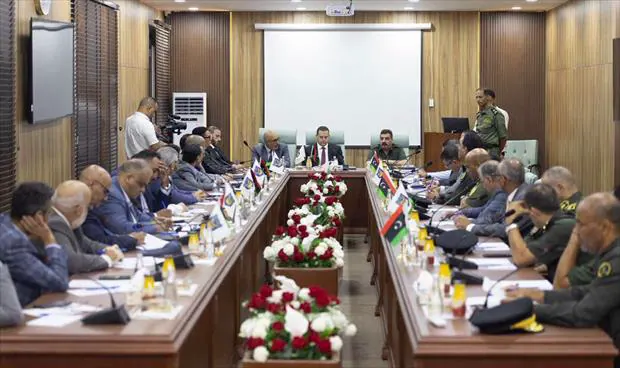
The Libyan government, led by Prime Minister Hamad, has convened a meeting to discuss the implementation of a unified customs system, known as "Baraq," and standardized procedures at border crossings. The meeting, which took place on October 1, 2026, in Benghazi, was attended by various ministers, officials, and representatives from several institutions. The goal is to streamline and regulate the movement of individuals and goods, enhancing control and efficiency.
The meeting focused on the overall framework of the "Baraq" system and the harmonization of procedures among agencies operating at border crossings. Participants agreed to develop a joint action plan, outlining the responsibilities and tasks of each entity, as well as mechanisms for data exchange and unified procedures. This aims to reduce bureaucracy, increase control efficiency, and promote transparency in border management.
A legal committee will be formed to review existing legislation, regulations, and decisions governing border operations, including a cabinet decision (No. 588). The committee will prepare proposals for necessary amendments to keep pace with digital transformation. The review will cover procedures for prior approval of imported goods, radiation scanning, and control of food, medicine, and imported goods.
The meeting also addressed practical issues related to border crossing, particularly at the Amasadd border crossing. Discussions included procedures for the entry of ambulances and vehicles, as well as the activation of the Libyan Automobile Club in coordination with relevant authorities. The attendees also examined international and regional agreements governing border crossing and trade exchange with neighboring countries.
The Ministry of Foreign Affairs and International Cooperation expressed its readiness to provide diplomatic and coordinatory support for files related to concerned countries, which will help implement the "Baraq" system and fulfill Libya's obligations under bilateral and regional agreements. The implementation of the system is expected to improve border management and enhance cooperation with neighboring countries.
Key aspects of the "Baraq" system include the automation of customs procedures, improved data exchange, and enhanced control measures. The system is expected to reduce smuggling, increase revenue, and improve the overall efficiency of border operations. The government has emphasized its commitment to implementing the system, which will help to strengthen Libya's borders and improve the business environment.
The implementation of the "Baraq" system and unified border procedures is a significant step towards improving Libya's border management and trade facilitation. The government aims to enhance transparency, efficiency, and control at border crossings, which will have a positive impact on the country's economy and trade relations with neighboring countries.
Key points
- Libya's government is exploring a unified customs system and standardized procedures at border crossings to regulate the movement of people and goods.
- The "Baraq" system aims to automate customs procedures, improve data exchange, and enhance control measures.
- The implementation of the system is expected to improve border management, increase revenue, and enhance cooperation with neighboring countries.