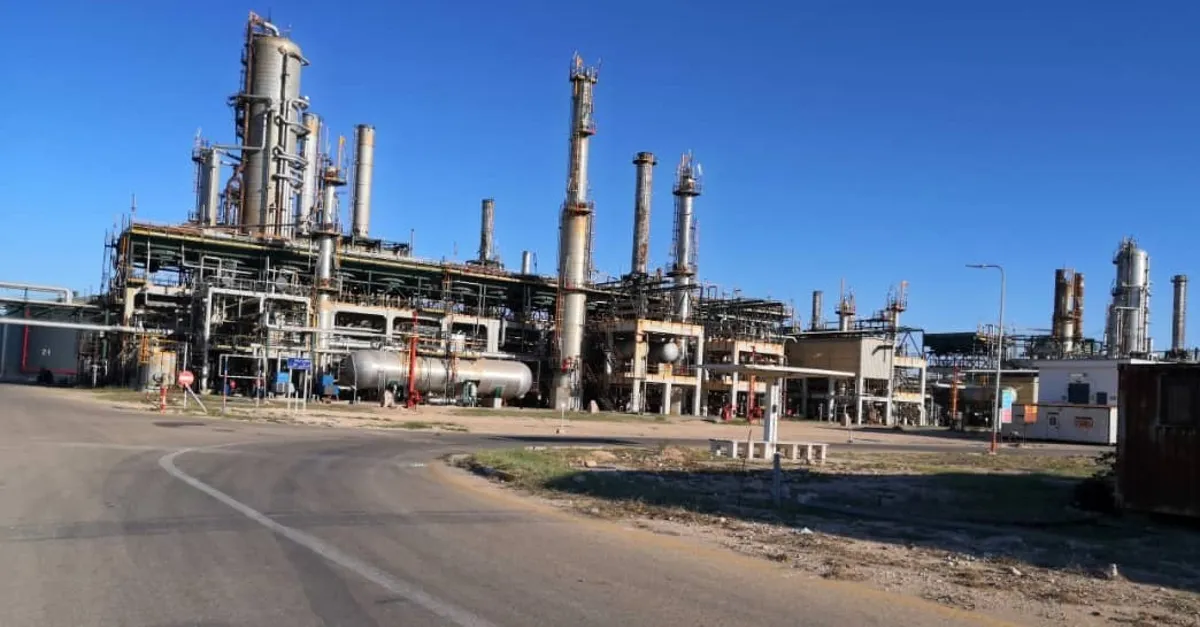
Libya's National Oil Corporation (NOC) has warned of potential technical, operational, and security risks due to the continued closure of the main gate at the Zawiya refinery. In a statement, the NOC said its board of directors may declare a 'force majeure' situation within the next few hours if the valve at the Hamada area on the Sharara crude pipeline is not opened. This move aims to protect the corporation's assets and avoid financial penalties.
The dispute began when a group of personnel from the Petroleum Facilities Guard closed the main gate at the Zawiya refinery and the gate at the Brega Oil Marketing Company. This prevented users, technicians, and night shift workers from entering the premises, disrupting operations. Although the Brega gate was partially reopened later, the main gate at Zawiya remained closed, hindering a full and safe resumption of operations.
The NOC stated that the closure coincides with the ongoing shutdown of valve number 7 in the Hamada area by members of the Petroleum Facilities Guard and an armed group. This has resulted in the shutdown of the crude pipeline from the Sharara field, operated by Akakus Oil Operations, to the Zawiya port. The corporation estimates that the daily loss due to the pipeline's shutdown is around 130,000 barrels.
The NOC warned that continued closure of the oil complex poses a significant threat to the facilities and equipment, potentially causing damage and disrupting refining operations and oil supplies. This situation could have a direct impact on fuel supplies, state revenues, and the import and distribution of petroleum products in the local market.
The corporation urged those responsible for the closure to immediately lift the blockade and allow technical, operational, and administrative teams to perform their duties. The NOC also called on relevant authorities and security agencies to assume their responsibilities in protecting oil facilities and ensuring the safe movement of workers.
The NOC's board of directors is working on declaring a 'force majeure' situation within the next few hours if the valve is not opened. This step aims to protect the corporation's assets and partners and avoid imposing financial penalties on the Libyan state.
The ongoing dispute has significant implications for Libya's oil production and economy. The situation remains volatile, with concerns about potential damage to facilities, disruption of oil supplies, and financial losses. The international community is closely monitoring developments, and efforts are being made to resolve the crisis peacefully.
Key points
- The Libyan National Oil Corporation may declare 'force majeure' due to the ongoing closure of the Zawiya refinery's main gate and a valve on the Sharara crude pipeline.
- The closure has resulted in a daily loss of around 130,000 barrels of oil.
- The situation poses significant risks to Libya's oil production, economy, and energy supplies.