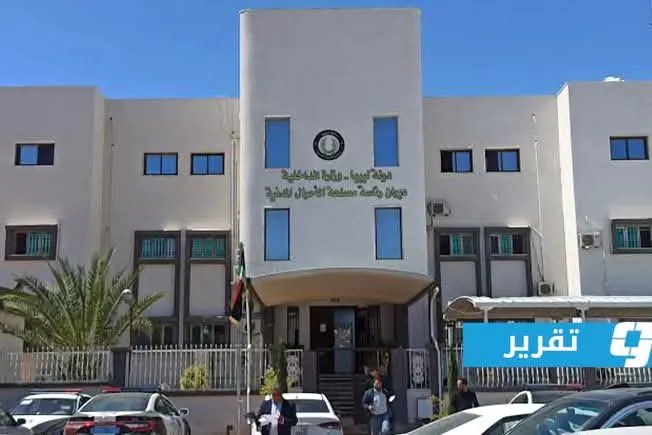
Libya is grappling with a growing issue of fake national IDs, which has led to significant financial losses and security concerns. According to recent reports, over 89,000 fake national IDs have been identified, with many more suspected to be in circulation. The issue has been ongoing for several years, with the problem escalating in recent times. The Libyan government has launched investigations and cracked down on those involved in the scam.
The issue of fake national IDs in Libya came to light in August 2022, when the country's Public Prosecutor, Siddiq Al-Sour, announced that 88,819 incorrect national IDs had been identified. These IDs had been used to obtain approximately 208 million dinars in benefits and services. An investigation revealed that 63,986 of these IDs were entirely fabricated, while 48,000 had been issued to non-Libyans. The misuse of these IDs has had far-reaching consequences, including the payment of salaries to 8,690 individuals who do not exist in the civil registry.
Experts point to weaknesses in Libya's civil registry system as a major contributor to the problem. The system, which was introduced in 2011, aimed to create a unified national ID for all citizens. However, the system has been criticized for its lack of biometric data, such as fingerprints or iris scans, making it vulnerable to manipulation. The use of outdated laws, which date back to 1953, has also hindered efforts to combat the issue. These laws were not designed to address the complexities of modern cybercrime.
The consequences of fake national IDs in Libya extend beyond financial losses. The issue has significant implications for national security, as it allows individuals to obtain sensitive information and access restricted areas. The IDs have also been used to manipulate the electoral process, with 3,829 fake voting cards identified in the 2021 elections. The use of fake IDs has also led to the issuance of passports to non-Libyans, which has resulted in Libyan citizens being denied visas to travel abroad.
Human rights activists and experts have expressed concern about the scale of the problem and its impact on Libyan society. Thraya Al-Tuwaili, a human rights activist, argues that the issue is a symptom of a broader problem of corruption and lack of oversight in the country. She also points to the economic and social factors that drive individuals to engage in this type of activity, including poverty and unemployment. Al-Tuwaili emphasizes the need for a comprehensive solution to address the root causes of the problem.
The issue of fake national IDs in Libya has also raised concerns about the country's demographic makeup. The use of fake IDs has allowed individuals to access services and benefits intended for Libyan citizens, which has led to concerns about the impact on the country's social and economic fabric. Experts argue that the issue must be addressed through a combination of technical and legislative measures, including the introduction of biometric data and more effective oversight mechanisms.
Libyan authorities have pledged to take action to address the issue of fake national IDs. The Public Prosecutor's office has launched a series of investigations and prosecutions, and new measures have been introduced to strengthen the civil registry system. However, experts argue that more needs to be done to address the root causes of the problem and to prevent similar issues from arising in the future. The issue of fake national IDs in Libya serves as a reminder of the challenges faced by countries in the region in maintaining effective and secure systems of identification.
Key points
- Over 89,000 fake national IDs have been identified in Libya, posing significant security risks and financial losses.
- Weaknesses in Libya's civil registry system, including a lack of biometric data, have contributed to the problem.
- The issue of fake national IDs in Libya has significant implications for national security, the electoral process, and the country's demographic makeup.