The Libyan House of Representatives has issued Law No. 3 of 2026, which freezes Law No. 27 of 2023 on the election of the House of Representatives. The new law, which was published on September 27, 2026, reinstates Law No. 10 of 2014, which governed the election of the House of Representatives during the transitional period. This move is seen as a step towards implementing the UN-brokered agreement aimed at resolving the country's political crisis.
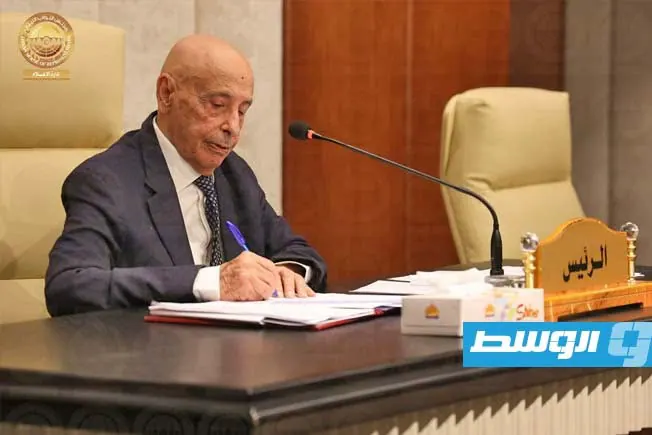
The decision was made during a session chaired by House of Representatives Speaker Aguila Saleh in the city of Benghazi on September 14, 2026. The law was not voted on in a formal session, and its text was not published on the House of Representatives' media platforms. The move is part of efforts to implement the agreement signed on August 30, 2026, by a small group of Libyan leaders, known as the "4+4" committee.
The agreement aims to reconstitute the High National Elections Commission and amend the legal framework for presidential and parliamentary elections. The House of Representatives has adopted the agreement, which has been welcomed by the UN Support Mission in Libya. However, the High Council of State has not yet voted on the agreement, citing concerns that the committee was not representative of the council.
The High Council of State has emphasized that any changes to the electoral laws must be made through a consensual and institutional framework. The council's stance is that the electoral process should be based on a comprehensive and agreed-upon legal framework. The Libyan parliament's decision to freeze the law on parliamentary elections has been seen as a positive step towards resolving the country's political crisis.
The move has also been seen as a way to address the concerns of various Libyan stakeholders, including political parties and civil society organizations. The law allows parties to field individual candidates in all electoral districts. The decision has been welcomed by some Libyans, who see it as a step towards stability and progress in the country.
However, the decision has also been criticized by some who argue that it undermines the country's democratic process. The UN Support Mission in Libya has called for a swift implementation of the electoral process, based on a comprehensive and agreed-upon legal framework. The international community is closely watching the developments in Libya, where a prolonged political crisis has had significant humanitarian and economic impacts.
The Libyan House of Representatives' decision to freeze the law on parliamentary elections is a significant development in the country's efforts to resolve its political crisis. The move is seen as a step towards implementing a UN-brokered agreement and addressing the concerns of various Libyan stakeholders. The international community is closely watching the developments in Libya, where a peaceful and stable transition to democracy remains a top priority.
Key points
- The Libyan House of Representatives has frozen a law on parliamentary elections, reinstating a 2014 law that governed the election of the House of Representatives during the transitional period.