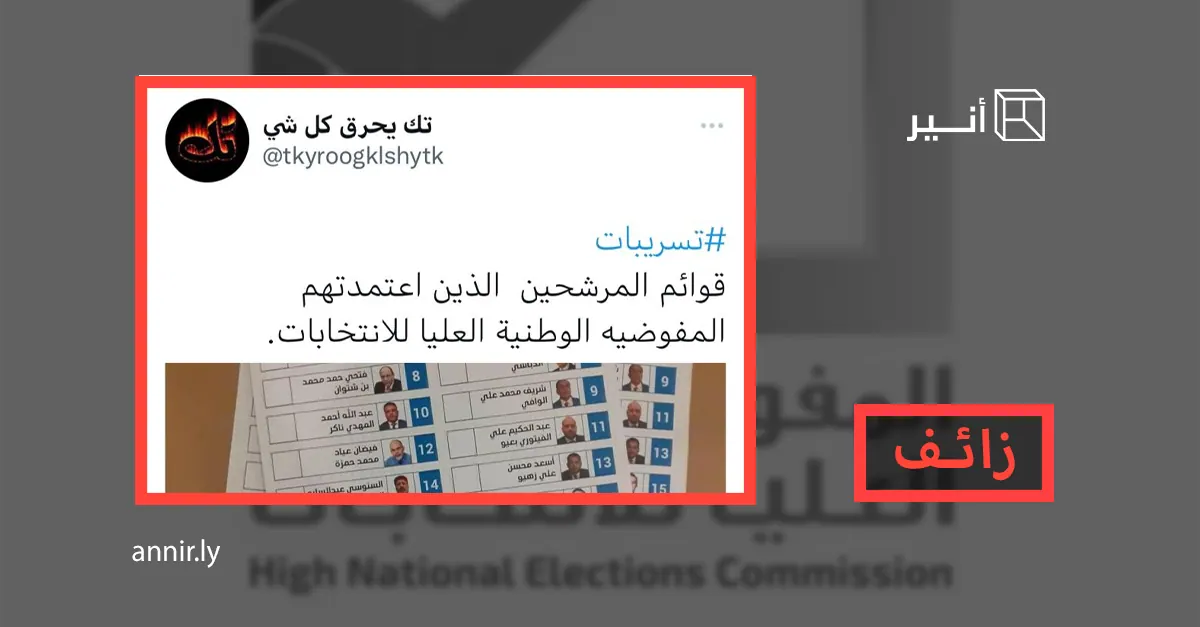
The High National Elections Commission in Libya has denied the authenticity of a ballot paper circulating on social media, claiming it to be the final list of presidential candidates. According to Annir, an investigation was conducted after the news spread, and it was found that the image was of a trial ballot paper for internal use. The commission stated that the design of the final ballot paper would be revealed after the announcement of the final list of candidates.
The fake news spread rapidly on social media platforms, with various pages and websites publishing the image and claiming it to be the final ballot paper. However, the commission quickly moved to dispel the rumors, stating that the image was not of an official document. This incident highlights the need for fact-checking and verification of information, especially during sensitive periods such as elections.
The High National Elections Commission in Libya has been working to ensure the integrity of the electoral process. The commission has been conducting voter registration, candidate registration, and other preparations for the elections. The incident of the fake ballot paper highlights the challenges faced by the commission in maintaining the integrity of the electoral process.
The spread of fake news and misinformation has become a significant concern in Libya, particularly during sensitive periods such as elections. The incident highlights the need for citizens to be cautious when consuming information on social media and to verify information through reputable sources.
Annir, a fact-checking organization, has been working to identify and debunk fake news in Libya. The organization has been working with various partners to promote fact-checking and media literacy in the country. The incident highlights the importance of such initiatives in promoting a culture of critical thinking and media literacy.
The incident of the fake ballot paper has raised concerns about the potential for manipulation of public opinion through social media. The High National Elections Commission in Libya has urged citizens to rely on official sources of information and to be cautious of fake news and misinformation.
The commission has reassured citizens that it is working to ensure the integrity of the electoral process and that it will take all necessary measures to prevent the spread of fake news and misinformation. The incident highlights the need for continued vigilance and fact-checking efforts to ensure the integrity of the electoral process.
Key points
- The High National Elections Commission in Libya denied the authenticity of a ballot paper circulating on social media.
- The fake ballot paper was found to be a trial ballot paper for internal use.
- The incident highlights the need for fact-checking and verification of information, especially during sensitive periods such as elections.