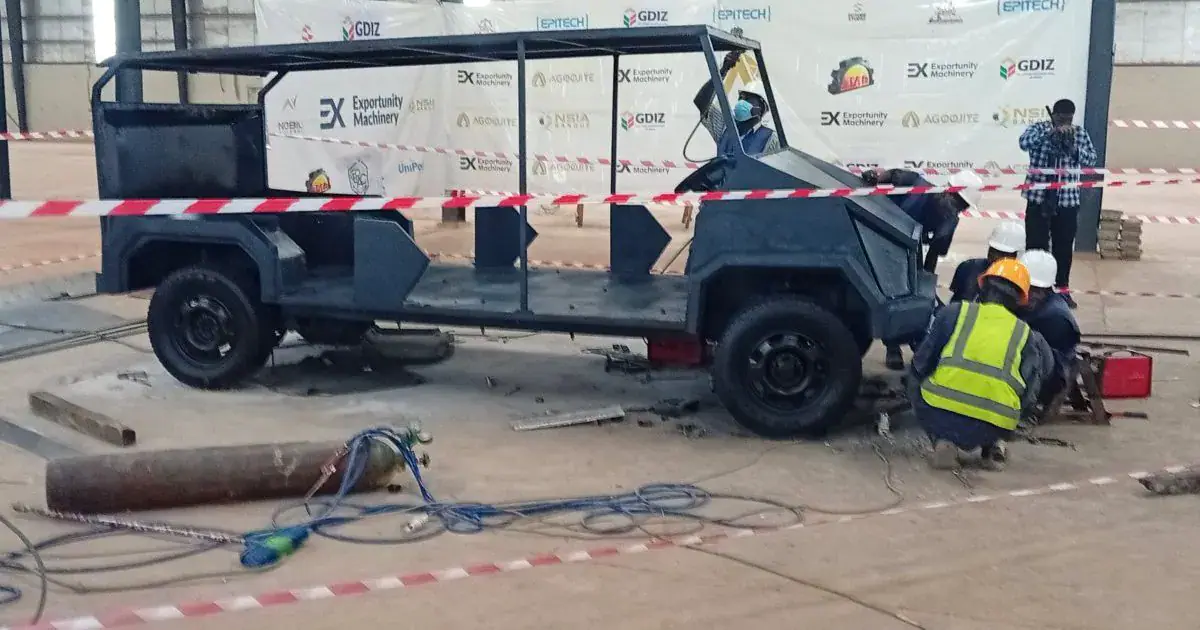
The Zone industrielle de Glo-Djigbé (GDIZ) in Benin is now home to a prototype electric bus, AGOOJIYÉ, developed by Exportunity Machinery with support from the Société d’investissement et de promotion de l’industrie du Bénin (SIPI-Bénin). This project aims to showcase local competence in a sector heavily reliant on imported technology and spare parts. The electric bus is designed to meet the transportation needs of the industrial zone's personnel.
The project was presented to the press on November 9, 2026, with a conference and a visit to the workshop where the development is ongoing. According to Létondji Béhéton, director-general of SIPI-Bénin, this initiative aligns with the innovation and industrial transformation drive within the GDIZ. The project promotes less polluting solutions, consistent with the challenges of energy transition. AGOOJIYÉ addresses a specific need, as the GDIZ currently employs over 25,000 workers, posing a logistical challenge for daily commutes.
The development process began on June 10, 2026, with a challenge that brought together 85 students from various technical schools and institutions. These young individuals worked on the design, technical and electrical diagrams of the vehicle. Several organizations, including Africa Design School, Epitech, and Future Studio, contributed to the project. The École polytechnique d’Abomey-Calavi (EPAC) also played a significant role in the project, with students and teachers working on the bodywork and verification of diagrams.
The assembly of the first vehicle structures involved engineers, students from EPAC, and welders who worked together for twelve days. The project then moved to a hangar provided by the GDIZ, where mechanics, welders, and electricians continued the assembly and finishing work. As of November 9, the bodywork had an execution rate of 98%, while the mechanical components had a rate of 96%.
The next steps include integrating the electric motor, batteries, electrical circuit, interior fittings, and finishing touches. According to the presented schedule, the first driving tests within the GDIZ are set to begin on November 23, 2026. The vehicle is designed to accommodate eight people, including the driver, with a designated space for a passenger with reduced mobility.
Exportunity Machinery plans to produce around 680 vehicles to meet the transportation needs of the industrial zone. Potential specific circuits, including tourist routes, may also be explored, such as during the Vodun Days or along the Route des Pêches.
The electric bus, AGOOJIYÉ, symbolizes what can be achieved in Benin in terms of engineering. The project demonstrates that Benin has the necessary human resources to develop its own industrial solutions.
Key points
- The development of AGOOJIYÉ showcases local competence in electric vehicle production.
- The project aims to provide a less polluting transportation solution.
- The electric bus is set to undergo its first driving tests on November 23, 2026.
Reporting sources
- Un bus électrique Made in Bénin prend forme à la GDIZ · 24 Heures au Bénin