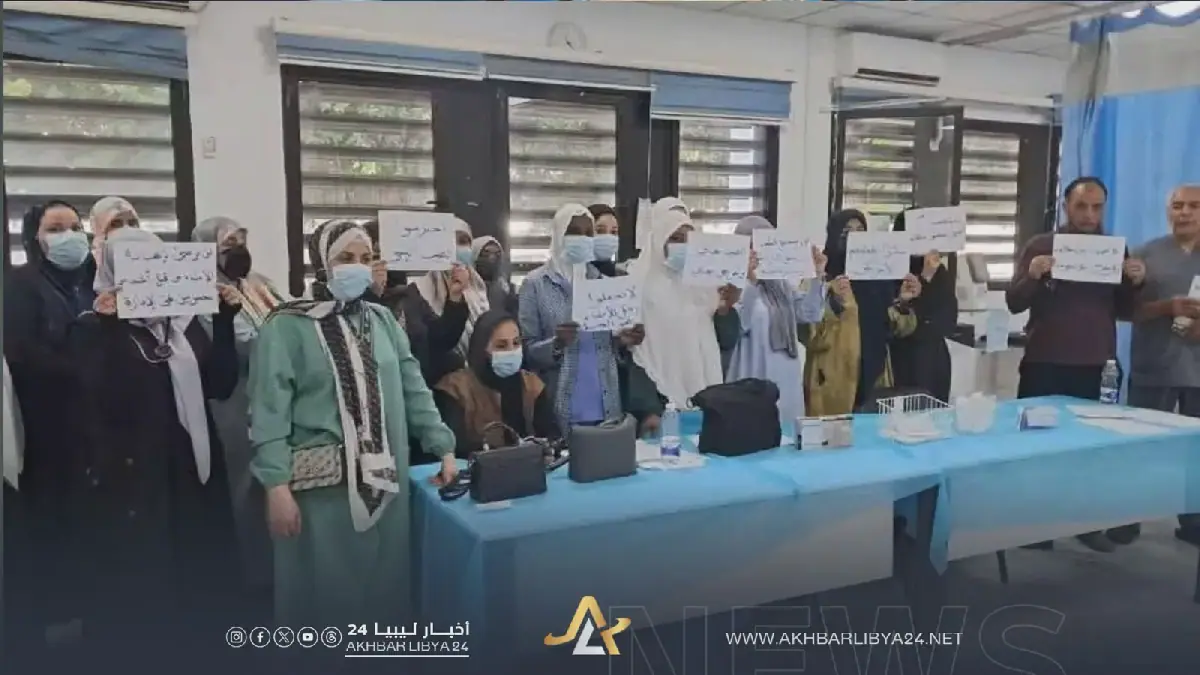
Protests within Libya's healthcare sector have intensified, with workers demanding better working conditions, unpaid salaries, and essential medical supplies. The emergency department at Tripoli's university hospital was closed, with exceptions for critical cases. Protesters raised slogans rejecting the blame for the healthcare system's deterioration, calling on authorities to take responsibility for providing resources and improving working conditions.
The protests reflect a widening gap between the needs of healthcare institutions and the reality faced by workers. The crisis extends beyond a shortage of medicines and medical equipment, with workers also demanding better salaries and financial benefits. A demonstration was planned outside the Prime Minister's office in Tripoli to press for their demands.
The healthcare sector's crisis has been highlighted by the testimony of American doctors who visited Tripoli's medical hospital to perform heart surgeries on children. They reported a shortage of anesthesia and surgical supplies, equipment malfunctions, and poor infrastructure. One doctor reportedly spent $400 of his own money to purchase essential supplies.
The protests and testimonies have raised questions about the ability of healthcare institutions to provide basic medical care. The situation has been attributed to a lack of resources, poor management, and corruption. Workers are calling for fundamental reforms to address the sector's problems.
The healthcare crisis has significant implications for the country's healthcare system. The situation requires a comprehensive solution that addresses the needs of healthcare workers, patients, and institutions. The protests and demonstrations are expected to continue until the authorities respond to the workers' demands.
The Libyan government's response to the crisis will be crucial in determining the future of the healthcare sector. The sector's problems have been building for years, and a failure to address them could have severe consequences for the country's healthcare system.
Key issues, including unpaid salaries, a shortage of medical supplies, and poor working conditions, must be addressed to resolve the crisis. The protests and demonstrations are a clear indication of the sector's problems and the need for urgent reform.
Key points
- Libyan healthcare workers are protesting over unpaid salaries, poor working conditions, and a shortage of medical supplies.
- The protests have led to the closure of the emergency department at Tripoli's university hospital.
- The crisis has significant implications for the country's healthcare system, with workers calling for fundamental reforms to address the sector's problems.