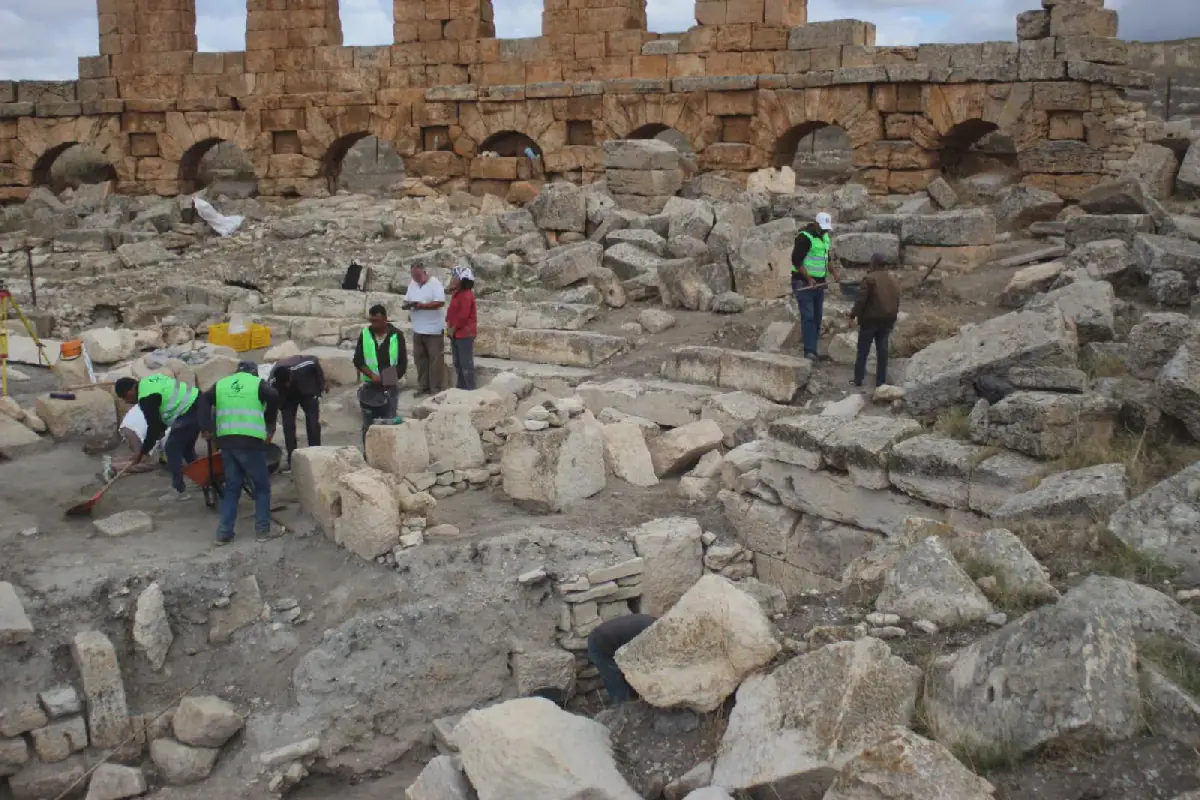
A recent archaeological excavation at the Roman theater site in the city of Altiبوروس, located in the Dehmani delegation of Kef Governorate, Tunisia, has led to the discovery of remains of homes dating back to the Fatimid and Aghlabid periods. The excavation, conducted by the Tunisian National Heritage Institute and the University of Palermo, Italy, took place from October 11 to 22, 2026. The team of researchers, heritage conservators, and archaeology students worked together to uncover the site's historical significance.
The excavation was part of a collaborative effort between the Tunisian National Heritage Institute and the University of Palermo, Italy. The site, which dates back to the Roman era, has been the focus of scientific study, with a particular emphasis on documenting the late antique and Islamic periods. The discovery of Fatimid and Aghlabid era remains provides valuable insights into the lives of people who lived in the region during those times.
The Fatimid and Aghlabid periods, which spanned from the 10th to the 13th centuries, were significant in North African history. The Fatimid dynasty, known for its Shia Islamic roots, ruled much of North Africa, including Tunisia, during this period. The Aghlabid dynasty, which preceded the Fatimids, was also influential in the region. The discovery of homes from these periods offers a unique glimpse into the daily lives of people living in the region during that time.
The excavation also uncovered details about the Roman theater's architecture, including the distribution of seats, the position of the stage, and decorative elements. Some of these elements were found in their original place, while others had been reused in the construction of walls and floors. This discovery provides a rare opportunity to study the evolution of the site over time.
According to the Tunisian National Heritage Institute, this excavation is significant because it is one of the few instances where a Roman theater has been thoroughly studied and documented, particularly in North Africa. Most Roman theaters in the region have been excavated without thorough investigation into their post-Roman history.
The discovery of these remains highlights the rich cultural heritage of Tunisia and the importance of preserving historical sites. The collaboration between the Tunisian National Heritage Institute and the University of Palermo demonstrates the value of international cooperation in archaeological research and the importance of continued exploration and discovery.
The findings of this excavation will likely contribute to a greater understanding of Tunisia's history and cultural significance. Further study and analysis of the site will provide more insights into the lives of people who lived in the region during the Fatimid and Aghlabid periods.
Key points
- A Tunisian-Italian archaeological team discovered remains of homes dating back to the Fatimid and Aghlabid periods at a Roman theater site in the Kef Governorate.