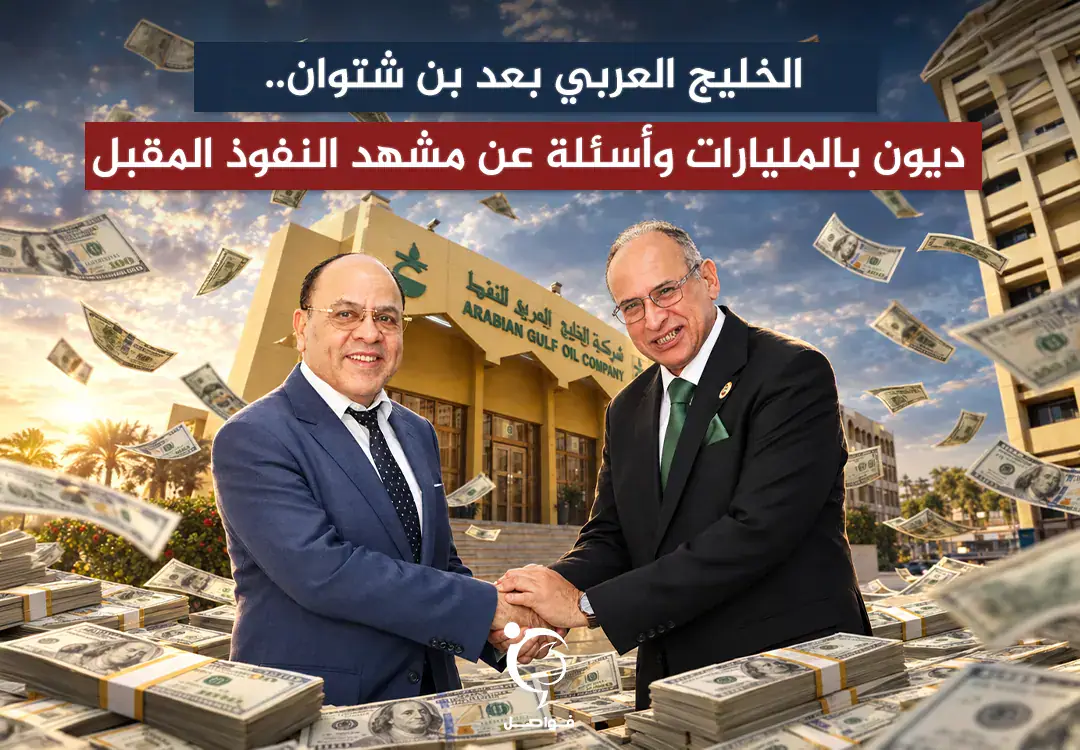
The departure of Mohamed bin Shtwan as head of the Gulf Oil Company in Libya has opened the door to a new administrative era, amidst significant financial burdens and questions about the future of influence within the country's crucial oil sector. According to documents obtained by Fawasel Media, the company's total financial obligations and deficit for 2024 and 2025 reached approximately $1.228 billion, equivalent to 7.615 billion dinars.
The financial deficit is distributed across 3.575 billion dinars in 2024 and around 4.040 billion dinars in 2025. This situation presents significant challenges to the new administration under the leadership of Fadl Ali Al-Masmari, who took over from bin Shtwan on November 2, 2026. Bin Shtwan initially assumed the role in August 2013 and continued until 2022, before returning to the position in March 2023.
The changes in leadership come at a critical time for the company, which is closely tied to economic interests and networks of influence within Libya's oil sector. This transition raises questions about whether the change in leadership will be limited to administrative adjustments or if it will extend to a reorganization of the balance of power and management of one of Libya's most important oil assets.
The National Oil Corporation of Libya has reconstituted the company's board of directors, paving the way for Al-Masmari to officially take over from bin Shtwan. This move is significant given the company's role in Libya's economy and the implications for the country's oil industry.
The Gulf Oil Company is a key player in Libya's oil sector, and its financial health has implications for the broader economy. The company's debt and deficit have been mounting, and the new leadership will need to address these challenges while navigating the complex landscape of influence and power within the sector.
The leadership change and the company's financial situation have sparked interest in the potential for a shift in the balance of power within Libya's oil industry. As the new administration takes hold, it will be closely watched for signs of how it will manage the company's assets and navigate the complex web of interests and influences.
The future of the Gulf Oil Company and its role in Libya's oil sector will be closely monitored, both domestically and internationally. With significant financial obligations and questions about the balance of power, the company's next steps will be crucial in determining its trajectory and impact on Libya's economy.
Key points
- The Gulf Oil Company faces significant financial challenges, with a total deficit of $1.228 billion for 2024 and 2025.
- The company's leadership change from Mohamed bin Shtwan to Fadl Ali Al-Masmari has raised questions about the future of influence within Libya's oil sector.
- The new administration will need to navigate the company's financial challenges while managing the complex landscape of power and influence within Libya's oil industry.