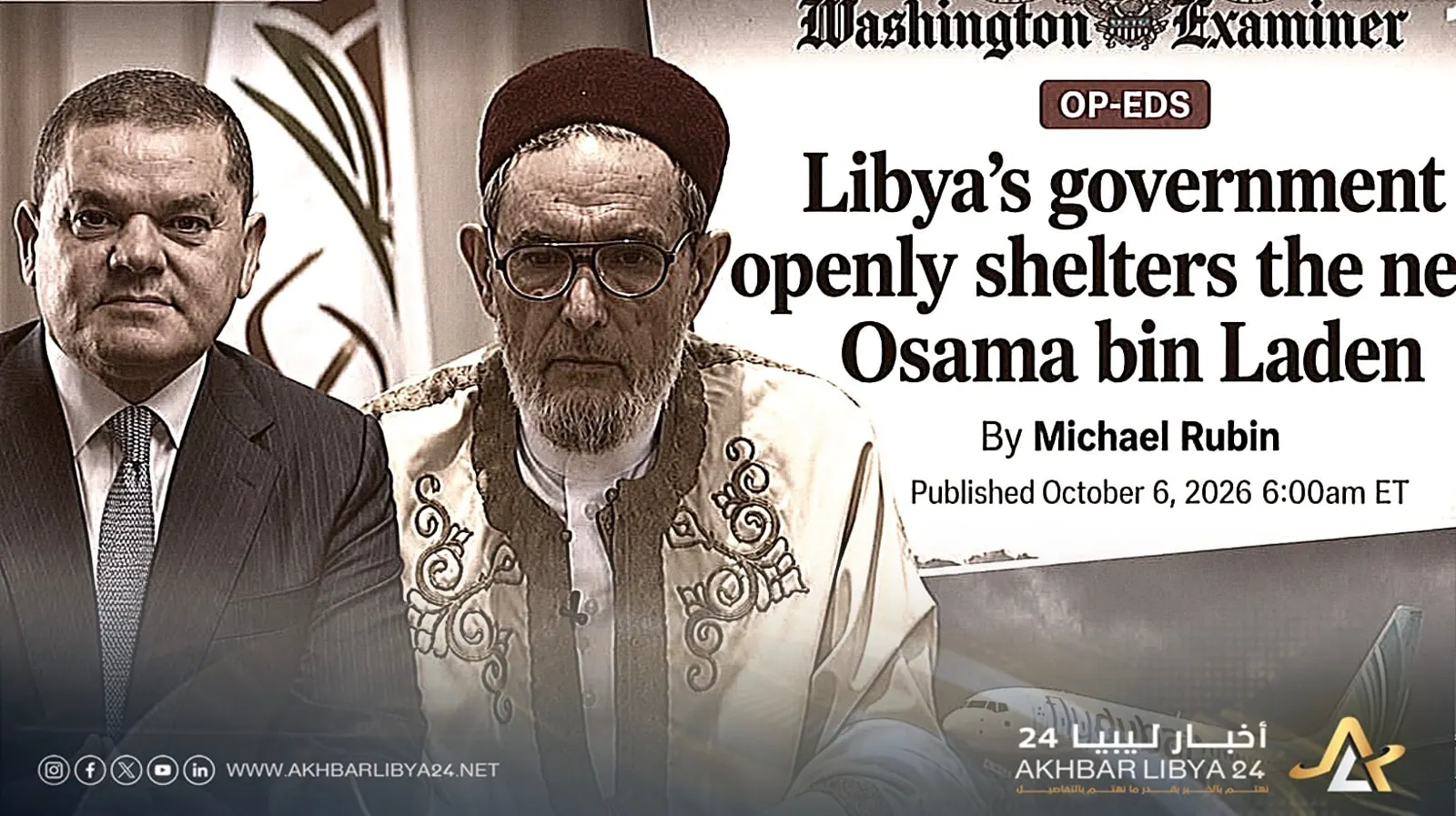
The Washington Examiner has warned of the consequences of remarks attributed to former Grand Mufti of Libya, Sadiq al-Ghariani. In an opinion piece published on October 6, writer Michael Rubin argued that al-Ghariani's comments went beyond religious and political discourse, inciting actions that could threaten civil aviation safety. This comes after a FlyDubai plane was involved in a serious incident on a flight from Dubai to Tel Aviv, which was forced to make an emergency landing in Saudi Arabia.
According to Rubin, al-Ghariani called on Muslim pilots to emulate the actions of Omani pilot Hamam al-Hamami, who was involved in a plane hijacking. The Libyan cleric allegedly stated that if three or four pilots were to hijack and crash their planes, it would be considered a "victory and honor." These comments were reportedly made on a state-funded Libyan television channel in Tripoli. The incident has raised concerns about the potential for extremist ideologies to influence civil aviation.
The Washington Examiner article placed al-Ghariani's comments within a broader context of the risks of using religious rhetoric to incite violence against civilian aircraft. Rubin called on the White House, US State Department, European governments, and the United Nations to take notice of such statements. The article also touched on the ongoing investigation into the September 30 incident involving FlyDubai flight 1073, which was forced to make an emergency landing in Tabuk, Saudi Arabia, after a co-pilot attacked the captain.
The US publication also questioned the legitimacy of the current Libyan government, led by Abdul Hamid Dbeibah, arguing that it lacks a direct electoral mandate. Rubin suggested that continued international recognition of the Tripoli-based government could empower what he sees as an illegitimate authority. He also argued that this could provide a political cover for those who criticize the government due to its stance on armed groups and extremist rhetoric.
Rubin called on US President Donald Trump and Secretary of State Marco Rubio to reassess the US approach to Libya, prioritizing security, counter-terrorism, and the protection of Libyan sovereignty. He proposed that the international community should use the ability of Libyan parties to provide security and counter terrorism as a criterion for engagement. Rubin also suggested that Dbeibah's government should meet certain conditions, including distancing itself from al-Ghariani and handing over those involved in the 2012 Benghazi attack to the US.
The article linked the al-Ghariani controversy to the legacy of armed groups that have been active in Libya since 2011, including the Ansar al-Sharia group, which was involved in the 2012 Benghazi attack that killed US Ambassador Christopher Stevens and three other Americans. Rubin presented these issues as part of his concerns about the continued activity of armed groups and extremist elements in Libya.
The Washington Examiner article concluded by calling for Libyan elections to be held and a unified government to be formed, which would be able to address the country's security and political challenges. Rubin argued that this would enable Libya to become a partner in achieving stability in the Middle East, North Africa, and the Mediterranean region.
Key points
- The Washington Examiner warns of the consequences of Sadiq al-Ghariani's call to pilots to hijack planes.
- The US publication questions the legitimacy of the current Libyan government.
- The article calls for a reassessment of the US approach to Libya, prioritizing security and counter-terrorism.