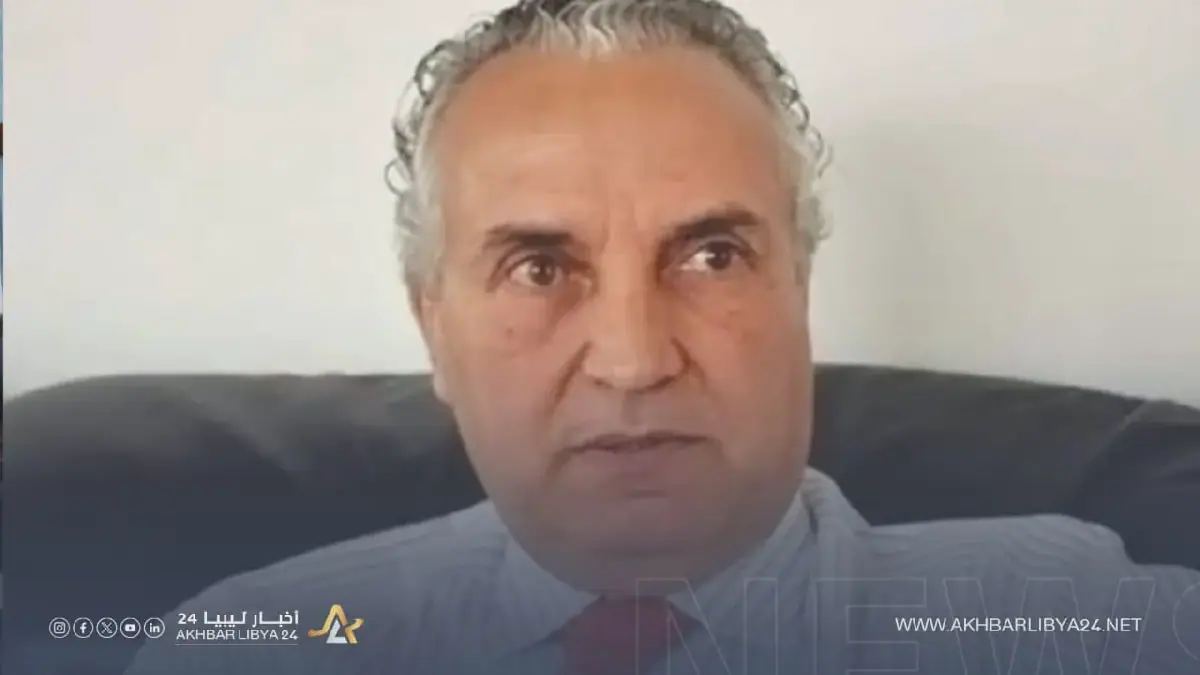
Libyan businessman Hossni Bey has emphasized that the options available to the Central Bank of Libya to rescue the dinar are extremely limited. He stressed that economic realities are not subject to political decisions. Bey noted that Libya is not facing a shortage of resources, but rather a chronic imbalance between the state's revenues and its expenditures.
Bey explained that the root of the problem lies in the persistent discrepancy between what the state earns and what its institutions spend. He described this as the real issue that burdens the Central Bank. Bey argued that the question goes beyond the person of the Governor of the Central Bank to the inability of monetary policies to address ongoing financial imbalances alone.
Bey outlined the first priority for financial and monetary reform, stating that public spending should not exceed sustainable revenues by more than 5% temporarily. He emphasized that this is a shared responsibility of the legislative and executive authorities across different regions of the country. Bey also highlighted the need for a unified and transparent national budget that includes all revenues and expenditures.
An analysis of the first nine months of 2026 showed a surplus in local accounting, but a significant deficit in foreign exchange accounts due to multiple obligations and parallel spending. Bey called for a national account that is transparent and unified to avoid misleading economic decision-making. He proposed four main options to address the crisis: using foreign exchange reserves, increasing production, reforming subsidies, and adopting a flexible exchange rate.
Bey suggested that foreign exchange reserves be used within a transitional period not exceeding three years, accompanied by clear reforms. He also recommended increasing oil and gas production to maximize revenue and ensuring its actual delivery to the public treasury. Additionally, Bey proposed replacing price subsidies with direct cash transfers to protect citizens' purchasing power.
Bey urged the Central Bank to launch an emergency program within the first 100 days, focusing on absolute transparency in publishing accounts, monetary discipline, and reforming the foreign exchange market. He also emphasized the need to protect assets, preserve reserves, and develop the banking sector to restore depositors' and society's trust.
Bey concluded by stressing that the Central Bank cannot solve problems such as production, salary inflation, or lack of financial discipline alone. He emphasized the need for transparent management of the economy and honest communication with citizens about economic realities, without selling illusions.
Key points
- Hossni Bey calls for financial reform and transparency to rescue the Libyan dinar.
- The Libyan economy faces a chronic imbalance between state revenues and expenditures.
- Bey proposes a 100-day emergency program for the Central Bank to address the economic crisis.