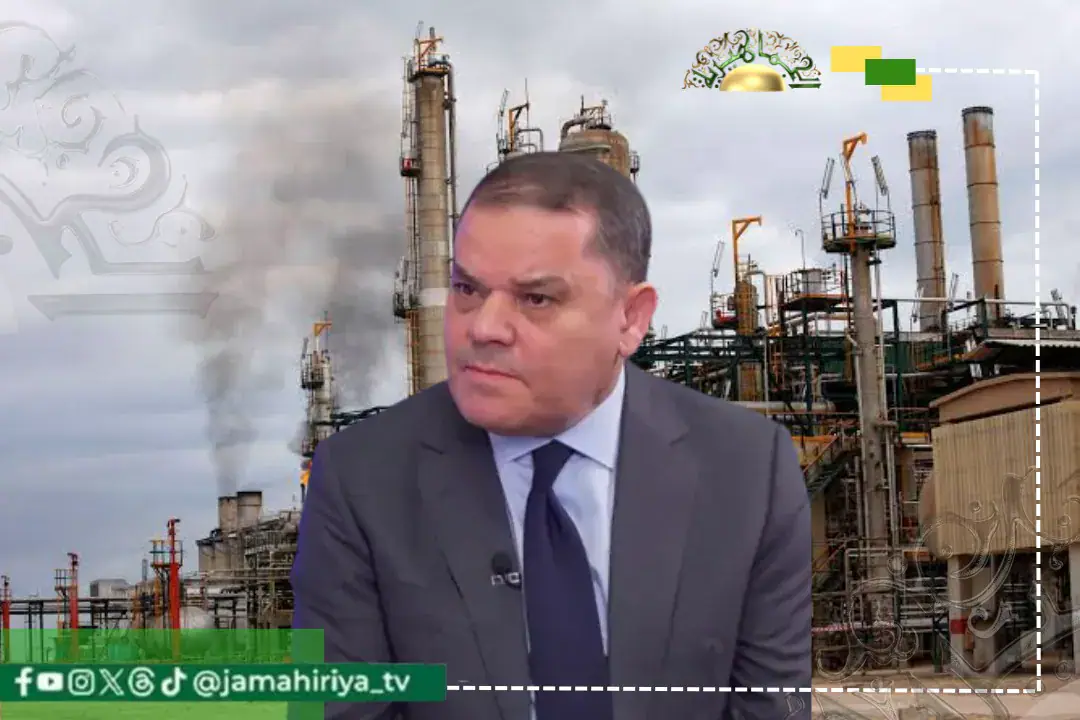
The Libyan government, led by Prime Minister Abdul Hamid al-Dibeyba, has taken legal action to suspend and cancel an oil agreement with Arkino, a private company. The deal, signed in 2023, allowed Arkino to export crude oil from Libya's largest fields in exchange for investment in their development. The government's move comes amid widespread controversy over the deal's revenue and allegations that over $3 billion was transferred to foreign bank accounts.
A report by a UN expert panel in March revealed that more than $3 billion in revenue from the Arkino deal was transferred to accounts outside Libya, raising questions about the management of the agreement's earnings. The panel described the Arkino deal as a "mutually beneficial" arrangement between Ibrahim al-Dibeyba and Sadam Hifter. However, Arkino and Hifter's office have denied any connection to the company.
Prime Minister al-Dibeyba instructed authorities in April to take steps to end the production-sharing agreement, citing widespread popular opposition to the deal. The move has been supported by various groups, including a military authority in Misrata, which demanded the deal be terminated immediately, stating that "Libyan oil is a red line."
The Arkino deal has faced significant backlash, with many questioning its legitimacy and the role of key players. Researcher Jalal Harshawi noted that the agreement has sparked opposition from influential groups in Misrata, where Hifter's forces are viewed with skepticism. The controversy has highlighted the complexities of managing Libya's oil wealth.
The Libyan government has justified its legal action by citing alleged legal and procedural irregularities in the contract, as well as Arkino's failure to meet technical and legal requirements for oil development and production. Arkino has stated that it has not received a copy of the lawsuit and that the agreement was commercially approved by al-Dibeyba's government.
The dispute reflects the challenges of managing Libya's oil resources, with the National Oil Corporation based in Tripoli and Hifter's forces controlling many oil fields, pipelines, and facilities in the east and south. This has led to a complex interplay between competing political and economic interests.
The outcome of the dispute remains uncertain, with Arkino warning that attempts to cancel the agreement could raise questions about the legal authority responsible for reviewing it. The case has significant implications for Libya's oil sector and the country's ongoing struggle to stabilize its economy and politics.
Key points
- The Libyan government is seeking to cancel a 2023 oil deal with Arkino due to alleged irregularities and unreported revenue.
- The deal has sparked controversy and opposition from various groups, including those in Misrata.
- The dispute highlights the complexities of managing Libya's oil wealth amid competing political and economic interests.