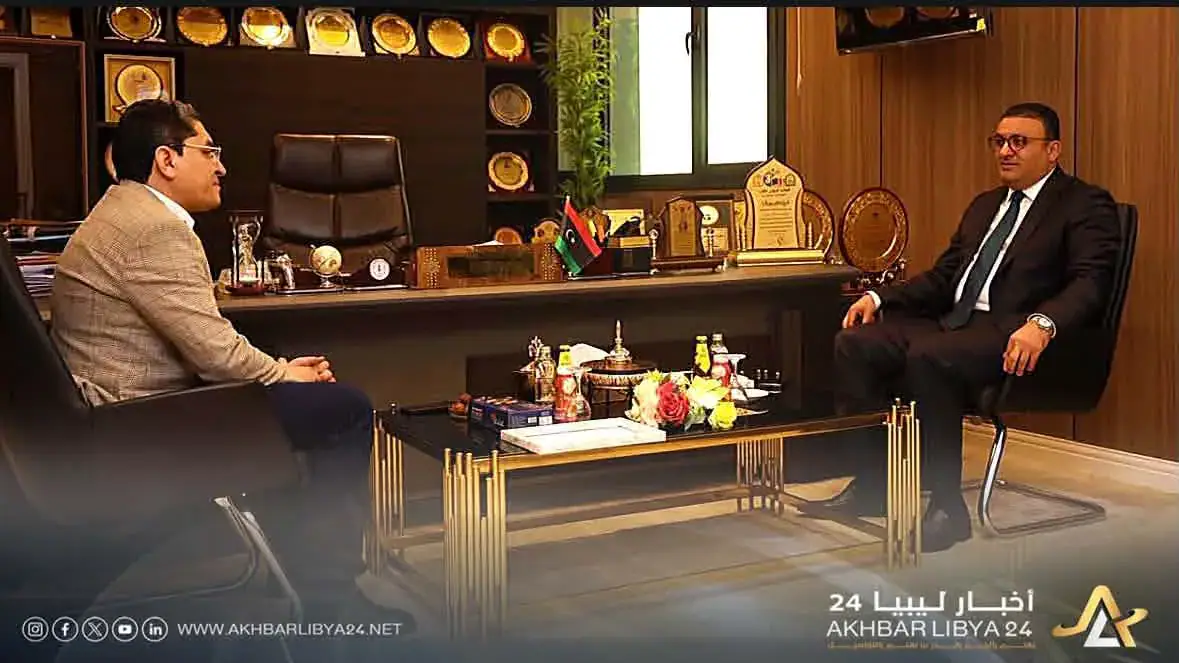
Libya's Minister of Labor and Qualification, Dr. Abdullah Al-Sharif Arhouma, and Minister of State for Communications, Engineer Khalid Al-Saadiwi, recently met to discuss the country's "Crafting a Libyan Cadre" initiative. The program seeks to transition from traditional training to paths that connect youth to the job market and enable them to build stable income sources. The meeting, held at the Ministry of Labor and Qualification in Benghazi, focused on the initiative's importance in qualifying youth and providing job opportunities.
The "Crafting a Libyan Cadre" initiative has garnered attention from Minister Al-Saadiwi, who expressed his support for the program's third phase. He praised the efforts made in training and qualifying youth, as well as opening new avenues for them. This support is significant, as it highlights the need for coordination between government agencies on files that directly impact citizens' lives. The initiative's success will be measured by its ability to convert training into usable skills and real economic opportunities.
The initiative has three phases, with the first two phases having been completed. The third phase will see the completion of training programs and the preparation for the graduation of trainees in batches in various regions, including the Gulf of Sirte, Awjela, and Idri. This geographic expansion indicates an effort to make qualification programs available in multiple areas, taking into account the needs of youth in different regions and the local economic requirements.
Minister Al-Sharif Arhouma and Minister Al-Saadiwi discussed the importance of continuing the initiative and expanding its scope to include more beneficiaries. The program aims to train and qualify youth of both sexes in various trades and professions required in the job market, including job seekers and those who have dropped out of education. The initiative also seeks to improve the efficiency of workers, which will enhance performance, productivity, and professional development.
One of the key points discussed during the meeting was the provision of operational equipment and tools to trainees upon graduation. This will enable them to enter the job market and establish their own projects, creating new job opportunities in the public and private sectors. This step is crucial, as it addresses one of the challenges faced by trainees after acquiring skills, which is the lack of necessary tools to practice their profession.
The success of the initiative depends on its ability to provide a clear path for trainees to transition from training to professional practice, ensuring that acquired skills translate into job opportunities or productive projects. The government will play a crucial role in supporting the initiative, and its success will be measured by its impact on the lives of Libyan citizens. The program's focus on qualifying youth and providing job opportunities aligns with the country's efforts to develop its economy and improve the living standards of its citizens.
The meeting between Minister Al-Sharif Arhouma and Minister Al-Saadiwi highlighted the importance of continued coordination and consultation between government agencies to maximize the benefits of the initiative. The program's success will depend on its ability to address the needs of youth and provide them with the skills required in the job market. Key points include the initiative's focus on qualifying youth, providing job opportunities, and supporting the country's economic development.
Key points
- The initiative aims to qualify youth and link training to national economy needs.
- The program has three phases, with the third phase focusing on completing training programs and preparing trainees for graduation.
- The initiative's success will be measured by its ability to convert training into usable skills and real economic opportunities.