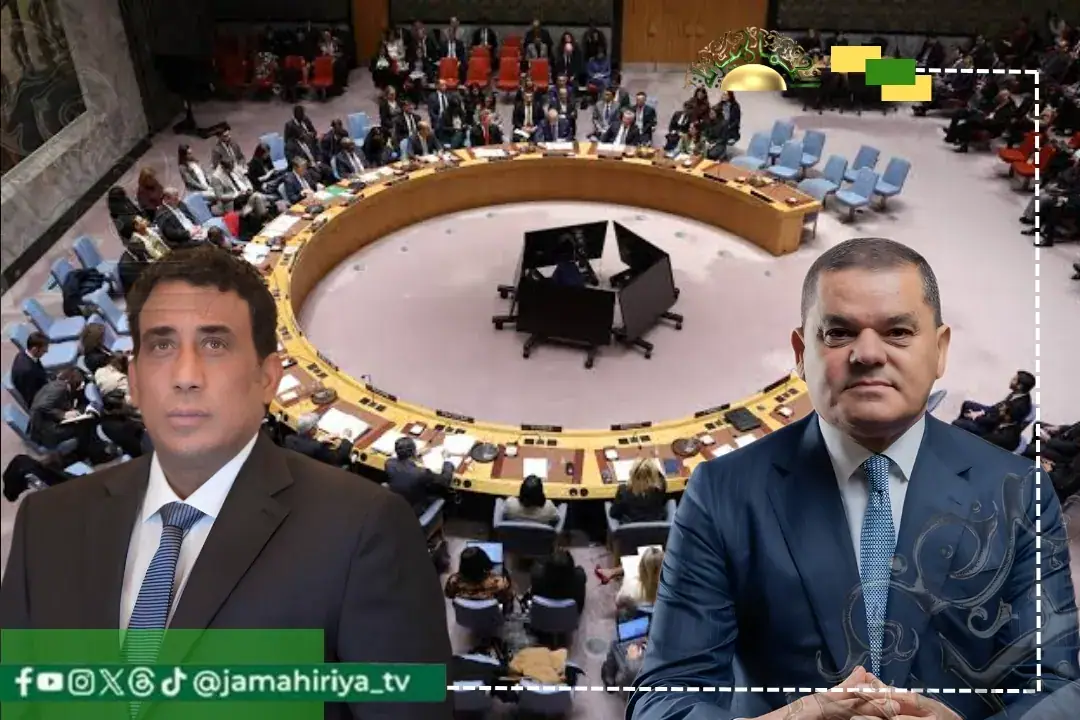
Libya's government has announced its candidacy for a non-permanent seat on the UN Security Council for the 2028-2029 term, despite facing significant challenges at home. The country's ongoing power struggle and institutional divisions have raised concerns about its ability to effectively represent the nation on the international stage. According to a report by the Qatari newspaper Al-Arabi Al-Jadid, Libya's government, led by Prime Minister Abdul Hamid al-Dbeibah, has launched a campaign to secure the seat, with President Mohamed al-Menfi representing Libya at the UN General Assembly.
The report questioned the feasibility of Libya's bid, given the country's complex internal situation. The government is embroiled in a heated political dispute with domestic parties, which has hindered progress on key issues, including the unification of institutions. This has led to skepticism about Libya's capacity to take on a significant role in the UN Security Council, an institution that continues to discuss the country's crisis and issue international decisions.
The Libyan government's bid for a UN Security Council seat has been met with scrutiny, particularly in light of the country's ongoing crisis. The African Union is aware of the challenges facing Libya and has been actively engaged in efforts to resolve the crisis, including presenting various approaches and roadmaps. The report suggested that Libya's government may be relying on its international recognition and network of alliances, but this may not be sufficient to overcome the country's internal weaknesses.
A key concern is the ability of Libya's government to effectively represent the country on the international stage, given its internal divisions and power struggles. The report noted that previous Libyan governments have also enjoyed international recognition, but this has not translated into effective diplomacy or institutional strength. The country's diplomatic apparatus and external relations have not been adequately leveraged to support its international ambitions.
The report argued that Libya's priority should be to rebuild its state institutions and address its internal challenges before seeking a high-profile role in international organizations. This would involve a long-term process of institutional unification, followed by efforts to strengthen its diplomatic capabilities and external relations. However, this process has been delayed, with the current government taking office in 2021.
The Libyan government's bid for a UN Security Council seat has raised questions about its priorities and capabilities. While the country has made efforts to engage with the international community, its internal challenges and institutional weaknesses remain significant. The international community will be watching closely as Libya seeks to take on a more prominent role in global affairs.
The outcome of Libya's bid for a UN Security Council seat remains uncertain, with the African Union's support potentially playing a significant role. However, the country's internal challenges and institutional weaknesses will need to be addressed if it is to effectively represent itself on the international stage. The Libyan government's ability to navigate these challenges will be crucial in determining the success of its bid.
Key points
- Libya's government has launched a bid for a non-permanent seat on the UN Security Council for 2028-2029 despite facing significant internal challenges.
- The country's ongoing power struggle and institutional divisions have raised concerns about its ability to effectively represent the nation on the international stage.
- The international community will be watching closely as Libya seeks to take on a more prominent role in global affairs.