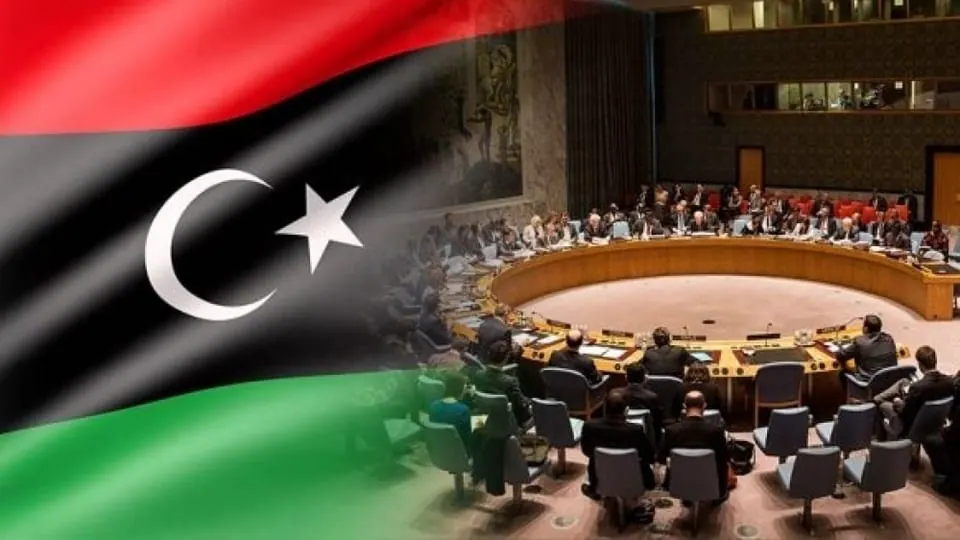
Libya's House of Representatives' Foreign Affairs Committee has announced its support for launching a campaign to secure a non-permanent seat on the UN Security Council. The committee described this move as a significant national achievement. They called on all state institutions to coordinate efforts and unify work to serve the country's interests, away from divisions and rivalries.
The announcement comes after Libya officially launched its campaign in New York last week, with representatives from over 140 countries in attendance. The bid faces competition from Morocco, which had previously announced its candidacy for the 2028-2029 term. Libya's Government of National Unity and the High Council of State have welcomed the launch of the campaign, considering it a crucial step towards restoring the country's natural position and regaining the trust of the international community.
According to diplomatic norms within the UN and African Union, the non-permanent seat allocated to the North Africa group is typically rotated. However, Libya's bid is competing directly with Morocco, which announced its candidacy in 2019 and 2020, taking advantage of Libya's internal divisions at the time. This has opened a competitive process within the African Union to secure the official endorsement of the region before heading to the general vote.
Libya's position is based on procedural and customary arguments that make Tripoli a stronger candidate than Rabat, citing the principle of "seniority in absence" within the African Union. With Algeria's current term (2024-2025) set to complete a full cycle of representation for North African countries, Libya's next bid would mark two decades since its last term on the Security Council (2008-2009).
In contrast, Morocco was a member in 2012-2013, which Libya argues makes its candidacy a more logical choice for the new cycle, based on fair rotation rules. Securing the seat would also support Libya's political process and restore its regional sovereignty after years of crisis. The country's successful bid would enable it to defend Arab, African, and Islamic interests within the Security Council.
The membership would also carry additional weight, as the occupying seat of North Africa would automatically represent the Arab Group within the Security Council, rotating with West Asian countries. This role would empower the seat holder to speak on behalf of Arab interests and issues, particularly the Palestinian question, and coordinate with other members.
Libya's push for a UN Security Council seat has garnered support from various domestic institutions, with stakeholders viewing it as a strategic step towards re-establishing Libya's international presence. The country's delegation to the UN has initiated outreach efforts to rally support from regional and international partners, ahead of the election for the non-permanent seat in 2028.
Key points
- Libya's eastern and western authorities have agreed to support the country's bid for a non-permanent seat on the UN Security Council.
- The bid faces competition from Morocco, which had previously announced its candidacy for the 2028-2029 term.
- Securing the seat would support Libya's political process, restore its regional sovereignty, and enable it to defend Arab, African, and Islamic interests within the Security Council.