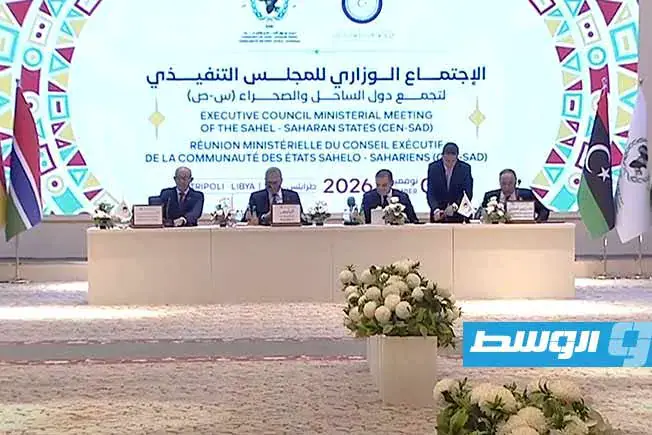
On November 7, 2026, Libya's Prime Minister Abdulhamid Dabaiba addressed the 22nd ordinary session of the Sahel-Saharan States' Executive Council in Tripoli. He emphasized the need for a unified regional framework to tackle shared challenges, including terrorism, organized crime, and irregular migration. Dabaiba highlighted the importance of coordinating efforts to combat these threats and promote regional stability.
Dabaiba expressed his hope that the Sahel-Saharan States gathering would become a robust regional entity. He noted that Libya had taken the initiative to establish the group, driven by a conviction in the necessity of regional integration and cooperation. The Prime Minister stressed that addressing security, economic, and developmental challenges in the region required transitioning from coordination to effective collective action.
The Libyan Prime Minister encouraged member states to expand trade exchanges, develop transportation and energy projects, and enhance cooperation in food security, desertification control, and climate change mitigation. He also urged the group to establish a realistic timeline for relocating the Executive Secretariat to its permanent headquarters in Tripoli.
Several foreign dignitaries attended the meeting, including the Foreign Minister of Guinea-Bissau and ministers from Tunisia, Djibouti, and the Central African Republic. The attendees discussed ways to strengthen cooperation and tackle common challenges facing the Sahel and Sahara regions.
Dabaiba reaffirmed Libya's commitment to supporting the Sahel-Saharan States' efforts and promoting African integration. He emphasized that Libya was dedicated to utilizing its resources to help achieve the group's objectives and address regional challenges.
The Sahel-Saharan States group comprises countries from North, West, and Central Africa. Its primary goal is to foster cooperation and coordination among member states on issues such as security, economy, and development. The group's activities focus on promoting regional stability, combating terrorism, and improving living standards.
The meeting in Tripoli aimed to strengthen regional cooperation and address pressing challenges in the Sahel and Sahara regions. The discussions centered on finding effective solutions to common problems, including terrorism, migration, and economic development. The participants sought to build on their shared interests and foster a more collaborative approach to regional issues.
Key points
- Dabaiba calls for unified efforts against terrorism and support for border security.
- The Sahel-Saharan States meeting aims to promote regional cooperation and stability.
- Libya reaffirms its commitment to supporting the group's efforts and promoting African integration.