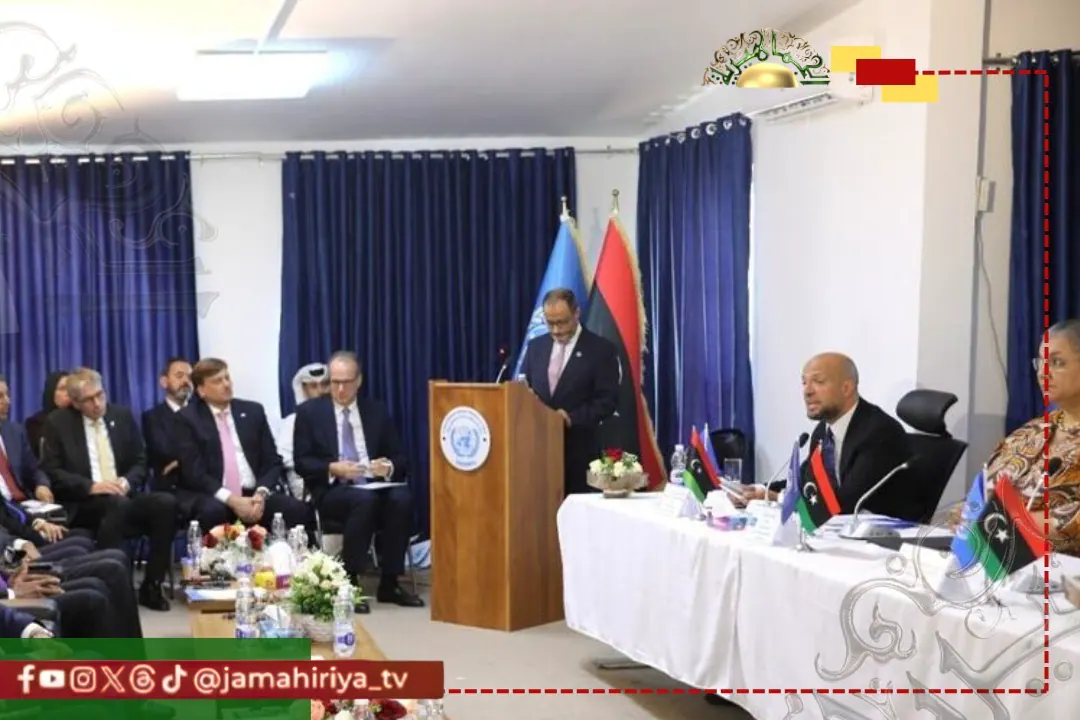
A meeting of Libya's 4+4 committee commenced in Tunis, the capital of Tunisia, on October 4, 2026. The committee aims to discuss crucial issues, including sovereign positions and the unification of the judicial authority in Libya. This meeting is part of the political process tied to an agreement reached by the committee members. The discussions focus on implementing previously agreed-upon points and exploring steps toward unifying institutions and ending the division.
The 4+4 committee's meeting is a significant development in Libya's ongoing efforts to stabilize and unify its institutions. The committee's discussions are expected to center on the distribution of sovereign positions and the integration of the judicial authority. These issues have been contentious in Libya's post-conflict landscape. The meeting's outcome may have implications for the country's future stability and progress toward a unified governance structure.
The 4+4 committee is composed of representatives from various Libyan factions and international stakeholders. Their agreement is seen as a critical step toward resolving Libya's complex political and institutional challenges. The committee's work is closely watched by Libyan citizens and international observers, who hope for tangible progress toward stability and unity.
Libya has faced significant challenges in recent years, including division and conflict. The country's institutions have been fragmented, and its judicial authority has been split. The 4+4 committee's efforts aim to address these issues and pave the way for a more unified and stable Libya. The meeting in Tunis is an opportunity for committee members to engage in constructive dialogue and find mutually acceptable solutions.
The discussions in Tunis will likely involve sensitive topics, including the allocation of sovereign positions and the structure of the unified judicial authority. Committee members will need to balance competing interests and priorities to achieve meaningful progress. The success of the 4+4 committee's efforts could have far-reaching implications for Libya's future and its relationships with international partners.
Libya's international partners and stakeholders are closely monitoring the 4+4 committee's progress. The international community has a vested interest in Libya's stability and security, given the country's strategic location and resources. A unified and stable Libya could play a more significant role in regional and international affairs.
The outcome of the 4+4 committee's meeting in Tunis will be closely watched by Libyan citizens and international observers. The committee's success in addressing key issues, such as sovereign positions and judicial unification, could mark an important step toward a more stable and unified Libya.
Key points
- The 4+4 committee's meeting in Tunis aims to discuss and resolve key issues, including sovereign positions and judicial unification.
- The committee's work is closely watched by Libyan citizens and international observers, who hope for tangible progress toward stability and unity.
- The success of the 4+4 committee's efforts could have far-reaching implications for Libya's future and its relationships with international partners.