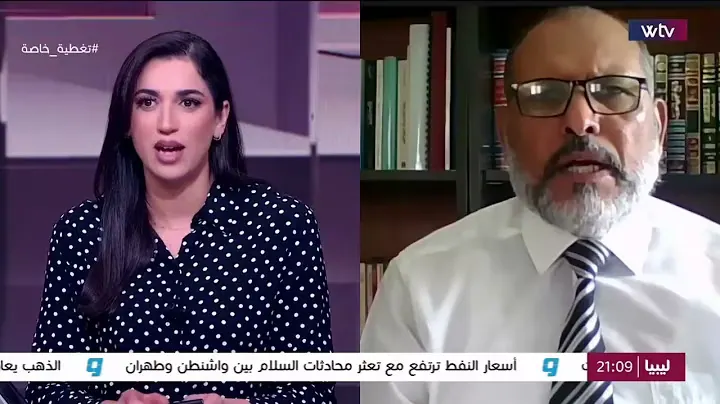
A recent agreement between four Libyan parties has sparked debate on whether it will help resolve the country's ongoing crisis or merely reorganize the existing power dynamics. The agreement, dubbed 4+4, was reached between the House of Representatives, the State Council, and the leaders of the two main military factions, Khalifa Haftar and Mohamed al-Menfi. The deal aims to pave the way for elections and establish a unified government.
The 4+4 agreement has been hailed by some as a step towards stability and unity in Libya, which has been plagued by conflict and political turmoil since the ousting of Muammar Gaddafi in 2011. However, others have expressed skepticism, arguing that the agreement may only serve to further entrench the existing power structures. The deal has also been criticized for its lack of clarity on key issues, such as the integration of rival militias and the distribution of power.
The agreement was facilitated by the United Nations, which has been working to broker a peaceful resolution to the Libyan conflict. The UN's Special Envoy to Libya, Stephanie Williams, has expressed hope that the agreement will help to create a more conducive environment for elections and national reconciliation. However, some have questioned whether the agreement will be enough to overcome the deep-seated divisions and rivalries that have characterized Libyan politics.
The 4+4 agreement has also been welcomed by some of Libya's international partners, who have been calling for a peaceful and negotiated solution to the crisis. The European Union, in particular, has expressed support for the agreement, seeing it as a crucial step towards stabilizing the region and preventing further migration and terrorism. However, others have expressed concerns that the agreement may not go far enough in addressing the root causes of the crisis.
One of the key challenges facing the implementation of the 4+4 agreement is the issue of security. Libya remains a volatile and unpredictable country, with many armed groups and militias operating outside of the control of the central government. The agreement will need to be accompanied by concrete measures to disarm and dismobilize these groups, and to establish a unified and effective security apparatus.
Despite these challenges, many Libyans remain hopeful that the 4+4 agreement will help to bring about a new era of peace and stability. The country has suffered greatly from years of conflict and division, and there is a widespread desire for a return to normalcy and prosperity. However, it remains to be seen whether the agreement will be enough to overcome the many obstacles and challenges that lie ahead.
The 4+4 agreement is a significant development in Libya's ongoing crisis, but its success will depend on the commitment and cooperation of all parties involved. The international community will be watching closely to see whether the agreement leads to tangible progress and a lasting resolution to the crisis.
Key points
- The 4+4 agreement aims to pave the way for elections and establish a unified government in Libya.
- The agreement has been facilitated by the United Nations and has been welcomed by some of Libya's international partners.
- The implementation of the agreement will require concrete measures to address the country's security challenges.