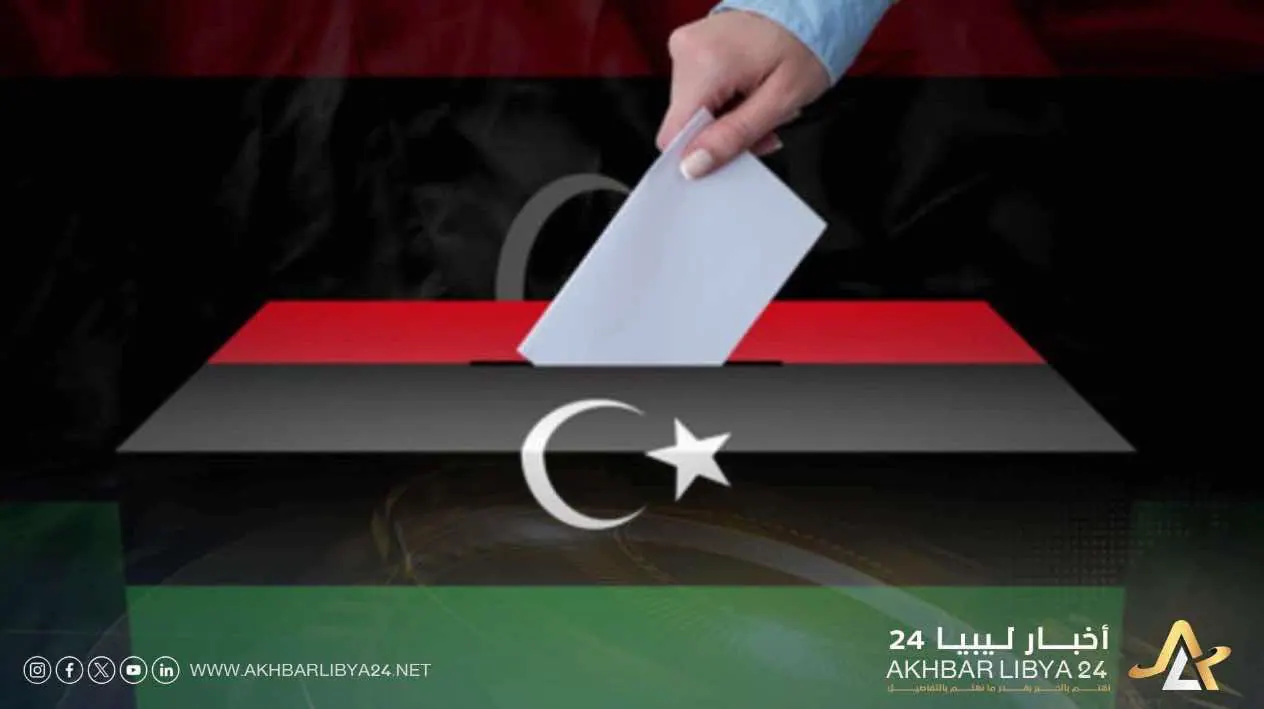
Libya's political landscape has entered a sensitive phase as the 4+4 agreement transitions from a political understanding to actual implementation. This development occurs against the backdrop of ongoing disputes over powers and legal competencies, directly impacting the future of the electoral process and the conclusion of the prolonged transitional period. The agreement's success hinges on transforming political consensus into enforceable decisions by Libyan institutions.
According to Fathi al-Shibli, head of the Voice of the People party, the agreement has moved beyond the signing stage and now faces a real test: converting political understandings into decisions issued by Libyan institutions, making them enforceable and binding. This step is crucial in measuring the seriousness of parties involved in implementing the agreed-upon terms. The House of Representatives has already adopted the 4+4 agreement's outcomes regarding the reconstitution of the High National Election Commission.
The reconstitution of the commission opens the way for implementing the agreement, but it does not resolve the legal controversy surrounding the process, particularly due to the continued rejection by the presidency of the High State Council. This reflects the ongoing institutional divide characterizing the Libyan scene, where transitioning from political understandings to enforceable legal procedures remains tied to the ability of institutions to overcome disputes over competencies and decision-making mechanisms.
The continuation of rejection from the High State Council's presidency raises a political and legal question about the ability of other parties to proceed unilaterally with implementing the agreement's outcomes. Al-Shibli noted that political implementation is possible, but the legal aspect is more complex, especially concerning the legislation organizing the electoral process, which requires addressing competency and institutional consensus issues.
Al-Shibli emphasized that the first required step is to legally solidify the new election commission composition, followed by addressing electoral laws as a key to any path leading to elections that end the transitional period. This issue is particularly important for Libyan citizens amid ongoing political and institutional divisions and delayed electoral processes, with the country needing a clear path to institutions deriving their legitimacy from an electoral process.
Regarding the UN mission's role, al-Shibli stressed that it cannot replace Libyan institutions in decision-making, but it can facilitate and exert political pressure. The UN mission has announced that 4+4 agreement members have started monitoring the implementation of the consensus, alongside continued engagement with parties rejecting or reserving the process. This places the UN mission in another test, supporting consensus among parties without substituting national decisions and competent Libyan institutions.
Al-Shibli concluded that the 4+4 agreement has successfully paved the way for a new path, but its transformation into reality depends on the party capable of translating political consensus into binding legal decisions. The success of any path aiming for elections requires overcoming disputes over procedural legitimacy and institutional competencies. The continuation of obstruction and rivalry keeps the country within the transitional phase.
Key points
- The 4+4 agreement's implementation is critical for Libya's electoral process and transition to a more stable political phase.
- Disputes over institutional competencies and legal procedures continue to challenge the agreement's implementation.
- The UN mission's role in supporting the Libyan parties in reaching a consensus is crucial but must be balanced with respect for Libyan institutions and decision-making processes.