On December 5, 2021, a social media claim emerged on Facebook, stating that two suspected cases of the new Omicron variant had been detected in Libya. The post, which garnered over 2.7 thousand interactions and 432 thousand comments, was widely shared across various platforms. However, a thorough investigation by Annir, a fact-checking organization, revealed that the claim was false.
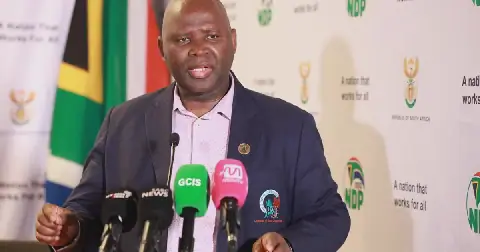
Annir's investigation led to a statement by Hayder Al-Saeh, Director-General of the National Center for Disease Control (NCDC) in Libya. He explicitly stated that there were no recorded cases of the Omicron variant in the country at that time. Al-Saeh emphasized the importance of relying on official sources for such critical information, citing the NCDC's official page and his personal account.
The false claim spread rapidly across social media platforms, contributing to public concern and anxiety. This incident highlights the challenges of combating misinformation, particularly in the context of public health. The spread of unverified information can undermine trust in health authorities and complicate efforts to manage disease outbreaks.
The NCDC, as the primary health authority in Libya, plays a crucial role in monitoring and responding to public health threats. The center is responsible for disease surveillance, outbreak investigation, and implementing control measures. In the case of the Omicron variant, the NCDC would be at the forefront of confirming cases and advising the public on necessary precautions.
Annir's fact-checking efforts aim to mitigate the impact of misinformation by verifying claims and providing accurate information. In this instance, their investigation helped to clarify that there was no evidence to support the claims of Omicron cases in Libya. The organization encourages the public to consult official sources for health-related information.
The incident underscores the importance of media literacy and critical thinking in the digital age. With the proliferation of social media, false information can spread rapidly, often outpacing efforts to verify its accuracy. As a result, it is essential for individuals to be cautious when consuming and sharing information online.
In conclusion, the Libyan health authorities have confirmed that there were no recorded cases of the Omicron variant in the country as of December 5, 2021. The public is advised to rely on official sources for accurate information on public health matters. Key points include:
Key points
- The Libyan health authorities have not recorded any cases of the Omicron variant.
- The false claim was widely shared on social media platforms.
- The public is advised to consult official sources for accurate health information.