As Libya prepares for the upcoming winter, concerns have been raised about the possibility of floods and storms similar to those experienced in the past. Atia Salah al-Hussadi, head of the 'Ruya' Space Sciences Foundation, has sought to allay these fears, stating that it is too early to predict a 'flood winter.' He emphasized that seasonal forecasts can only provide general indications of temperature and rainfall averages over large areas.
Al-Hussadi explained that the recent low-pressure system that brought rain to various parts of the country was an example of a normal weather pattern. He stressed that the presence of a low-pressure system or large amounts of rain in numerical models does not necessarily mean that a disaster or storm similar to 'Daniel' will occur. 'Daniel,' which hit Libya in September 2023, was an exceptional event that resulted in thousands of casualties and significant damage.
The 'Ruya' Space Sciences Foundation has been working to improve Libya's ability to predict and respond to natural disasters. Al-Hussadi noted that the foundation has established a network of over 70 weather monitoring stations across the country, which provide critical data for predicting weather patterns. The foundation is also working to develop an early warning system that can provide accurate and timely alerts for potential floods and storms.
Al-Hussadi emphasized that the key to mitigating the impact of floods and storms is to have a comprehensive understanding of the country's hydrology and hydraulics. He noted that the Wadi Derna basin, which was severely affected by the 'Daniel' storm, is a complex system that requires careful management. The foundation is working to develop a detailed understanding of the basin's hydrology and to identify effective solutions for managing flood risk.
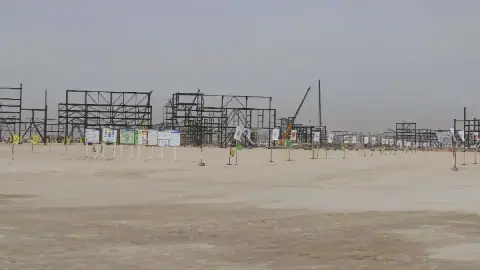
The Libyan government has been working to improve the country's infrastructure and emergency response systems in the wake of the 'Daniel' disaster. Al-Hussadi noted that the reconstruction efforts in Wadi Derna, including the widening of the wadi and the construction of new infrastructure, are important steps towards reducing the risk of future floods. However, he emphasized that a comprehensive approach is needed to manage flood risk, including the development of early warning systems and emergency response plans.
Al-Hussadi also noted that climate change is likely to have significant impacts on Libya's weather patterns in the coming decades. He cited reports from the World Bank that suggest that the country may experience more extreme weather events, including floods and droughts. The 'Ruya' Space Sciences Foundation is working to develop a better understanding of these changes and to identify effective strategies for mitigating their impacts.
The 'Ruya' Space Sciences Foundation was established in 2012 as an initiative to promote astronomy and space sciences in Libya. Since then, it has grown into a full-fledged organization with a range of activities, including weather monitoring, space exploration, and education. The foundation's work has significant implications for Libya's development, particularly in the areas of disaster risk reduction and climate change mitigation.
Key points
- Libya's upcoming winter is unlikely to be a 'flood winter,' according to the 'Ruya' Space Sciences Foundation.
- The country needs a comprehensive approach to manage flood risk, including early warning systems and emergency response plans.
- Climate change is likely to have significant impacts on Libya's weather patterns in the coming decades.
Reporting sources
- Wasat TV · Wasat TV