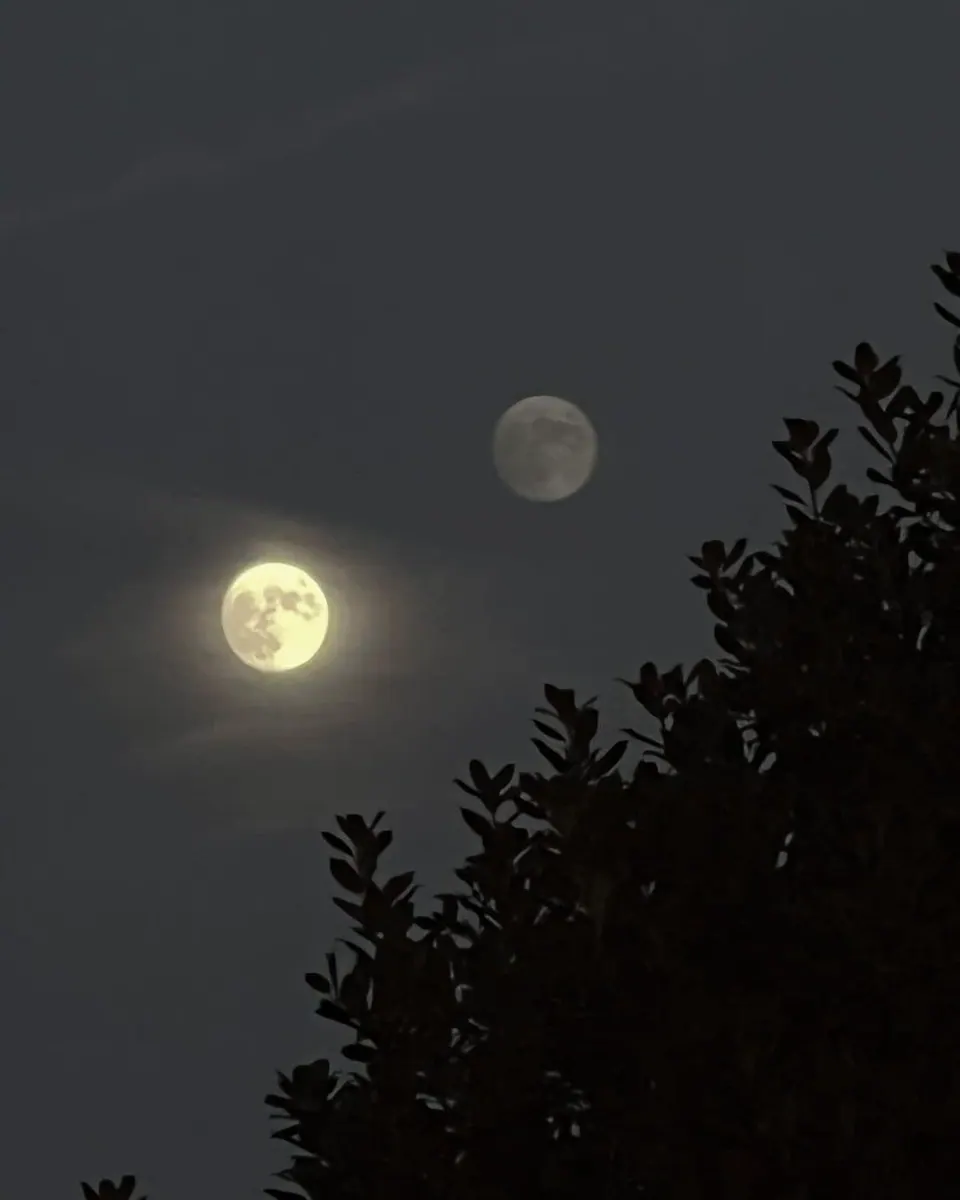
A post on Facebook, first shared on April 27, 2023, at 12:28 AM Libyan time, claimed a rare celestial event had occurred, with two moons appearing in the sky. The post garnered significant attention, with approximately 31,200 interactions and 18,300 comments by April 27, 2023. The claim was widely shared across multiple pages, sparking curiosity and concern among Libyan social media users.
Annir, a fact-checking organization, investigated the claim and found it to be misleading. Through keyword searches, Annir traced the claim to the Vision Institute for Space Sciences and its Applications, which published a statement on its official Facebook page denying the claim. The institute explained that the double moon image was an optical illusion caused by light refraction through a transparent surface.
According to the Vision Institute, the phenomenon can occur when taking pictures through glass, a camera or phone lens, or when there are large ice crystals in the upper atmosphere. The institute later added a comment suggesting that a secondary reflection in the circulating image could be attributed to the planet Venus. A follow-up video was also provided to demonstrate the refraction and reflection of moonlight through glass, creating the double moon image.
The Vision Institute's explanation was conclusive, and Annir's investigation confirmed that the claim was misleading. The fact-checking organization concluded that the post used a natural phenomenon to spread incorrect information. As a result, Annir classified the claim as misleading, highlighting the importance of verifying information before sharing it on social media.
This incident is not isolated, as Annir has previously debunked other misleading claims circulating in Libya. For instance, a video was shared on social media, allegedly showing a Sudanese refugee being chased by militias in Libya. However, Annir found that the video actually depicted a Libyan celebrating his success.
In another instance, a post claimed that a 3,000-year-old mummy was discovered in the Libyan city of Shahhat. Annir investigated and found no evidence to support the claim. These examples demonstrate the need for fact-checking and verification in Libya, where misinformation can spread quickly.
The debunking of the double moon claim serves as a reminder to Libyan social media users to be cautious when sharing information online. By verifying information through reputable sources, users can help prevent the spread of misinformation and promote a more informed public discourse.
Key points
- The claim of a double moon sighting in Libya was found to be a misleading optical illusion caused by light refraction.
- The Vision Institute for Space Sciences and its Applications provided a scientific explanation for the phenomenon.
- Annir's investigation and debunking of the claim highlight the importance of fact-checking and verification in Libya.