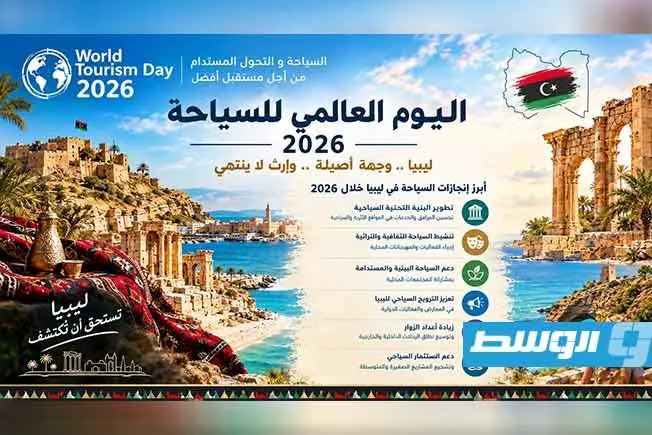
The world celebrates World Tourism Day on September 27th every year. This year, Libya joins the celebration with several efforts to revive its tourism industry. The country has made significant progress in recent months, including strengthening its presence in Arab and international tourism institutions, supporting cultural and heritage tourism, and developing digital services. These efforts aim to reactivate domestic tourism and promote Libyan tourist destinations.
One of the notable achievements is Libya's selection to host the 53rd meeting of the Middle East Regional Committee of the United Nations World Tourism Organization. This decision was made during the 52nd meeting of the committee in Kuwait, marking Libya's return to regional and international tourism events. This move is expected to enhance cooperation and exchange of expertise in the sector.
In June, Libya chaired the 15th meeting of the Arab Tourism Technical Committee in Cairo, where participants discussed ways to develop Arab tourism, enhance intra-Arab tourism, and exchange experiences. The meeting also focused on updating legislation, improving service quality, and creating an attractive investment environment. These efforts demonstrate Libya's commitment to reviving its tourism industry.
In January 2026, Libya achieved a significant cultural milestone with the registration of "Arabic Kohl" on UNESCO's Representative List of the Intangible Cultural Heritage of Humanity. This registration highlights the importance of preserving Libya's cultural heritage and promoting cultural tourism. The country's rich cultural heritage is a key component of its tourism industry.
On May 13, 2026, the Libyan Ministry of Tourism and Traditional Industries signed a memorandum of understanding with the Development and Urban Development Authority of Ghadames. The agreement aims to implement recommendations from the World Heritage Center related to the old city of Ghadames and support efforts to preserve the city's architectural and historical heritage. This initiative demonstrates Libya's commitment to protecting its cultural and historical sites.
According to the Libyan Tourism Information and Documentation Center, the country has seen an increase in tourist activity during the first quarter of 2026. The center reported over 121,000 visitors to archaeological sites and cities, with the ancient city of Cyrene being the most visited site. The number of tourist facilities has also increased, with 777 establishments, including hotels and tourist villages.
In June, Libya introduced electronic payment systems, allowing international visitors to use their credit cards through local payment networks. This move is part of the country's efforts to develop its digital services and make it easier for tourists to travel and pay for services. The introduction of electronic payments is expected to boost tourism and improve the overall tourist experience.
Key points
- - Libya is making efforts to revive its tourism industry, including strengthening its presence in Arab and international tourism institutions. - The country has achieved significant cultural milestones, including the registration of "Arabic Kohl" on UNESCO's Representative List of the Intangible Cultural Heritage of Humanity. - Libya has introduced electronic payment systems to make it easier for tourists to travel and pay for services.