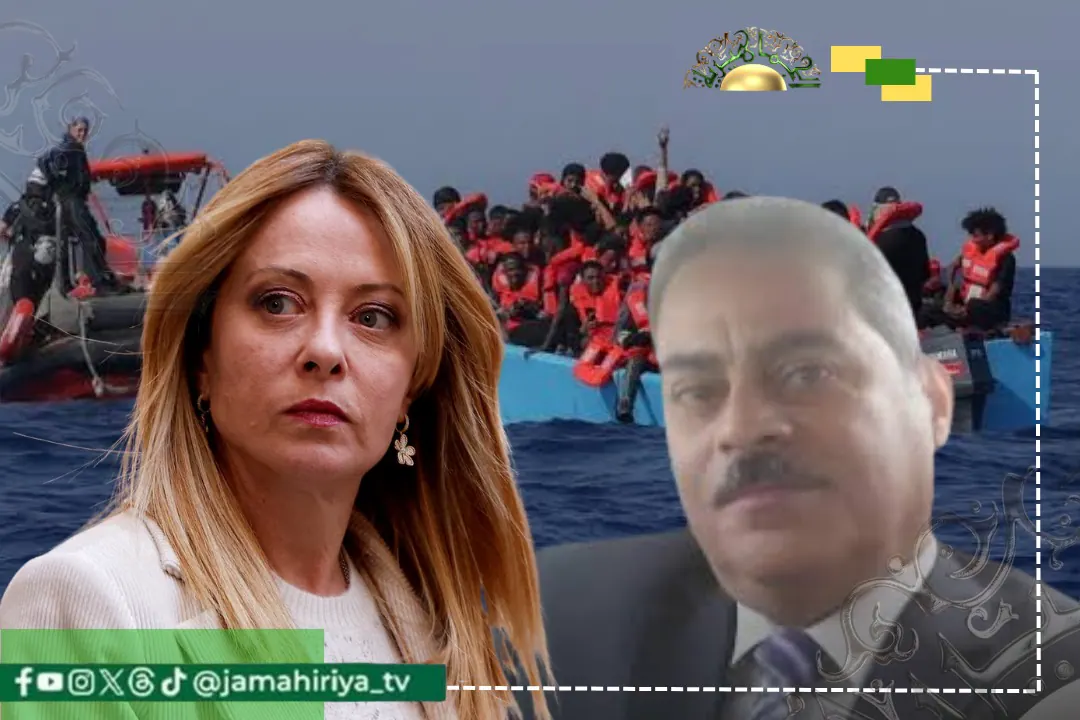
A former Libyan diplomat, Faraj Zurouq, has sparked discussion on the relationship between Libya and Italy regarding migration policies. In a Facebook post, Zurouq shared an article by researcher Diana Folfi, highlighting the connection between Italy's current policies and its colonial past in Libya. The article notes that Italy's efforts to curb migration through the Mediterranean have led to a 46% decrease in arrivals, but a 111% increase in migrant deaths.
The article suggests that Italian media coverage focuses on accusations against non-governmental organizations (NGOs) of collaborating with smugglers, while downplaying the reasons behind these organizations' reluctance to cooperate with Libyan coast guards. Critics argue that Libyan coast guards are involved in forced returns and human rights abuses. Italy provides funding, training, and logistical support to Libyan coast guards as part of efforts to control Mediterranean migration.
Folfi's article draws on the concept of "colonial haunting," introduced by researcher Ann Laura Stoler. This concept describes how colonial histories continue to influence current policies and social dynamics. The Italian occupation of Libya from 1912 to 1943 was marked by settler colonialism, land expropriation, and violent repression, resulting in the displacement of many Libyans to detention camps.
The article argues that Italy's current migration policies are influenced by its colonial past, particularly in the way they distance the country from direct involvement in migrant detention and processing. The 2008 Friendship and Partnership Treaty between Italy and Libya included an official apology for Italy's colonial past and provided $5 billion in compensation. However, this treaty also strengthened cooperation on migration control.
Folfi's research includes interviews with Italian citizens involved in politics, which revealed complex perceptions of Italy's colonial past and its responsibilities towards migrants intercepted or detained under current cooperation arrangements with Libya. These discussions highlighted the difficulty some participants faced in acknowledging Italy's responsibilities and the historical context of its migration policies.
The article concludes that Italy's migration control policies are shaped by historical power dynamics, colonialism, and economic interests. While there is no direct link between the Italian occupation and current migration policies, the research suggests that these historical relationships continue to influence how responsibility, violence, and borders are understood and addressed.
The issue remains complex, with multiple stakeholders and interests involved. As Italy and Libya continue to navigate their relationship, understanding the historical context and ongoing impacts of colonialism will be crucial in shaping more effective and humane migration policies.
Key points
- Italy's current migration policies are influenced by its colonial past in Libya.
- The 2008 Friendship and Partnership Treaty between Italy and Libya included an apology and compensation, but also strengthened cooperation on migration control.
- Italy provides funding, training, and logistical support to Libyan coast guards as part of efforts to control Mediterranean migration.