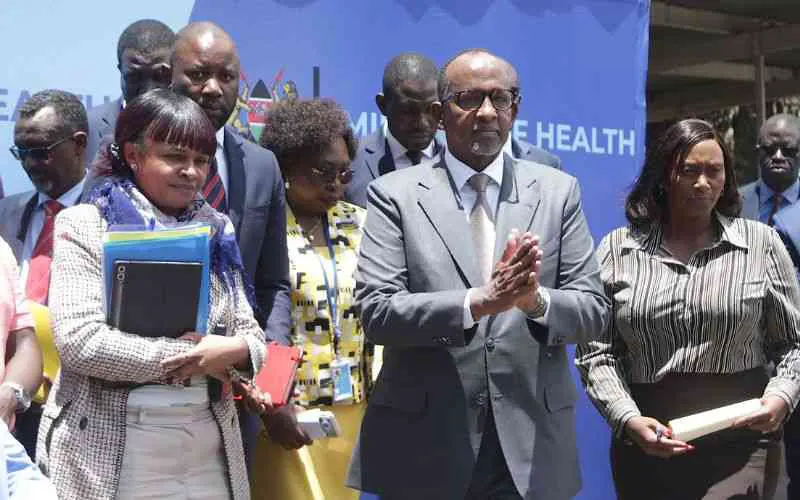
Kenya's Health Cabinet Secretary, Aden Duale, confirmed on Tuesday that the country has registered its first case of Ebola. The patient, who traveled by road from the Democratic Republic of Congo (DRC) to Uganda and then by air to Kenya, died on Saturday. The confirmation has sent shockwaves across the country, raising concerns about the effectiveness of its health screening processes at ports of entry.
The patient traveled directly from a high-risk zone and passed through international transit and screening at Jomo Kenyatta International Airport (JKIA) without being detected. This has raised uncomfortable questions about how the individual was allowed to enter the country undetected. The government must now investigate who was responsible for the oversight and take measures to prevent similar cases in the future.
The Ministry of Health has identified 28 people who had contact with the patient and is working to isolate them to prevent further spread of the virus. The government has also established 23 Ebola isolation and treatment centers nationwide as part of its preparedness and response measures. These centers will play a critical role in containing the outbreak and providing treatment to those infected.
The public has a crucial role to play in preventing the spread of Ebola. Measures such as frequent handwashing with soap and water or using alcohol-based hand sanitizers will be essential in reducing the risk of transmission. People must also avoid direct contact with blood, body fluids, or tissues of infected persons. The government must initiate public awareness campaigns to educate the public on the necessary precautions.
The Kenyan government has been preparing for an Ebola outbreak for months, and now it must prove that it is ready to respond effectively. The Ministry of Health must ensure that it has set aside enough resources and trained enough personnel to deal with this emergency. The government must act with extreme urgency, transparency, and clinical discipline to prevent the single imported case from escalating into a national disaster.
Former Health CS Mutahi Kagwe's warning during the COVID-19 pandemic bears repeating: "If we treat this disease normally, it will treat us abnormally." The Ministry of Health and county governments must work together to contain the outbreak, and the public must remain vigilant and strictly follow health protocols. Demand for full accountability from those tasked with keeping national borders safe is also essential.
The next 72 hours will be critical in the fight against Ebola. The government must act swiftly to contain the outbreak, and the public must cooperate by following health guidelines. With the correct measures in place, Kenya can prevent the spread of Ebola and mitigate its impact on the country. The Standard will continue to provide updates on the situation as more information becomes available.
Key points
- The Kenyan government has established 23 Ebola isolation and treatment centers nationwide.
- The patient traveled from DRC via Uganda and passed through JKIA undetected.
- The public must take precautions such as frequent handwashing and avoiding direct contact with infected persons.