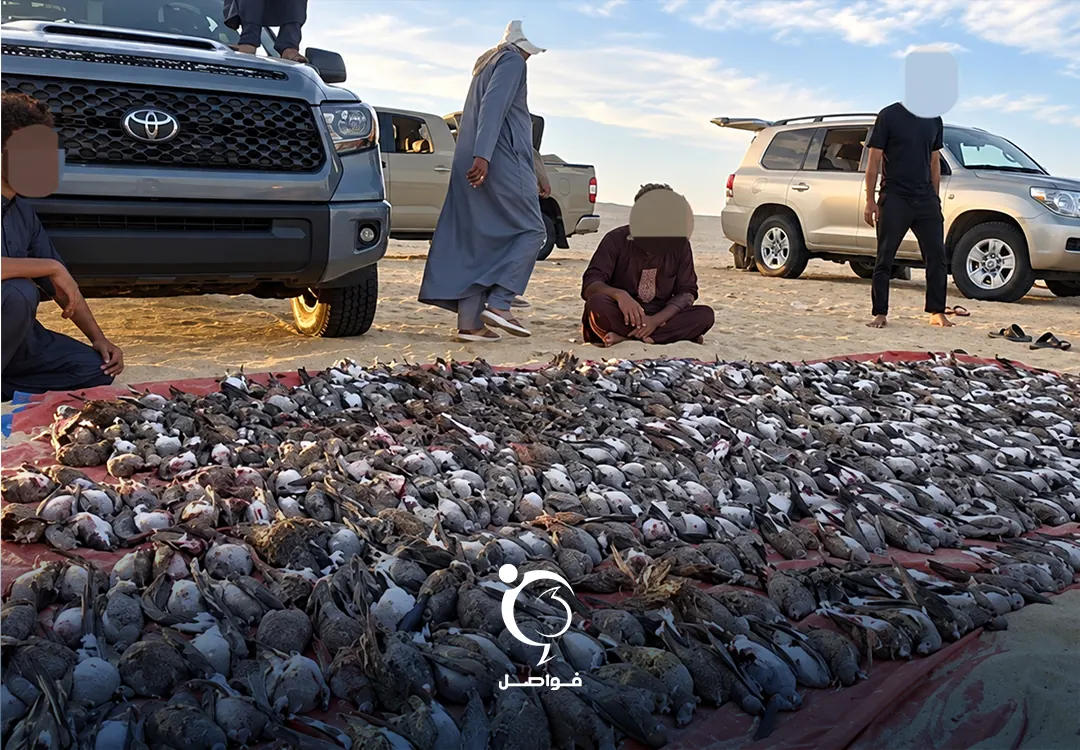
The Libyan Authority for Heritage and Wildlife has issued a decision to impose a total ban on hunting wild and migratory birds in five regions in southeastern Libya, including Jalu, Uqayla, Ajkharah, Tazirbu, and Kufra. The ban also extends to surrounding valleys and farms. This move aims to protect the declining populations of migratory birds. The decision was made in response to reports of widespread hunting practices that threaten the sustainability of these bird species.
The ban, which will be in effect during the 2027 and 2028 migration and return seasons, was announced by the Libyan Authority for Heritage and Wildlife on September 20, 2026. The authorities have been instructed to take legal action against violators, confiscate hunting equipment, and seize assets used for hunting. This includes loudspeakers, sound simulation devices, nets, firearms, ammunition, and vehicles used for hunting.
According to the Libyan Authority for Heritage and Wildlife, the decision was prompted by a significant decline in migratory bird populations and reports of rampant hunting practices. The organization has expressed concern that the sharing of hunting trophies on social media may encourage more hunting. They have called on relevant authorities to monitor and verify images and videos of hunting activities to ensure compliance with existing laws.
The ban coincides with growing debate over hunting practices in Libya, fueled by images and videos shared on social media. On September 19, 2026, the Burari Organization for Nature Conservation warned of large-scale hunting of European turtle doves, citing images showing over 600 birds in one instance and over 700 in another. These images sparked concerns about the impact of hunting on migratory bird populations.
The Libyan government has taken steps to address concerns about hunting practices and their impact on the environment. The decision to ban hunting in five southeastern regions reflects efforts to balance human activities with conservation goals. However, the effectiveness of this ban in protecting migratory bird populations remains to be seen.
Environmental organizations and authorities in Libya are working together to monitor and enforce the ban. They aim to prevent further decline in migratory bird populations and promote sustainable environmental practices. The issue of hunting and conservation has gained significant attention in Libya, with many stakeholders calling for more effective measures to protect the country's natural heritage.
The ban on hunting migratory birds in five southeastern regions is a significant step towards conservation in Libya. Key points of the ban include:
Key points
- The ban will be in effect during the 2027 and 2028 migration and return seasons.
- Authorities will take legal action against violators and confiscate hunting equipment.
- The decision aims to protect declining populations of migratory birds and promote sustainable environmental practices.