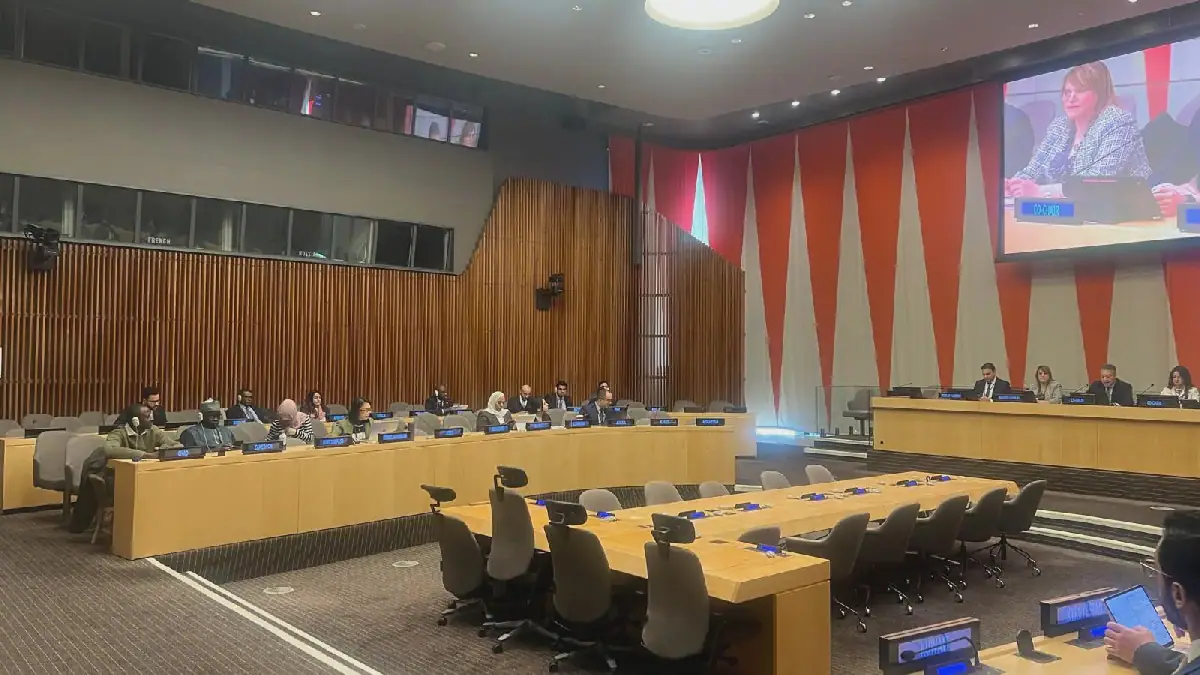
On October 28, 2026, Libya presided over a joint coordination meeting between the Arab Group and the Organization of Islamic Cooperation. As the current chair of the Arab Group at the United Nations for the month of October, Libya led the meeting at the level of deputy permanent representatives. The session aimed to garner support for a package of draft resolutions related to the Palestinian issue, which are set to be presented during the 81st session of the UN General Assembly.
The meeting was co-chaired by Libyan Ambassador Essam Mohamed Al-Qaffa, acting deputy permanent representative of Libya, and the Turkish deputy permanent representative, who is also the current chair of the Islamic Group. During the meeting, participants received a briefing from Palestinian Ambassador Majed Bamieh, deputy permanent representative of the State of Palestine. The briefing covered various draft resolutions that address key issues, including support for the United Nations Relief and Works Agency for Palestine Refugees in the Near East.
The draft resolutions also focus on countering Israeli legislative efforts to halt the agency's activities and attacks on its centers and staff. Furthermore, the resolutions emphasize the rights of Palestinian refugees to their properties and returns. Another significant draft resolution concerns the Israeli settlements, specifically highlighting the dangers posed by the E1 settlement project. This project aims to separate Jerusalem from its surroundings, based on the advisory opinion issued by the International Court of Justice on July 19, 2024.
The joint coordination meeting is a crucial step in aligning the efforts of Arab and Islamic countries on key issues affecting the Palestinian people. By fostering cooperation and coordination, the meeting seeks to strengthen the international community's support for the Palestinian cause. Libya's chairmanship of the meeting underscores the country's commitment to promoting Arab and Islamic solidarity on this critical issue.
The Palestinian issue remains a central concern for both the Arab Group and the Organization of Islamic Cooperation. The draft resolutions to be presented at the UN General Assembly reflect the collective efforts of member states to address the challenges faced by the Palestinian people. These resolutions aim to promote a peaceful and just solution to the Israeli-Palestinian conflict, in accordance with international law and relevant UN resolutions.
Libya's role in hosting the joint coordination meeting demonstrates its active engagement in international diplomacy and its commitment to advancing Arab and Islamic interests. The meeting's outcomes are expected to contribute to a more unified and effective international response to the Palestinian issue. As the situation continues to evolve, the international community remains closely engaged on this critical issue.
The joint coordination meeting between the Arab Group and the Organization of Islamic Cooperation serves as a testament to the ongoing efforts to strengthen cooperation and coordination among member states. By working together, these countries aim to promote a more just and peaceful world, while addressing the pressing challenges faced by the Palestinian people.
Key points
- Libya chaired a joint coordination meeting between the Arab Group and the Organization of Islamic Cooperation to discuss draft resolutions on the Palestinian issue.
- The meeting aimed to garner support for a package of draft resolutions related to the Palestinian issue to be presented during the 81st session of the UN General Assembly.
- The draft resolutions address key issues, including support for the United Nations Relief and Works Agency for Palestine Refugees in the Near East and the rights of Palestinian refugees.