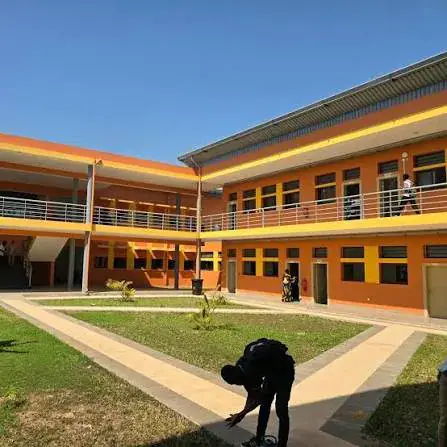
The University of The Gambia (UTG) has taken emergency measures to address concerns raised by students over food, water, internet, and transportation. This move comes after a peaceful protest by the Students' Union on Monday, 26 October 2026. In response, the university's management announced on Tuesday, 27 October, that it had implemented immediate steps to alleviate the challenges affecting students' welfare and academic activities.
A high-level stakeholder meeting convened by the Ministry of Higher Education, Research, Science and Technology (MoHERST) on Saturday, 24 October, preceded the university's measures. The meeting aimed to address the challenges faced by students. As part of its emergency measures, UTG contacted existing and prospective vendors to resume food operations where catering was unavailable. By Tuesday, 27 October, a food vendor was operating at each of the university's six schools.
To address the water challenges on campus, the university purchased and installed 14 water dispensers on Sunday, 25 October. These dispensers were distributed across schools and tested on Monday. Additionally, management purchased 100 filled dispenser bottles and delivered them to Faraba Campus. The university acknowledged that these measures were temporary and would not resolve the underlying water challenges. Discussions with the National Water and Electricity Commission (NAWEC) are ongoing to find a more reliable solution.
The university also took steps to improve internet connectivity, which is critical for research and access to learning materials. Management engaged its internet provider to introduce a temporary fix at the Faculty of Law and the Dr. Akinwumi A. Adesina School of Agriculture and Environmental Sciences. These areas had particularly poor connectivity. The work commenced on Monday, 26 October, and was scheduled for completion on Tuesday, 27 October, on a pro bono basis.
In addition to addressing food, water, and internet challenges, the university tackled transportation issues. The Ministry of Higher Education, Research, Science and Technology (MoHERST) and the Gambia Transport Service Company (GTSC) agreed to deploy the full fleet of 20 buses daily, in line with their contract. The university will monitor the daily deployment of buses and provide feedback to ensure the agreement is upheld.
The university's management stated that it remains committed to improving conditions on campus and will provide further updates on its progress. The emergency measures were taken in response to students' concerns, which were highlighted during a peaceful protest. The protest took place despite government assurances over campus conditions. The university is working to find sustainable solutions to the challenges affecting students' welfare and academic activities.
The situation at the University of The Gambia highlights the challenges faced by institutions in ensuring that students have a conducive learning environment. The university's efforts to address the concerns raised by students demonstrate its commitment to providing a better learning experience. Key stakeholders, including the government and service providers, are working together to find lasting solutions to the challenges faced by the university.
Key points
- University of The Gambia takes emergency measures to address students' concerns over food, water, internet, and transportation after peaceful protest.
- Measures include deploying food vendors, installing water dispensers, and improving internet connectivity.
- University working with stakeholders to find sustainable solutions to challenges affecting students' welfare and academic activities.